Seedy Cuttings and Other Updates

Seedy Penpals Blog Badge

The last Friday in the month is here and now is the opportunity to update you all on progress in the Seedy Packet Patch, but I have also been doing a lot of other stuff with seeds this month that I thought that I would share.

This month has been busy for me. I’ve planted some of the amaranths and some radishes that I got as part of my first Seedy Packet. Unfortunately, I only managed to get these in this week, and there has been very little sign of sprouting so far. I will spare you a picture of bare earth, but there will be green and lovely photos next time, I promise.

We’d love to hear about any updates that you have too, so please share any posts in the linky below, in the comments, or contact me or Carl for a guest post, like Gillian did to share her Seedy Packet

News of Seedy Penpals has been spreading. I think I have probably mentioned this a lot, but I am really enjoying seeing the wider effects swapping seeds online can have. I have seen new friendships form, and other links being made. Loads of people have said very kind things about the scheme. Thanks for being wonderful penpals, for the duration of the first swap, and beyond. I hope that the community will continue to grow and support each other.

Thanks to Michelle at Veg plotting, I reached out to a gardener, who also runs a postal seed exchange; Patrick at Bifurcated Carrots. He was very generous with some tips on the practicalities of seed exchange in an international setting, and he wrote up a lovely post about Seedy Penpals. On top of that, he is practically a neighbour, so I hope to meet him very soon, and discuss all things seedy (not a euphemism, honestly)!

Last week, I found out about Cityplot. I got in touch with them (there seems to be a general theme of Seedy Penpal stuff making me braver. I’ve been reaching out in more directions than a party of octopuses on a fairground ride), and funnily enough, Ann got back to me straight away to say that she had heard of me and Seedy Penpals through Bifurcated Carrots, and she’d intended to get in touch. I love the serendipity of things like this.

I booked myself on the Cityplot Seed Saving course, run in conjunction with Urban Herbology, and from the conversation  I had with Ann, things seem to have snowballed (in the very best way).  Last Friday, I found myself meeting up with Jennie and a bunch of other enthusiastic people, and heading off to a little patch of wilderness on a burdock seed forage in preparation for the workshop on Sunday.

Burdock Plant in Autumn

Urban Warrior

Harvesting seed from a very irritating plant, covered in bandanas and swimming goggles is a very quick way to unify a group of strangers, let me tell you.

Burdock burrs, ready for picking

Prickly Customers

We all donned gloves to harvest the driest of the burrs from the plants in the patch, before having to wear more protection whilst we shook , stamped on and rubbed the burrs to encourage them to release their seedy treasures. Our unconventional attire seemed to get a lot of interest from passing dog walkers and cyclists. Some of them came and asked us why we were all covering our faces; they went off happy that we were doing no harm, and were just protecting ourselves from the prickles that cover the burrs. We did have to explain ourselves to some parks police, and the actual  police did a slow drive by a couple of times. Nothing that a friendly explanation couldn’t quickly clear up, but left us amused.

Collected Burdock Seed

The Seeds of Our Labour

It was all worth it, and we had collected and winnowed enough seeds for the workshop, plus we all got extra to take home with us. It is edible, but quite bitter. I am experimenting with bread, and I am also sprouting some, so I hope that will appear on a salad post sometime soon.

On Sunday I headed to the seed saving workshop, where there were a lot of new faces, most of whom were fairly recent gardeners, but with some more experienced people. We learned about seed harvesting for both domestic and wild seeds, discussed open pollinating, and the importance of  seed saving and sharing. It was a good mix of theory and practical work, as we headed out to the kitchen garden of the restaurant, which is maintained by Cityplot, to look at different seed type and how to save them. There were plenty of envelopes and seeds to take for all. It was really fun, and was accessible to all abilities.

I guess you are wondering what we did with all that burdock seed? Well, we made a tincture and have instructions of how to mix it, and filter it to make it usable  Everyone who attended the workshop went away clutching their tinctures, which are powerful skin and liver cleansers and a warming tonic for people who feel the cold. This was entirely new to me. I love to forage for food. I am greedy. The herbal and health side of things is not really my speciality at all. It was great to meet with new people and acquire new knowledge.

Cityplot hold a number of other workshops including vermiculture, and growing exotics. Urban Herbology run a number of similar workshops and foraging walks. If you are in Amsterdam, I really recommend them, you’ll have a lot of fun, and learn useful skills.

Also through meeting Ann, I learned that a local arts group, Mediamatic, are having a “Sharing Exhibition” and were looking for examples of sharing. I went along to tell them about Seedy Penpals. One thing led to another here, and Cityplot, and I are looking at ways we can do a seed swap as part of this art project. So, Seedy Penpals could be going from virtual to physical for a couple of months in Amsterdam.

Don’t forget that you can join Seedy Penpals anytime, and that the next swap will be taking place in February. See here for more information, and to sign up. I’d also love to read about any progress your seeds have made, so let me know more.

Disclosure: I was not paid to promote either City Plot or Urban Herbology, and neither was I asked to write about them. I paid for the course, and mention them here because it was something that I enjoyed, and is relevant to seed sharing. I think that others may enjoy their courses and get a lot from them too.

However, I have met like-minded people, and we are looking at ways to collaborate in the future on foraging and cooking, as well as the art project.  I hope that they will become friends too.



9 Comments

Filed under Farmed

Garden Companions and a Lemony Salad

Foraging Spot, De Bretten, Netherlands

Pretend it’s a Salad!

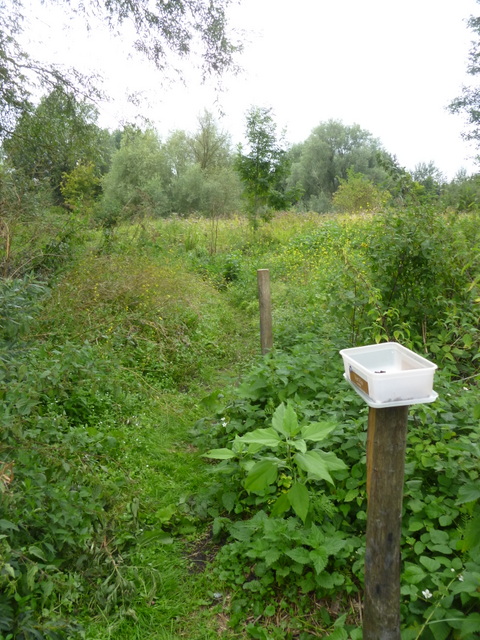
Well, it has been a little while since I posted, which I blame on having broken my camera. It also means that I am about to do something that you should never do on a food blog, and that is publish a post without a photo of the food. I did have a corker to share, but it is lost, so you will have to wait until next I make this recipe. In the meantime, please enjoy the view from one of my favourite foraging spots, complete with convenient resting place for my containers.

In this area, people have also planted a guerilla garden. It has been here as long as I have been coming, and probably longer. You may be able to make out Jerusalem artichoke in the picture, and there are potatoes, pumpkins and corn at various times of the year. There is also a lot of mint, which I think was planted initially, but the conditions in the Netherlands are perfect for this herb, and now it is running rampant.

I may have mentioned that we are trying to eat healthily but with all the flavour, and one of the salads that really fits the bill is fattoush. This is a Lebanese salad that uses sumac and lemon to give a really zingy dressing. I have been buying sumac, but I’m delighted to learn that you can actually forage for this plant. It is a native of North America, but apparently it has been a popular garden and municipal plant in the UK. I shall be looking out for it here too.

Despite trying conditions for many of our crops this year, our herbs have gone crazy. So, I didn’t need to forage the mint for this recipe, but at least I’d have known where to go. I don’t take any of the other plants in the guerilla garden, because they are clearly loved and cared for, but there is enough mint here to keep Cuba in mojitos for a decade.

I am also proud to say that this salad contained my first ever Little Gem lettuce.

Since my course back in March, I have been trying to garden according to permaculture principles.  Part of this is that you try to avoid bare soil in an effort to preserve the soil microbiology, take advantage of microclimates, and to prevent the army of local cats from pooing near your veg.

OK, that last one is more a principle of mine, since they used to see our dug over soil as a litter box, little*ahem* darlings. But it does adhere to the principles of  using and valuing diversity, letting a problem become the solution, and (literally) reducing waste 🙂

Based on companion planting charts that are widely available on the internet, I decided to underplant my asparagus with lettuces, marigolds, and chicory. These included red velvet, a leaf lettuce called “Australian Yellow”, a mixed salad, and the aforementioned Little Gems. Most of them have done well, apart from the red velvet. I think this is because a cat got to the spot that night I planted the seed.

So with parsley and mint in abundance and Little Gems and radish doing well, garden fattoush was the salad of choice. A lot of flavour, with the potential of foraging. Could you ask more from a salad?

I’d be really interested in hearing about other people’s efforts at companion planting. Do you have any particular favourites that grow well, or help against pests? Please do share them in the comments.

Recipe: Fattoush Salad

Ingredients

2 pita breads, diced

1 tsp oil for frying

2 Spring onions (or more if really like them), finely sliced

Zest and juice of one lemon

3-4 tbsp extra virgin olive oil

1 tsp sumac

200 g cherry tomatoes (or baby plums), halved

½ cucumber, chopped into large dice

small bunch radishes; roots quartered lengthways, and smaller leaves

2-3 Little Gem lettuces, leaves only, chopped in half

Large handful of flat leaf parsley, leaves whole and stalks finely chopped

Smaller handful of mint, leaves only, roughly chopped

Method

In a frying pan, heat a little oil until it is quite hot. Fry the diced pita breads until they are golden. You will need to stir them occasionally. Drain onto kitchen paper.

While the bread is frying, mix together the lemon juice and zest, the good olive oil, the sumac and the spring onion. Leave aside for a  few minutes to take the raw edge off the onion.

Combine the tomatoes, cucumber, salad leaves, herbs and the radish roots and leaves in a large bowl. Dress the salad with the dressing, and toss well.

Add the pita bread, stir briefly, and serve immediately.

Sounds appetising, doesn’t it? I’m sure you can picture this one without a photo.


19 Comments

Filed under Farmed

A Silky Soup for September

Spiced and Silken Roast Vegetable Soup

A Change in the Seasons

OK, so I was clearing out the fridge, but this is a great way to use the last tomatoes and aubergines of the season, and the first sweetcorn of the next one.

At the moment, we are trying to avoid calorific food, but I am determined that does not mean that we will miss out on flavour. This is easy when you can pack your salads and other dishes with loads of fresh herbs, but as we near the end of the herbs in the garden, I am looking to spices to plug the gap. And they are doing a great job.

My Sister just had her hen do, and I made everyone roasted aubergine with a chermoula spice rub. Partly because I was doing vegetarian, and also partly as part of my quest to make more middle eastern food.

When I found a couple of aubergines in the fridge, I initially thought I was going to make a chermoula and aubergine soup. When you roast or burn aubergine in its skin, it develops a lovely smoky, silky texture, as you can see from Baba Ganoush and similar dips. That was also going to give the soup a richness without the need for fat or cream, which is perfect for how I’m trying to eat at the moment.

As I kept poking, the fridge also relinquished some tomatoes and half a red pepper. In the spirit of not wasting food, I decided that they could go in the soup as well. And since I was already roasting the aubergines, I may as well roast these too, making the oven use more efficient, making it easier to peel the veg, and also to develop a bit of flavour, especially of the later developing vegetables that may not quite reach their full potential.

At this time of year, the sweetcorn are just appearing too. The Big Guy loves fresh corn, and we had a few cobs, though not yet from our garden. Since the soup was to be spicy and smoky, I didn’t want to just let the golden little kernels cook in the soup itself, I wanted them to add to the overall smoky flavour, so I decided to put a cob under the grill until the kernels were browned.

I had also intended to use some preserved lemons to add to the soup, in keeping with the chermoula idea. I was going to chop them fine, and use them to garnish the soup, but when I tasted it, it definitely didn’t need a sour salty note. Instead, I opted for a spoonful of yoghurt, to counter the fact that the chilli I had used was much hotter than expected!

This soup is great for the start of September, as the summer turns to autumn, and the nights get that bit colder. And it turns out that aubergines are great to add creaminess to a soup without the need for dairy too.

Recipe: Spiced and Silken Roast Vegetable Soup

Ingredients

2 medium aubergines

½ red pepper

6-8 tomatoes

4 cloves of garlic, still in their skins

salt and pepper

2 tbsp olive or vegetable oil

1 cob of corn, with the husk removed

1 medium onion, chopped

1 tsp cumin seeds

1 red chilli, deseeded and chopped

1 tsp ground coriander

750 ml vegetable stock

2 tbsp natural yoghurt

Method

Heat the oven to 200 °C

Cut the aubergine and the tomatoes in half. Arrange the aubergines, pepper and tomatoes in an ovenproof dish, and season with the salt and pepper. Slosh over 1 tbsp of the oil, and toss the veg to coat with the oil. You want the aubergine and tomato cut side up; but the pepper skin side up, because you want it to char.

Put in the oven to roast for 30-40 minutes, until the vegetables have taken on a bit of colour. After about 15 minutes, add the garlic cloves, so that they don’t burn to a crisp. You want them to be golden and soft, not crunchy.

Once the vegetables are roasted, put the grill on high, and put the corn underneath it. You will need to turn it as it cooks. If you have a separate grill, which I don’t, you can do this at the same time, it may take a while.

Meanwhile, dry fry the cumin until it is fragrant, then grind to a fine powder in a pestle and mortar, or a spice grinder.

Sweat the onion in the rest of the oil, until translucent. Add the chilli and cook for another minute on a gentle heat, then add the spices, and just cook through.

Squeeze the garlic from their skins, and add to the spice and onion. Allow to sweat on a gentle heat while you scrape the creamy flesh from the aubergine. Add this to the saucepan, and cook for 2-3 minutes to combine the flavour.

The tomato and pepper should also be really easy to skin as well by now. Mine just slipped off. Discard the skins, as these are indigestible, and hopefully the pepper skin will have blackened and blistered, so will be bitter and unpleasant anyway.

Add the flesh of the tomatoes and the pepper, along with any juices in the roasting dish to the saucepan. Add the stock, and bring to the boil. Cover the pan and simmer for about 15 minutes.

Blend the soup with an immersion blender or a food processor, until it is smooth and rich.

Run a knife down the corn, to remove the kernels, which should be brown and succulent, not black.

Divide the soup between 2 bowls, add a tablespoon of yoghurt to each, and sprinkle the corn kernels over the top.

Perfect to come home to after a day’s foraging, whether that be outside or in the fridge!

14 Comments

Filed under Feast

Simple Ways to Avoid Onion Breath

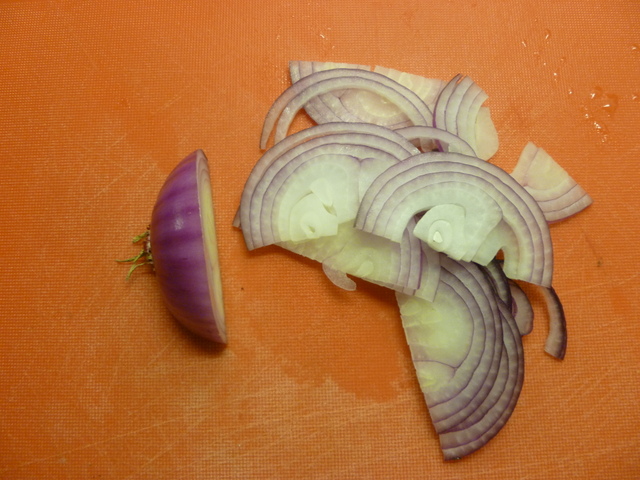
Sliced Red Onion

Not Your Lunch Time Friend

Raw onion: a lot like Marmite, it is a very divisive ingredient in any dish. Alliums in general are used to impart flavour to a wide range of food, both raw and cooked, but they are pungent and packed with sulphur compounds that make you cry and give you bad breath.

There is a growing trend amongst lunch venues to put red onion in a variety of salads and sandwiches almost everywhere I have been or travelled to. Why do they do this? Apart from making me really thirsty, raw onions are a little antisocial, especially if you have to return to breathe onion fumes all over your colleagues, and anyone that you happen to be having a meeting with that afternoon. I also think it is really lazy. There are several easy ways to avoid this, without compromising on flavour or crunch.

If I am going to be using shallots in a salad dressing, or taboulleh, I address the problem by soaking them in the vinegar of the dressing before I add the rest of the ingredients. A good 10 minutes in the vinegar will reduce the affect of sulphur compounds, as well as develop the flavour.

Similarly, if I am going to make guacamole, a 10 minute pre-soak of the onion in the lime juice sorts out the problem of onion breath. It really isn’t difficult, and in reality doesn’t add loads of time to your prep, you can do it first, then get on with another element of your salad.

I have been eating a lot of salads, not just because of the 52 Week Salad Challenge, but also because they are healthy, low in fat and they are a great way of tasting the best of the seasons.

In the past, I have omitted the raw onion in a salad, but there are a couple that really are made better by the crunch and flavour of onion, but I don’t benefit from the unquenchable thirst I get when I’ve eaten them in any amount.

Panzanella is one of my favourite salads, but it loses a lot by leaving out the onion. Keeping the onion slices as crunchy as possible is also integral to the necessary contrasts of the dish too. For this reason, soaking it in the vinegar is not the best way forward, as this will reduce the crispness of the bite a little.

I am sharing my recipe for panzanella, because it contains the easiest tip for avoiding onion breath, it’s a fantastic salad, and it uses up leftover bread. What’s not to like?

Panzanella

Scented With Summer, Not Onions

Recipe: Panzanella

Ingredients

This will serve two people on its own, or 5 as a side dish

4 thick slices of stale bread, cut into large cubes

400 g tomatoes, different varieties, if you can get hold of them. They need to be ripe, and at room temperature.

½ cucumber, in large dice

1 red onion, finely sliced

3 tbsp extra virgin olive oil

1 tbsp blackberry vinegar, or red wine vinegar if you don’t have blackberry

1 tbsp capers

6-8 anchovy fillets (optional)

salt and pepper

15-20 basil leaves

Method

If the bread you are using is not stale (although this salad is much better with stale bread), you can dry out the bread in a low oven, or one that has been turned off from cooking something else.

Chop and slice the tomatoes. If you have pretty heirloom varieties, slice some of these and set aside as a decorative touch later. I was using a mix of varieties, which included marmande, plum, tigerella and black Russian. I put the red ones into the salad, and sliced the tigerella and black Russian for the plate.

Combine the cucumber, tomatoes and bread in a large bowl, and set aside.

Cover the onion slices in boiling water, and leave them there for about 2-3 minutes. This removes the sulphur from the onion, but does not cook it, so you still get the crunch, but none of the bad breath. Drain the onion, and leave to drip while you make the dressing.

Whisk together the oil, vinegar, capers and the chopped anchovy fillets. Adjust the acidity or oil to taste, but bear in mind that the tomatoes are also going to add acidity. Season well with salt and pepper.

Add the onions and the dressing to the salad, and mix well. Set aside to allow the flavours to develop for at least a couple of hours, or overnight in the fridge, if you can, but serve it at room temperature.

Just before you serve, roughly tear the basil leaves and mix them in.

If you like, you can add punchy salad leaves, like spinach, mizuna and rocket to add extra bulk. Do this when you add the basil, or the dressing will cook them.

This is a great salad to serve at a barbecue, or summer picnic, or as a side dish. It is also the tastiest way to use up leftover bread.

4 Comments

Filed under Farmed

Gluten Free Cake

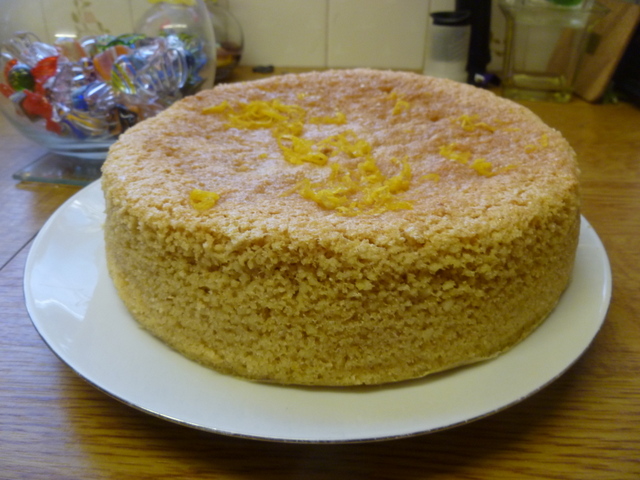
Lemon Torte

A Vote of Thanks

Like many people, I am fortunate enough not to have food allergies, so my cooking can revolve around whatever I fancy, and usually does. So, it is not often that you will see foods for restricted diets on these pages. However, I am also very careful to ensure that I cater for friends who are restricted in what they eat either by choice or for health reasons, and that when I do make special food that it has as much flavour as possible. I want people to feel that they have feasted rather than been subjected to bland food made with little imagination.

This cake is great for people who cannot eat gluten, as it is made entirely from ground almonds and egg. I have a couple of friends for whom this cake, or a variation of it, gets made regularly.

I always use whole almonds, and grind them up myself in my food processor. That way, you can make the meal as fine or as rustic as you like. I usually leave the skins on the almonds, because it does add to the flavour, and I like it that way.

Most recently, I made this cake for a friend of my Mum’s. They met in a maternity ward when they were having their eldest offspring (me, in Mum’s case), so I guess that you could say that I have known her for my whole life. She recently did me a huge favour, by taking up a bridesmaid’s dress that I am to wear at my Sister’s forthcoming wedding, and I wanted a way to thank her.

She has a restricted diet, and cannot eat flour, sugar, chocolate, or too much fibre. I know that she loves sweet things, however, and I thought that this would be the ideal cake for her needs. And what better way to say thank you than to show someone that you have thought of them?

In some ways this is a tried and tested recipe, but I needed to use a sweetener, and reduce the amount I used. I also removed the almond skins, by soaking them in boiling water, and popping them out of their skins once the water had cooled enough for me to put a hand in.

I was pleased with the result, and I thought that I would share this recipe with you, in case you want to bake something thoughtful for a friend with similar restrictions. After all dietary restrictions should not mean repetitive and restrictive diets.

Mum even liked this cake, despite not liking almonds. Mum’s friend was delighted with both the thought and the flavour.

Update: My friend tried this cake with ground almonds, and has pointed out that the amount needs adjusting for the much finer variety. I have reflected this in the ingredients list. Thanks to Julie for giving me some valuable feedback on my recipe, and for testing a new amount.

Recipe: Lemon Torte

Ingredients

300 g whole almonds (or 100 g ground almonds, if using them)

4 eggs, separated

100 g sugar substitute. I used Half Spoon by Tate and Lyle, which does contain some glucose, you may need a different one.

Zest of 1 lemon

1 tsp cinnamon

1 tsp ground ginger

Zest and juice of 1 lemon

1 tbsp sugar substitute

Method:

Heat the oven to 160°C.

Line a 20 cm spring form cake tin with baking paper. You don’t need to line the sides if you don’t want to, but make sure you grease them if you don’t choose to line them. You should line the base, or you will have to serve it on the metal tin base, which isn’t a good look

Remove the almond skins, by soaking them in boiling water. Once the water is cool enough to get your hand in, they should pop out of their skins easily if you apply a little squeeze. Or you can buy blanched almonds, and skip this step altogether.

I personally prefer the cake to have a bit of texture, so I grind up the almonds myself by pulsing them in a food processor, until they are a coarse meal. You can also buy ground almonds, which are much finer. Use these if you like.

Beat together the egg yolks, lemon zest and the sugar substitute until pale and creamy. Add the ground up almonds, cinnamon and ginger and mix in well.

In a clean bowl, whisk up the egg whites until they form stiff peaks.

Add a couple of tablespoons of the egg white to the almond and egg mix, and stir in well. This will loosen the nut mix slightly, so that you can add the egg white next, fold it gently in with a metal spoon, and not lose all of the air that you have painstakingly just whipped into it.

As soon as there are no streaks of egg white left, pour the cake batter into the tin, and bake it in the centre of the warm oven for about an hour.

The cake is done when a skewer poked into its centre comes out clean. Leave it to cool in the tin.

While the torte is still warm, make a sugar syrup by dissolving a tablespoon of sugar substitute into the zest and juice of a lemon, over a low heat. Pierce the cake in several places with the same skewer you used to test it, and then pour the syrup over the whole cake. The holes you have just made will help it to soak in.

Serve on its own, or with a little natural yoghurt. And always with a lot of thanks.

6 Comments

Filed under Feast

When Life Hands You a Lamb Rack

Herb Crusted Rack of Lamb

Pretty as a Mind’s Eye Picture

The other day the Big Guy was sent out for some chops to go with second helpings of the Jansson’s Frestelse. Instead, he came home with a beautiful French-trimmed rack of lamb. Of course, it was far too good to for the more rustic plans I had had for the chops.

I knew it would get a lovely herb crust, and be cooked medium rare, so that it was still juicy and melt-in-your-mouth tender. When I am thinking about a dish, I can often clearly visualise the food,  including exact colours and shades.  I get the best results when I have a really clear picture, and if I can get the dish to look as close to the mental picture as I can. I mentioned this to a friend once, and she seemed pretty surprised that my planning was so visual. I’m not sure if that is because it struck her as an odd method, or if it is because I am so linear in how I work in many other aspects of my life. For me it is natural, and obvious, since you eat with your eyes first. How do you develop a dish, or conceptualise it?

In my head, the crust of this dish was slightly darker than with breadcrumbs alone. I wanted something suitably autumnal, to go with the potatoes. I had initially thought to have chilli and coriander, but this differed significantly from my mental picture.

Then I realised that the colour was cumin. This brown, unassuming little seed would be fantastic in my crust, and it would be the right colour. So I settled upon cumin, rosemary and thyme for the autumnal flavour, and parsley for the greenness.

All good meat needs browning, because it loses so much flavour without the Maillard reaction to kick start the process, and add essential umami. Luckily, this also creates the perfect conditions to make a delicious gravy, or a sauce.

My vision was not of thick, plentiful gravy; instead, I made a fairly thin red wine sauce. I guess if it were served in a restaurant, they might call this a Jus. But it was just the Big Guy and me for dinner, so we didn’t need that level of formality.

I made a little too much of the crust, but that was fine, since you can sprinkle it on other dishes, and freezes well. I’m thinking I might top a stew with it, when next I make one. What do you think I should do with it?

Recipe: Herb Crusted Rack of Lamb with a Red Wine Sauce

Ingredients

For the Lamb:

1 tsp cumin seeds

40 g fresh breadcrumbs

3-4 sprigs thyme, leaves only

2 sprigs rosemary, leaves only, roughly chopped

Small bunch parsley, roughly chopped

Oil to moisten

1 French-trimmed rack of lamb allowing three cutlets per person

A little oil for frying

Dijon or French mustard for brushing

For the Sauce:

Trimmings from the lamb rack

Trimmings from an onion and a carrot if you keep a stock drawer or half of each, sliced

Splash of red wine

1 tbsp elderberry or redcurrant jelly

100 ml of stock per person

Method

Heat the oven to 220°C.

Toast the cumin in a dry frying pan until the scent fills the air above the cooker. Be careful not to burn it. Grind it to a fine powder in a pestle and mortar.

Make the crust. I used the end of an old piece of bread, and made fresh breadcrumbs by blitzing them in my food processor, until they were fine. I also often have breadcrumbs made this way in the freezer, because I won’t chuck something out if I can use it as an ingredient.

Once you have fine breadcrumbs, add the herbs and cumin and give it another quick blitz to blend it. Slowly add olive oil until the mixture comes together as a thick paste.

The lamb is likely to have a little fat and a sinew along one side. You can trim the fat, but leave a little around the bone, for flavour. The sinew must be removed, as this is tough. Don’t throw it away, It will help you make a tasty sauce later.

Put foil over the bones of the rack to prevent them from burning in the oven. Brown the meat in a hot frying pan with a little butter, to get the Maillard’s reactions going.

Once the lamb is browned on all sides, brush it with the mustard, giving an even coating. Put the breadcrumb crust in a shallow dish, and press the lamb into the breadcrumbs on all sides. Pat some breadcrumbs in, to ensure an even coating.

Put the meat into the hot oven for about 10 minutes if you want medium, turning once so that the crust browns on both sides. If you prefer your meat well done, then cook for up to 14 minutes, depending on the size. Once it is done to your liking, remove the meat from the oven, cover it in foil, and allow to rest for five minutes.

Make the sauce while the lamb is in the oven. In the same pan that you browned the meat in, brown the sinew and trimmings, with the onion and carrots. Don’t add any more oil to the pan. Once the vegetables have browned, but not burnt, deglaze the pan with the red wine. You really don’t need more than a splash. I do the Nigella trick of freezing any wine left in a bottle as ice cubes, and only used one, whereas I often use 3-4. Cook the wine out for a couple of minutes, then add the stock. Cook the sauce on a fairly high heat for about 5 minutes. Add the jelly, and cook until the jelly has dissolved.

Strain the sauce through a sieve. Remove the foil from the bones of the rack. Slice the rested meat into cutlets and serve with the sauce.

Leave a comment

Filed under Feast

Seeds with a Story

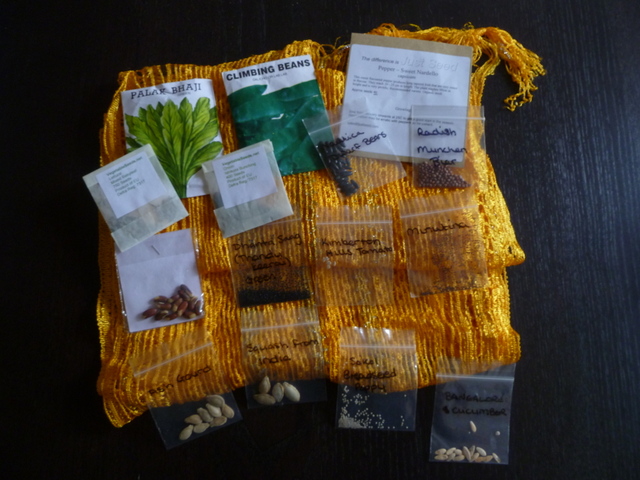
Seedy Packet August 2012

A Packet of Seeds

I am pleased to report that Sally got my seeds on Tuesday, and she sent me a lovely e-mail to say that she enjoyed my packet. I did my best to include seeds with a story, since I struggle to find heirloom varieties over here.  I often have to get them from the UK, and all the suppliers that I talk to laugh, since a lot of their seed is grown over here in the Netherlands. I find this pretty frustrating, as there are very few varieties on offer here and even less choice if you want organic seed. Not to mention the crazy seed miles that they have to travel. Anyway, I’m glad that Sally liked her parcel; I hope to be able to save some more seed, so I should have some more variety in the future.

Yesterday, it was my turn. As I mentioned in my last post, my penpal Charlotte has been to India. Lucky me, I got lots of lovely seeds from India, and some from elsewhere too. Charlotte was really good at getting plants that suit my shady garden, or my sunny windowsill, as well as being some of my favourite things to eat.

From India, I got:

  • Bangalore cucumber mix – with a random tomato seed. Charlotte picked up a pack of cucurbits, including some oblong ones, and there were a few random seeds in the pack, which she shared with me too.
  • Ash gourd, which is a popular Ayurvedic plant in India, particularly good for strengthening the digestive system, and protecting against indigestion and urinary tract problems. I am lucky not to currently suffer frequently from either, but now I can make sure they stay away!
  • Unknown squash, Charlotte couldn’t be sure of more than that, because the packet was in Mayalam. She postulates it is a winter squash, and recounts an unsuccessful attempt at explaining what a courgette is when she was trying to find out more.
  • A variety of yard long beans. Unknown, as again the packet was in Mayalam. I can’t wait to be able to grow these, I love beans and surprise varieties are always welcome.
  • Some Lab Lab beans. I am assured that these have beautiful flowers. I am already trying to think of some construction that will show them off near the house.
  • Palak Bhaji and Dhanta Saag, both of which are leafy greens, possibly amaranth types. They will be a different flavour to add to my salads and as cooked greens.

And it doesn’t stop there, Charlotte also sent me seeds that she enjoys, and that she chose because I prefer things that you can eat. All of the seeds she sent have a story, but I particularly enjoyed some of the stories with these seeds.

The stories and the seeds are:

  • Kimberton tomatoes; a yellow tomato variety developed by the members of Camphill Village, an intentional community in Kimberton, Pennsylvania for people with developmental disabilities. They grow their own fruit and veg, and develop varieties of plants. Charlotte is actually from a town very near to this community, so these are seeds from both her home and her homeland. She mentions that the packet says “Grown and selected for many years by the late Hupert Zipperlin from Camphill Village, Kimberton”, so thank you to Hupert for these seeds too.
  • Sokol Breadseed Poppy. Charlotte sent me these because the seeds are easy to collect, due to the unique way the seed heads form. She thought that they would be interesting for me, despite the fact that I don’t grow many flowers. I have previously not seen much point in flowers, but I am trying to garden using permaculture principles. I am seeing increasing uses for many flowers, and have learned a lot about edible flowers, and parts of flowering plants. I’m looking forward to benefiting from an abundance of beauty as well as the tasty seeds next year.
  • Nautica Beans, which are a particular favourite of Charlotte’s. She says that they are thin, tender and tasty, and remained so for the duration of her trip to India. She says she thinks they are amazing, and may not grow any other variety of bush beans. High praise indeed, I’m looking forward to these in a thousand different dishes already.
  • Minutina (Buckhorn Plantain) was chosen because I like to eat weeds. Or what others may consider weeds, in any case. I have found most of them to be delicious. Foraging is even better when you don’t have to look too hard.
  • Radish Munchen Bier, which are podding radishes. You don’t eat the root; you wait until they go to seed and eat the seed pods. I’ve never tried these before, so I’m looking forward to these too. Charlotte recommends stir frying them.

I also got Nardello peppers to grow indoors and some bunching onions and mixed lettuce, which will be great for the 52 week salad challenge.

You may have noticed the glorious yellow scarf underneath the seeds in the photo. Charlotte also sent me this, another present from India. Isn’t it beautiful? And as we head into winter, or even if we get another summer like this one, it is a vibrant reminder of sunshine, and happy hours in the garden.

Thank you, Charlotte. There is certainly a lot to challenge me, and a lot of brilliant plants to look forward to.

Anyone can join the Seedy Penpals, whether you have a window box or a wood. I can vouch for the fact that people have enjoyed the first one, and that you get some great surprises and new and interesting plants. If you are interested, see here for more details and how to join up for the next swap, which will be in the spring. New seeds, new varieties, new friends. What’s not to like?

11 Comments

Filed under Farmed

Seedy Survey August 2012

Seedy Penpal Blog badge

So, here we are. It is time for the first Seedy Survey. Please do join in, and add your link to the widget. If you don’t have a blog, but would like to write up what you got, Carl and I are more than happy to host your write up,  drop us a line.

If you don’t think that a blog post is for you, you can also add a comment here to talk about your parcel, we don’t want anyone to feel left out.

I have been really cheered to see all the chatter about #SeedyPenpals  on Twitter, it seems that you have enjoyed seeing what you have, and I know a few of you have already got seedy and planted up your haul. Brilliant progress, and I thank you all for taking part and for your enthusiasm.

I would also like to thank Ian at Foodies Heaven, who really ran with it, and set up this forum, if you’d like a place to chat about your Seedy Packet, or growing things in general.

We have also launched the Resources Page, with information on seed saving, autumn sowing, and growing in general. We’ll update this regularly, so let us know if there is anything that you think should be up there.

We have had a few teething problems, and we are learning as we go.  I’d like to say thank you for your patience, and encourage you to give us some feedback, so that we can improve. We got over 4 people joining  this time (and more for the next round already), so we would like this to become a regular thing.

My first match was with Sally of Constant Gardener. She is not wrong, she is a very experienced gardener and garden writer, so I fear that I have not really set her a challenge with my Seedy Packet, but I hope that she likes the seeds I sent. I remain hopeful that they will arrive with her today, as the post office promised. I got a bit of a flu, in the heat wave, and couldn’t post it on time (terrible, as one of the hosts I know, but I did let her know – it’s all in the communication people). I’ll let you know when they arrive.

I was matched with Charlotte, who tweets here. She was in India for work, and has unfortunately been a bit unwell since she got back, so I am still waiting for my Seedy Packet too. As my best friend would say, god never pays his debt with money! Again, we have kept in touch, so I know that it will arrive, and I’ll get things planted for the winter, so no worries. I’ll let you know what I get. And I hope that Charlotte feels better soon.

The great thing about Seedy Penpals is that it happens twice a year, so it doesn’t matter too much if you join in a little late (as llong as you have discussed this with your penpal), plus there is also Seedy Cuttings, where you can link to updates on your progress at the end of non-swap months, if you want to.

I have really enjoyed Seedy Penpals, and have been bowled over by the response. It has been great to meet many of you, and to learn a bit more about the growing habits of friends old and new.

If you aren’t sure what to write about your Seedy Packet, you could try using the questions in the Seedy Survey as a starting point. I know a number of you have already written up some great posts. The link widget should post to both Carl’s and my blogs, so you will only need to post it once.

If you would like to join in, you can sign up any time, and we will remind you closer to the time about the exchange. If you feel that you cannot participate for whatever reason, then just let us know at the time, so you don’t need to worry that you are obliged to do something, we all understand that life happens.  You only need to sign up once, so that’s a job less for you at each exchange.

I’m really looking forward to reading your experiences in the links and in the comments.


3 Comments

Filed under Farmed

A Box Where Sweets Compacted Lie

Foodie Penpal August

Choc Full

“Sweet spring, full of sweet dayes and roses,

A box, where sweets compacted lie”

From Vertue by George Herbert

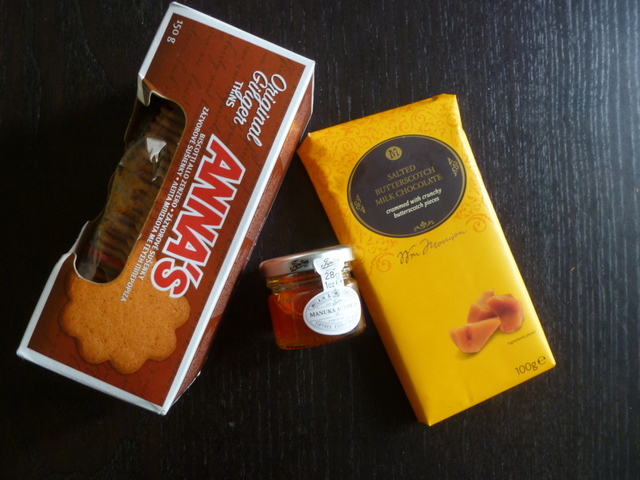
I thought that the title this month was appropriate for both the parcel that I sent, and the one that I received, as you can see from the photo above, which was jam-packed with goodies, and a recipe for a sweet treat!

This month, I was matched with Emma, and was to receive a parcel from Abbie, neither of whom have a blog (…yet, I believe at least one of them will be joining us soon 🙂 ), but you can go and check out Emma’s gorgeous cakey Facebook page, and you can see what amazing things Abbie has found on Twitter.

Contents of August Foodie Parcel

A Box of Sweets, Unconsolidated

Abbie was very clever with her box, as well as stuffing it to the gills. And it arrived in 3 days between her tweeting to say she’d sent it, and me receiving it. This is an absolute record.

Swedish Biscuits, Manuka Honey, Butterscothch Chocolate

Some Compacted Sweets

For ages, I was thinking that the chocolate was a new brand called M. I am an idiot, and have just realised that it comes from that famous supermarket. Salted butterscotch chocolate, it is delicious, and you would be right in thinking that I have started this one already.

There is a small pot of manuka honey, which I am dying to try. Abbie also thought of the Big Guy, giving him some Swedish ginger thins. This is the first time we have had something that he can reminisce over, and I think I may not see many of these.

Smoked Maldon Salts, Rice Crackers, Ras El Hanout

Compacted Savouries

This wasn’t just a sweet box, though. I also got savoury goodies. I rubbed the Ras el Hanout on a lamb cutlet, and ate it as part of a meal filled with temptations. The rice crackers will make a great snack, but I have an idea that they will also make a really tasty crust for fish, so I think that will be an experiment that I will be making soon. I have heard of smoked salt, but never tried it. It is actually great, bringing a subtle smokiness to dishes. I am not usually a fan of salting things, but have been getting more into it, as I have had quite a few gifts of salt lately.

Tinkerbell Peppers

A Fairy Plate

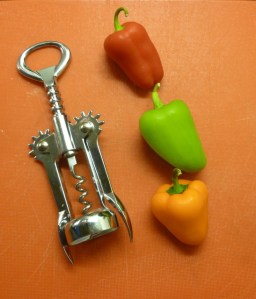
It was Abbie who sent me the Tinkerbell peppers. She wrote a little card, to say that she had these every day in Ibiza. This was also the first of two recipes she sent me, along with the ingredients. This is genius, and I wish I’d thought of it myself! Abbie suggested that I grill the peppers, and serve them with a sprinkling of the salt. I took most of her advice, but this is what I did with them in the end.

Rocky Road

Can you Tell What it is Yet?

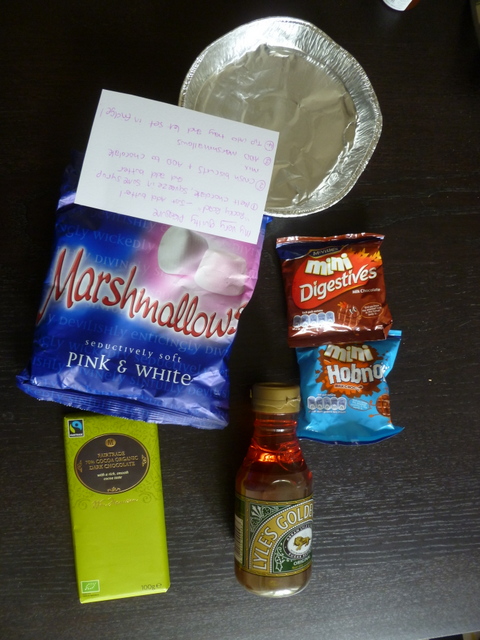
She also sent me the recipe and ingredients to make up her Guilty Pleasure. She has given me permission to reproduce the recipe on ediblethings, so I will let you know about this next week.

Thank you so much for this parcel Abbie, not only has it been an inspiration for future boxes, and fantastic recipes, but I dread to think how much it must have cost you to post this little treasure trove. I am amazed!

Thanks also to the lovely Carol Anne of This is Rock Salt, who hosts and organises us European penpals. This is no mean feat, I can tell you.

Here’s the rough outline of how it works:

  • All interested parties in the UK and Europe – bloggers and blog readers alike – sign up by the form available at the bottom of this post
  • Participants are matched on the 5th of the month
  • Penpals send thoughtful, food related parcels, on or before the 20th of the month. The parcel must include something hand written – a note explaining the box’s contents, a recipe card, whatever you like. The price limit for the boxes is £10 – this is a limit, the point is not the cost, but the thought (no, really!)
  • Penpals open their boxes and rejoice!
  • At the end of the month, everyone blogs about their box, or writes a guest blog post if they are usually a blog reader and not writer. Everyone reads one another’s posts and rejoices some more. Posts are made available on Lindsay’s blog so we can all find each other easily

2 Comments

Filed under Feast

I Don’t Know Who Jansson Was, But This Sure Is Tempting

Jansson's Frestelse

Jansson’s Frestelse

The weather is changeable again, and is blowing hot and cold. You can expect to see a much more eclectic mix on the blog of salads and more autumnal fare, while we wait for the season to make its mind up.

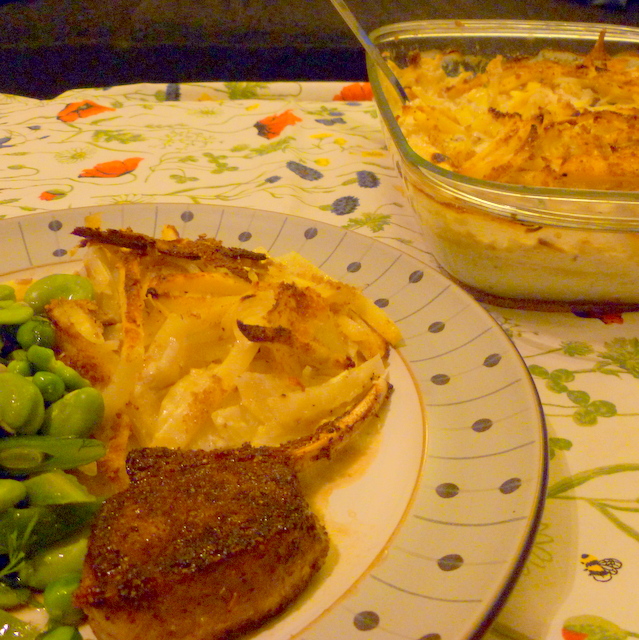
It has also shown me that the lighting in my living room lends my photographs an odd yellow tinge, now that it is getting darker earlier. Until I can be organised enough to make all my food in the day, I am going to have to try not to take photos in here.

Yesterday was a cooler day, and thoughts turned to comfort food for other reasons too. I have been thinking pretty hard about potatoes and cream. This means one thing, a traditional Swedish dish, called Jansson’s Frestelse, or Jansson’s Temptation. This is a lovely gratin of potato and cream, with the surprising, but brilliant addition of a little anchovy.

Swedes actually call a sweet preserved sprat ‘ansjovis’, so the Temptation will be slightly different. I haven’t found them outside of Sweden, so I use ordinary common or garden anchovy, preserved in oil.  And actually, the salty little things add a really unctuous quality, I think they are worth it.

You can make the gratin vegetarian by omitting the anchovy, but only do this for the vegetarians in your life. If you are one of these people who insist thy don’t like anchovy, and will remove them from pizza, I promise you will not notice them, as they will melt into the dish, but they add so much in the way of flavour.

I road tested this once, at one of the International dinners. I made two versions of the dish, one with anchovies and one without. The one with went quickly; we were eating the one without for the next few days.

I served it with some garden beans, and a lamb chop that had been rubbed with  Ras el Hanout, and pan fried to medium rare. It was an amazing meal, for little effort.

This is a very simple dish, and so good in colder weather. It is also an amazing alternative to mash. Give it a try.

Recipe: Jansson’s Frestelse (Temptation)

Ingredients

800 g waxy potatoes

1 onion

150 ml cream

150 ml milk

8-10 anchovy fillets

1/2 tbsp anchovy oil

Salt and pepper

Some breadcrumbs for scattering (optional)

Method

Preheat the oven to 180°C.

Cut the potato into thin matchsticks. It is easiest to use a mandoline, or you can get an attachment for some food processors. If you have neither, cut the matchsticks with a knife. This will give a larger surface area, and produce brilliant crunchy and soft textures, which improves the dish, so do take the time, even though it is a pain. This should be the spur for you to buy a mandoline. They aren’t all that expensive, and this is the second recipe in a week in which I’ve used one. As long as you keep your fingers clear, they are great, and this is coming from the woman who hates gadgets!

Slice the onion into thin half moons, and chop up the anchovy fillets.

Butter an oven proof dish, or roasting tin. Then you need to layer the dish. Start with a thin layer of onion, and season with salt and pepper. Next add a thick layer of potato, then a little anchovy. Continue to layer up in this order, but make sure that you finish with a layer of potato. Give it one last season with some salt and pepper.

Mix the cream, milk and anchovy oil in a jug. Pour half over the potato in the baking dish, and sprinkle over the breadcrumbs, if you are using some. They should be scant, they don’t need to cover the dish.

Put it in the oven for half an hour, then add the rest of the cream and  oil. Cook for a further 15 minutes, until the top is crunchy, and the potatoes are cooked through.

This is great the first day, and amazing reheated for leftovers. If you have enough left to reheat, you might want to cover it with some foil as it heats up, so that the lovely crust doesn’t burn.

2 Comments

Filed under Feast