Tag Archives: Taste Not Waste

Sing A Song of Six Quince

Quinces

A bit like large, hairy pears

The quince is an odd fruit. Part of the rose family, with a hard, fuzzy fruit that is easy to overlook if you don’t know what it is. It is often possible to forage the quince, as they do occur in the odd hedgerow, and a few lucky people grow them, or know someone else that does.

This is another of those things that I really hope to find out and about. The flowers are really beautiful, so they are often planted in municipal areas. I have heard rumour of one in a local park, although I have not found it myself. You also have to be pretty quick if you are to get there before the parakeets that live wild here.

However, I have found them on my local market. A basket full caught my eye, and I felt a rush of excitement, as I hurried closer to see whether or not I was in luck, or if they were just large conference pears. Luckily for me, my first glance was right, and I went home happily clutching a bag full of kweepeers, as they are called here.

I have cooked with them before, having baked them in a similar way to apples, but I have always wanted to try my hand at making membrillo. I first had some on a holiday to Barcelona, where it is served with sharp manchego cheese, and its sweetness and texture really are the perfect foil for this cheese. I have also used it with pâté on crackers, where it finds another worthy partnership.

I looked around for a good recipe, and Nigel Slater had a good one on the BBC site. When I read this, my first thought was that I could maximise the quince output by making jelly too. This appeals to the tight-fisted food waste geek in me – I really hate throwing stuff away, so any recipe where I can save scraps or cooking liquor to make something else out of is off to a good start already!

The quince might be an odd-looking fruit, but its perfume  is quite something. As I peeled and cored them, as per the instructions, my kitchen was filled with a gorgeous smell, very similar to ripe raspberries. As they cook, you get hints of their rosaceous origins as well.

One thing that cooked quince is famed for is its beautiful deep red colour, so imagine the panic I had when I cooked the fruit when they were still a pale off white colour, and the cooking liquor was pretty beige.
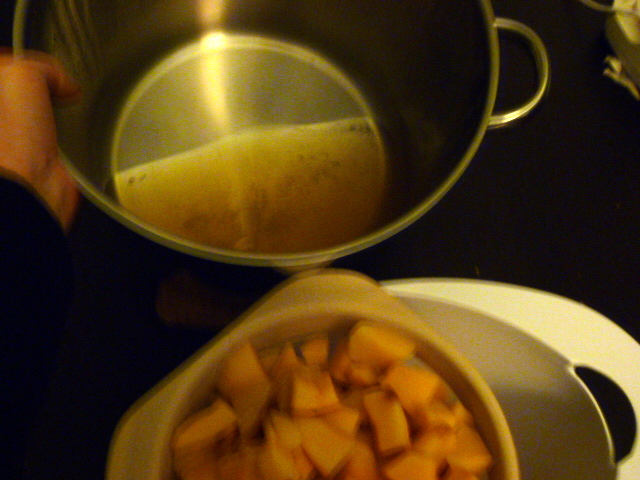
Part cooked quince

Taste the rainbow?

A while ago, I had promised a friend a session in nostalgia and jam making, so she headed round after work, and we got down to make the jelly. The first lot I made was with the cooking liquor that was drained from the fruit. Since the membrillo recipe says to peel and core the quinces, and this contains a good deal of pectin, this is also perfect for jelly. I boiled these up in some more water, and re-used the vanilla pod in it too. The strained liquor made yet more jelly.

Making jelly is really a question of proportion. For every 600 ml of liquid, you need 400 g of sugar. You can play around with this proportion a little, and I have reduced the amount of sugar for some fruits. However, the quince is a relatively unknown quantity for me, so I stuck with the tried and tested ratio.

We boiled it up to a nice rolling boil, and let it cook off for 10 minutes. These days I have taken the guess-work out of jam making by investing in a sugar thermometer. When the thermometer reaches 104.5°C, you know that you are done. I still like to check, since the first time I used a thermometer, the jelly I was making turned out a bit runny, because I had taken it off the heat the second it reached temperature. Also, it was good to show my friend the low tech way of seeing if your jam has reached setting point.

The Fridge Test is the old-fashioned way to ensure the setting point is reached. You put a plate in the fridge to cool. Drop a little jam on the plate and leave for a minute. If the jam wrinkles when you run your finger through it, then it has reached setting point. If it doesn’t wrinkle, stick the plate back in the fridge, leave the jam to cook, and try again in a few minutes.

When you have reached the setting point, take the jam off the heat and pour into hot, sterilised jars. Fill  them almost to the top, cover with waxed paper discs (wax side down) and seal with a hot, sterilised airtight lid.

As you can see from the picture, my worry that the final product would be beige was unfounded. They don’t tell you this in the recipes, but the quince does not take on its customary red until quite near the end of  the cooking process.
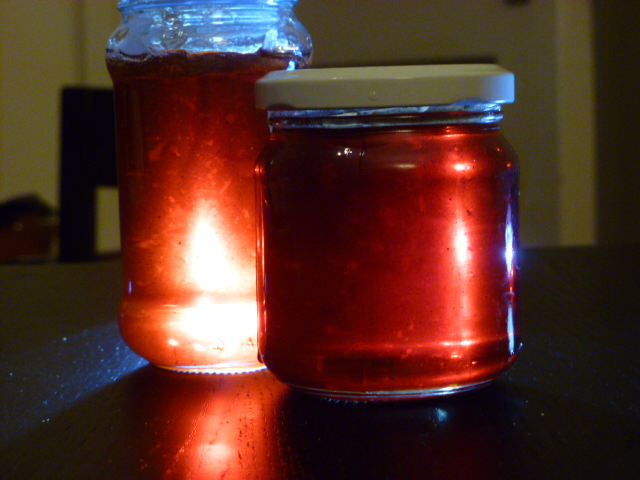
Quince Jelly

Not beige

Today I made the membrillo, as per the recipe. This too takes its time to reach the right colour, but when it does, it is a really thick paste, and has a grainy texture. I poured it into a roasting tin, but you could also use a swiss roll tin if you like it thinner.

I baked it in a low oven, but I should note that it still wasn’t entirely set, so I put it back in on low for a while.

Membrillo

The membrillo paste before it went in the oven

I cut this into two. The one half I have wrapped in greaseproof paper, and foil, and I will keep it somewhere cool and dark until it is required. The other half, I shall cut into squares, sprinkle in caster sugar and serve as a sweet at my upcoming party.
Leave a comment

Filed under Feast

Top Tips

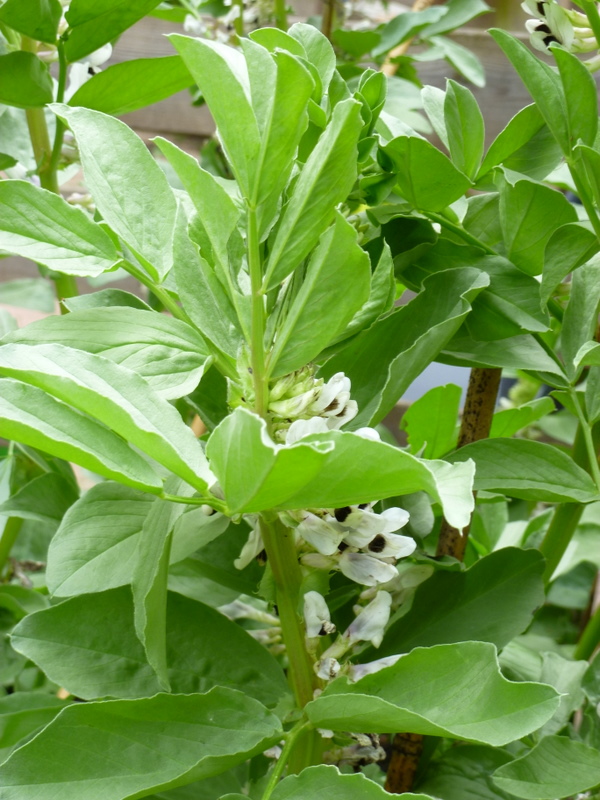
Broad Bean Plants

Better late than never

I got my broad beans in really late this year, through a mixture of snow and laziness. There was snow in both November and February, rendering the soil unworkable. However, since I love broad beans so much, I managed to shake myself, and get them planted, eventually.

Almost all gardeners will tell you to pinch out the tips of the beans once they get the first bean pods. This is to stop them getting taller, meaning that they concentrate their energy into beans. They also say it will help prevent blackfly infestations.

What a lot of them don’t tell you is that they also make a really delicious vegetable in their own right, with a subtle broad bean flavour.  You can have them steamed or quickly boiled. They don’t keep very well though, so they really are the gardener’s treat. This really is the best advert for growing your own, just so that you too can try this treat for yourself. They will even grow along the edge of your balcony in a deep window box – a pretty, edible, and practical windbreak.

Braod Bean Tips

Gardener's Delight, washed free of blackfly

I added mine to a risotto, following the same method as the one I gave in the masterclass the other day. I made the white risotto base, then added the tips, and some cooked, double-podded broad beans along with the last ladleful of stock. I used Crème fraîche instead of the butter at the end, along with some chopped dill. Then I served it all up with a nice green salad, which included some wild garlic leaves.

Risotto and salad

Tip Tops!

So lovely, light and fresh. Will you try to grow some just to see what you are missing out on?

Leave a comment

Filed under Farmed

Asparagus Soup

As a child, I didn’t eat many vegetables. As an adult, I eat many more, and I love to eat seasonally. This is why you will probably often hear me saying that such-and-such a vegetable is my favourite. It would probably be more accurate to say that such-and-such a vegetable is my favourite right now.

At the moment we are into the asparagus season, and it is cheap and plentiful. And right now, asparagus is my favourite vegetable.I eat it with eggs, in salads, on its own with butter, in risottos – you name it.

In general, the bottom end of the stalk becomes tough and woody, so it is best to cut, or snap it off. I really hate throwing food away, especially something as tasty as asparagus. So,  I decided to try to use these woody stalky bits up.

Soup is the obvious answer. First, I tried to blend it in a food processor, but this just resulted in smaller woody bits in the soup. I also have a food mill, and one day I tried it through that, and it turned out that the low tech version was the best, since the woody bits are not passed through the mill. I really recommend these – I picked mine up for a tenner back in the UK, and I use it weekly.

This year I planted my own asparagus, and freshly cut asparagus should not have the woody stalky bits. I wonder if this soup will continue to feature in my spring repertoire? I hope so, it really is good!

The following recipe varies in amounts, depending on how many stalks you have been saving in the fridge. The stalks will keep for up to 10 days (depending on age when you bought them, and the width of the stalks), so you can save them up from a couple of bunches to get a good amount, if you like.

Recipe: Asparagus Soup

Ingredients

1 chopped onion

1 tbsp olive oil

Asparagus stalk ends

Chicken or vegetable stock

Thyme

Crème fraiche (cream or milk would also work)

Method

Sweat the onion and thyme in the olive oil, until the onion is fairly soft, but not coloured.

Add the asparagus to the pan, and cook until it has turned a vibrant green

Add the stock. You need to allow enough stock to cover the vegetables in the pot by a couple of cm.

Bring to the boil, then simmer until the stalks are tender to the point of a knife. The time for this can be anything from 5 minutes for the really thin stalks, up to 20 minutes for the later season asparagus.

Take off the heat and allow to cool for 5-10 minutes. Then, pass through the food mill into a clean pan.

Add a little crème fraiche. Again, the amount you add will depend on the amount of soup that you have. Season with salt and pepper.

This soup can be served hot or cold, especially if you are having a really warm spring/ summer, like the one that we are having now.

If you are serving it cold, add a little water to thin it, allow to cool completely, then refrigerate for an hour or two. Garnish it with croutons, cooked asparagus tips, small dice of cucumber (seeded and peeled), or some of all three. A little chervil can be chopped and stirred through, or used as a garnish as well. Check for seasoning before serving, as cold soup can often need more seasoning that its hot counterpart.

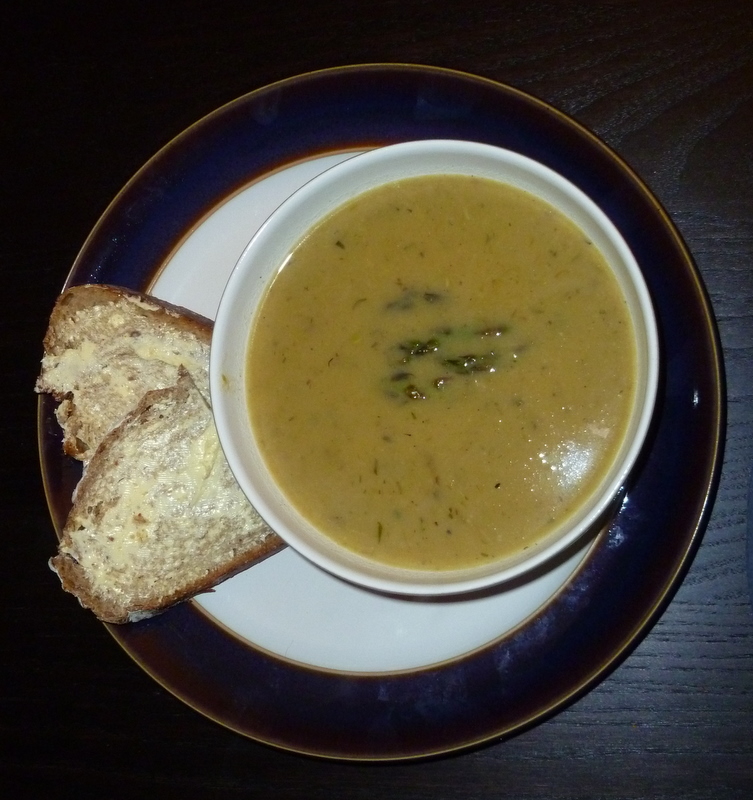
If you want to serve it hot, warm the soup gently, without boiling. The soup can be made ahead of time, and warmed through at a convenient time. Garnish with cooked asparagus tips, chervil, or a dollop or swirl of the crème fraiche. Serve with buttered brown, rye or sourdough bread. I prefer bread, as opposed to toast with the hot version of this soup.

Leave a comment

Filed under Feast