Tag Archives: Recipe

Green Bean Chutney: A Taste of My Childhood

Runner Beans, Unknown var

From One Generation to the Next

Every year I grow runner beans in my garden. I don’t know what variety they are, they were originally given to me by my father from seed that he saved from his garden. I have never bought runner beans, and subsequent generations of dad’s seeds have grown successfully across four different gardens/climates and in two different countries.

We always had runner beans, fresh from the garden, throughout the summer and early autumn months. I used to take them for granted, since they always came, no matter what the weather or growing conditions that year.

After I moved out of home, I only really got runner beans if I was visiting my parents. Back then, I tended to shop in supermarkets, and runner beans were not a popular supermarket choice, maybe because it is hard to get them to be completely uniform, like the Stepford style apples and tomatoes that they prefer to sell.

When I first started to get a veg box, I got some runners, to my delight. Just like Mum used to, I settled in to string and slice them. I was jolted by a powerful memory of Mum doing this, often in front of Last of the Summer Wine on a Sunday evening.

When large amounts of beans were being prepared, I always got a bit excited, because I knew that the next day she would make Green Bean Chutney.

Just as my Dad always grew our vegetables, Mum always made a lot of our food from scratch. Chutneys, pickles and jams were no exception. In fact, I didn’t have factory produced jam until I left home; and frankly, I found it wanting.

I have always loved Green Bean Chutney. I used to have it every day at school, and all of the other kids would say stuff like “eurgh, that’s gross” and “Why do you always have that yellow stuff in your sandwiches?”. I would smile at them, safe in the knowledge that they didn’t know what they were missing, and if they didn’t want to try any, then Mum would be less tempted to give some away.

Jars of Green Bean Chutney

Sandwich Filler

Now I am older, I make Green Bean Chutney for myself. The Big Guy is a total convert as well.

As you may have seen, I am a bit of a preserving addict, so I am always giving them as gifts to friends and relatives. Despite the fact that we grow extra runner beans, so that we can make this chutney, the Big Guy still severely rations the Green Bean, in order to keep more for himself.

If I am honest, I am a little loathe to give it away, too!

So, I thought that I would share the recipe for Green Bean Chutney with you, in the hope that you can make it for yourselves, and I get to keep all of the jars that I make!

So, here is my Mum’s Green Bean Chutney. She gave it to me, but I am not really sure where she got it from originally. Maybe she can let you know, by leaving her first ever blog comment – over to you Mum?

You can  also use French Beans in this recipe, or a mixture of both French and Runners. Next year, thanks to my Seedy Penpal, Charlotte, I am going to grow a few yard long beans too, so I shall be experimenting with those as well.

My bean harvest was a little late getting going this year, but hopefully you will still be able to find some beans to try it yourself.

Do  you have any food that evokes such strong childhood memories? I’d love to hear about them.
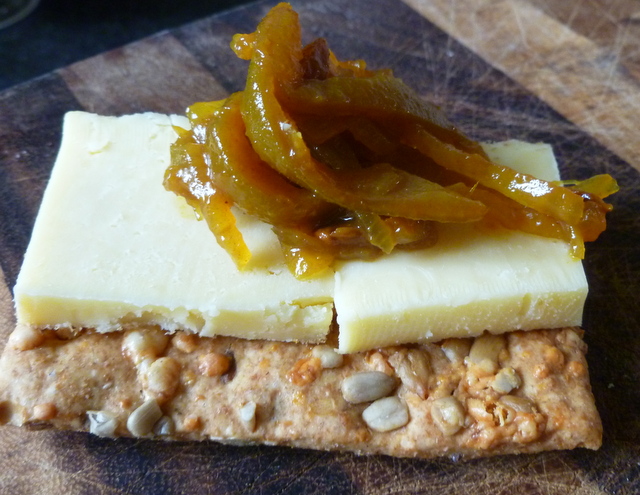
Green Bean Chutney, Cheese and Crackers

Super Match

Recipe: Green Bean Chutney

Ingredients

I have converted this recipe from imperial to metric

3-4 jam jars

700 g runner beans (or French or other green beans, or a mixture)

1 kg  onions

Cold water to cover

1 dstsp salt

350 g demerara sugar

600 ml malt vinegar (I can;t get malt vinegar over here, so I use 500 ml white wine vinegar and 100 ml balsamic)

1 dstsp turmeric

1 dstsp powdered English mustard

1 tbsp cornflour

Method

Sterilise the jam jars in a dishwasher, or wash them in hot water, dry them and leave them in a low oven while you make the chutney. Either way, they will need to be hot when you put the chutney in it.

String and slice the beans (or use a stringless variety), making sure that they are roughly the same size – this is especially important if you use a mix of bean varieties.

Peel and thinly slice the onions. Add them to a preserving pan (or a heavy-bottomed stainless steel pan) with the beans, cover them in water, and add the salt. Cook for about 10 minutes, or until tender.

Strain the water, and return the vegetables to the pan. Add half of the vinegar and the sugar. Cook for a further 10 minutes.

Mix together the cornflour, spices and the rest of the vinegar, and mix to make sure there are no lumps. Pour this into the pan, with the vegetables.

Bring the chutney back up to the boil, and hold it there for a few minutes, until the mixture thickens. You need some liquid though, because this will stop it drying out in the jars.

Fill the hot jars with the chutney. Then distribute the liquid between the jars, so that they are full to about 3 mm from the top.

Put a wax disc, wax side down, over the chutney, and seal it with cellophane. Don’t use a lid, the vinegar will corrode the metal, and may leave you exposed to some nasty microbial activity.

Don’t discard any excess liquid, it is great in salad dressings.

You need to leave the chutney for a week to allow it to meld and mellow.

This is a brilliant accompaniment to cheese, cold meats, salads, and is a particular marvel with jacket potatoes, and bubble and squeak.

UPDATE: In a very timely way, I found out that Susan at A Little Bit of Heaven on A Plate is running a Home Made and Well Preserved competition. So I thought that I would share my lovely childhood chutney there too, and maybe win some spices (fingers crossed).

37 Comments

Filed under Farmed

Red Lettuce Day

Thai Chicken, Mango and Noodle Salad

A spicy salad with a difference

Once a week, I volunteer at an Urbania Hoeve permaculture garden. It is great fun, and I am learning a lot. Another bonus is that I have been able to experience a number of different vegetables, as well as save the seeds from them to try them in my own garden.

As you can see from the salad photo, I have used nasturtium (leaves and flowers) in this salad. This is not new to me, I’ve been eating nasturtium for as long as I have been growing them.

Despite having called this post Red Lettuce Day, the two plants that I would like to talk about aren’t actually lettuces, but they are red, and plants that were new to me this year.

The first is Perilla, or Shiso (Perilla frutescens). Although I wasn’t aware of it, I have been looking for this plant since I went to Japan for work, and wanted to have a go at growing the fragrant leaf that you find in many of their broths and ramen. They translate it as morning glory, which I was very disappointed to find isn’t edible, after I had found and started to grow it.  Following a bit of a twitter storm earlier in the year, I found and grew the green version of this, and have been eating the red version from the permaculture garden.

I really love perilla in salads. It has a distinctive perfumed flavour, with a slight aniseed kick. It is a pretty strong herb, so you don’t need a lot of this to provide you with a lot of flavour. It is also good in broths and gravies, and is used a lot in pickles in Japanese cookery.

Orache (Atriplex hortensis) also comes in red and green varieties. You may be able to find the green version in the wild over here. In other temperate zones, it is possible to find it, but it is more likely to be a garden escapee. Like most wild greens, orache tastes very irony. It can be used anywhere that you would use spinach, raw or cooked. I have some seed saved, so I hope that I can grow some here too next year.

Both seem relatively easy to grow, but they need sun, so I can only grow them in a small part of my shady garden. I don’t mind, I’m looking to use them as part of a large mix in the suitable beds anyway, and I think they’ll be fine. I hope that more people will give them a go, I can recommend them.

This is an entry for the 52 Week Salad Challenge, where there has already been much discussion about red and green lettuces, and their attractiveness to slugs. I am not sure if these plants are particularly attractive to slugs in any case, but they are certainly both very tasty in my opinion!

I made up a Thai chicken and mango salad with my haul from the permaculture garden, and I used fresh coconut, which has just hit the markets around here.  I give the recipe below, but this is really easy to tweak if you don’t have your own permaculture garden to play in, or if you want a veggie version or whatever.

For example, you can substitute Thai (AKA holy basil) or even ordinary basil for the perilla; you can swap out the orache for spinach;  you can use cooked chicken without the marinade; or you can even leave it out if you would like. If you don’t have fresh coconut, use coconut flakes. It’s pretty versatile. The key components are really the dressing and the mango, with some contrasting salad flavours and crunch. Whatever salad leaves you choose will need to be robust enough to stand their own against the other strong flavours.

As always, this recipe serves 2 people, but is easily scalable.

Do you have any leaves you think would be good in this salad?

Recipe: Thai Chicken and Mango Salad

Ingredients

If using uncooked chicken:

4 chicken thighs, boned

3 tbsp oyster sauce

2 cloves garlic, crushed to a fine paste

5 cm knob of fresh ginger

½ tbsp light soft brown sugar (lichtbastaard suiker)

pinch chilli powder

If using cooked chicken: 

200 g cooked chicken, cut into bite sized chunks

For the salad:

200 g rice vermicelli noodles

150 g fresh or flaked coconut, cut in thin strips

50 g raw cashews, roughly chopped

1 mango (it can be green or ripe), diced

1 red pepper, diced

½ cucumber. diced

2 spring onions, finely sliced

200 g beansprouts, or other sprouted seeds

10-15 red perilla leaves

Bunch of red orache leaves

Bunch of nasturtium leaves

For the dressing:

3 tbsp fish sauce (optional)

1 tbsp soy sauce

Juice and zest of 1 lime

½ fresh red chilli, deseeded and finely diced, or a pinch of dried chilli flakes

Small amount of brown sugar to taste

Nasturtium flower to garnish (optional)

Method

If you are using uncooked chicken, cut down the thighs so that they are one flat piece. Mix together the marinade ingredients and coat the chicken pieces on all sides.

Roast off in a moderate oven (about 180°C) until the chicken is just cooked. Baste it with the marinade at points throughout the cooking time. Remove from the oven, and set aside

Cook the noodles according to the packet instructions, drain, and plunge into cold water, to stop them overcooking. Drain again.

Mix up the dressing, and add to the noodles.

Dry fry the coconut, until brown and toasted. Remove from the pan, then toast the nuts in the same way.

Toss together all the salad ingredients, except the leaves, and add to the noodles. Mix well.

If you are using the marinated chicken, cut it up into bite sized dice.

Toss the chicken and the leaves through the salad. Top each one with a nasturtium flower, and serve immediately.

This makes a filling and unusually tasty salad. Perfect as an evening meal.

4 Comments

Filed under Farmed

Garden Companions and a Lemony Salad

Foraging Spot, De Bretten, Netherlands

Pretend it’s a Salad!

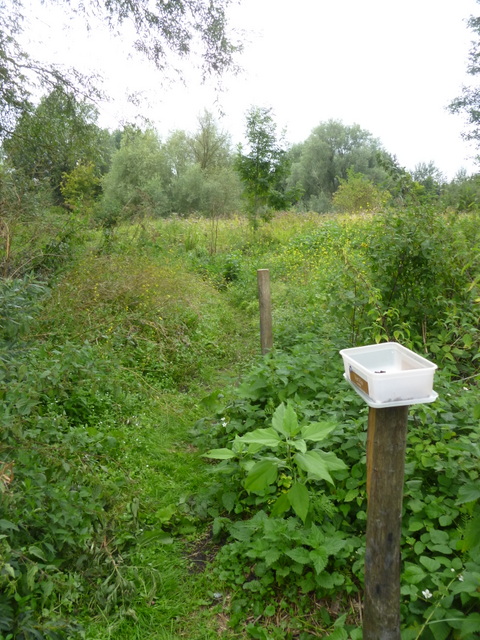
Well, it has been a little while since I posted, which I blame on having broken my camera. It also means that I am about to do something that you should never do on a food blog, and that is publish a post without a photo of the food. I did have a corker to share, but it is lost, so you will have to wait until next I make this recipe. In the meantime, please enjoy the view from one of my favourite foraging spots, complete with convenient resting place for my containers.

In this area, people have also planted a guerilla garden. It has been here as long as I have been coming, and probably longer. You may be able to make out Jerusalem artichoke in the picture, and there are potatoes, pumpkins and corn at various times of the year. There is also a lot of mint, which I think was planted initially, but the conditions in the Netherlands are perfect for this herb, and now it is running rampant.

I may have mentioned that we are trying to eat healthily but with all the flavour, and one of the salads that really fits the bill is fattoush. This is a Lebanese salad that uses sumac and lemon to give a really zingy dressing. I have been buying sumac, but I’m delighted to learn that you can actually forage for this plant. It is a native of North America, but apparently it has been a popular garden and municipal plant in the UK. I shall be looking out for it here too.

Despite trying conditions for many of our crops this year, our herbs have gone crazy. So, I didn’t need to forage the mint for this recipe, but at least I’d have known where to go. I don’t take any of the other plants in the guerilla garden, because they are clearly loved and cared for, but there is enough mint here to keep Cuba in mojitos for a decade.

I am also proud to say that this salad contained my first ever Little Gem lettuce.

Since my course back in March, I have been trying to garden according to permaculture principles.  Part of this is that you try to avoid bare soil in an effort to preserve the soil microbiology, take advantage of microclimates, and to prevent the army of local cats from pooing near your veg.

OK, that last one is more a principle of mine, since they used to see our dug over soil as a litter box, little*ahem* darlings. But it does adhere to the principles of  using and valuing diversity, letting a problem become the solution, and (literally) reducing waste 🙂

Based on companion planting charts that are widely available on the internet, I decided to underplant my asparagus with lettuces, marigolds, and chicory. These included red velvet, a leaf lettuce called “Australian Yellow”, a mixed salad, and the aforementioned Little Gems. Most of them have done well, apart from the red velvet. I think this is because a cat got to the spot that night I planted the seed.

So with parsley and mint in abundance and Little Gems and radish doing well, garden fattoush was the salad of choice. A lot of flavour, with the potential of foraging. Could you ask more from a salad?

I’d be really interested in hearing about other people’s efforts at companion planting. Do you have any particular favourites that grow well, or help against pests? Please do share them in the comments.

Recipe: Fattoush Salad

Ingredients

2 pita breads, diced

1 tsp oil for frying

2 Spring onions (or more if really like them), finely sliced

Zest and juice of one lemon

3-4 tbsp extra virgin olive oil

1 tsp sumac

200 g cherry tomatoes (or baby plums), halved

½ cucumber, chopped into large dice

small bunch radishes; roots quartered lengthways, and smaller leaves

2-3 Little Gem lettuces, leaves only, chopped in half

Large handful of flat leaf parsley, leaves whole and stalks finely chopped

Smaller handful of mint, leaves only, roughly chopped

Method

In a frying pan, heat a little oil until it is quite hot. Fry the diced pita breads until they are golden. You will need to stir them occasionally. Drain onto kitchen paper.

While the bread is frying, mix together the lemon juice and zest, the good olive oil, the sumac and the spring onion. Leave aside for a  few minutes to take the raw edge off the onion.

Combine the tomatoes, cucumber, salad leaves, herbs and the radish roots and leaves in a large bowl. Dress the salad with the dressing, and toss well.

Add the pita bread, stir briefly, and serve immediately.

Sounds appetising, doesn’t it? I’m sure you can picture this one without a photo.


19 Comments

Filed under Farmed

A Silky Soup for September

Spiced and Silken Roast Vegetable Soup

A Change in the Seasons

OK, so I was clearing out the fridge, but this is a great way to use the last tomatoes and aubergines of the season, and the first sweetcorn of the next one.

At the moment, we are trying to avoid calorific food, but I am determined that does not mean that we will miss out on flavour. This is easy when you can pack your salads and other dishes with loads of fresh herbs, but as we near the end of the herbs in the garden, I am looking to spices to plug the gap. And they are doing a great job.

My Sister just had her hen do, and I made everyone roasted aubergine with a chermoula spice rub. Partly because I was doing vegetarian, and also partly as part of my quest to make more middle eastern food.

When I found a couple of aubergines in the fridge, I initially thought I was going to make a chermoula and aubergine soup. When you roast or burn aubergine in its skin, it develops a lovely smoky, silky texture, as you can see from Baba Ganoush and similar dips. That was also going to give the soup a richness without the need for fat or cream, which is perfect for how I’m trying to eat at the moment.

As I kept poking, the fridge also relinquished some tomatoes and half a red pepper. In the spirit of not wasting food, I decided that they could go in the soup as well. And since I was already roasting the aubergines, I may as well roast these too, making the oven use more efficient, making it easier to peel the veg, and also to develop a bit of flavour, especially of the later developing vegetables that may not quite reach their full potential.

At this time of year, the sweetcorn are just appearing too. The Big Guy loves fresh corn, and we had a few cobs, though not yet from our garden. Since the soup was to be spicy and smoky, I didn’t want to just let the golden little kernels cook in the soup itself, I wanted them to add to the overall smoky flavour, so I decided to put a cob under the grill until the kernels were browned.

I had also intended to use some preserved lemons to add to the soup, in keeping with the chermoula idea. I was going to chop them fine, and use them to garnish the soup, but when I tasted it, it definitely didn’t need a sour salty note. Instead, I opted for a spoonful of yoghurt, to counter the fact that the chilli I had used was much hotter than expected!

This soup is great for the start of September, as the summer turns to autumn, and the nights get that bit colder. And it turns out that aubergines are great to add creaminess to a soup without the need for dairy too.

Recipe: Spiced and Silken Roast Vegetable Soup

Ingredients

2 medium aubergines

½ red pepper

6-8 tomatoes

4 cloves of garlic, still in their skins

salt and pepper

2 tbsp olive or vegetable oil

1 cob of corn, with the husk removed

1 medium onion, chopped

1 tsp cumin seeds

1 red chilli, deseeded and chopped

1 tsp ground coriander

750 ml vegetable stock

2 tbsp natural yoghurt

Method

Heat the oven to 200 °C

Cut the aubergine and the tomatoes in half. Arrange the aubergines, pepper and tomatoes in an ovenproof dish, and season with the salt and pepper. Slosh over 1 tbsp of the oil, and toss the veg to coat with the oil. You want the aubergine and tomato cut side up; but the pepper skin side up, because you want it to char.

Put in the oven to roast for 30-40 minutes, until the vegetables have taken on a bit of colour. After about 15 minutes, add the garlic cloves, so that they don’t burn to a crisp. You want them to be golden and soft, not crunchy.

Once the vegetables are roasted, put the grill on high, and put the corn underneath it. You will need to turn it as it cooks. If you have a separate grill, which I don’t, you can do this at the same time, it may take a while.

Meanwhile, dry fry the cumin until it is fragrant, then grind to a fine powder in a pestle and mortar, or a spice grinder.

Sweat the onion in the rest of the oil, until translucent. Add the chilli and cook for another minute on a gentle heat, then add the spices, and just cook through.

Squeeze the garlic from their skins, and add to the spice and onion. Allow to sweat on a gentle heat while you scrape the creamy flesh from the aubergine. Add this to the saucepan, and cook for 2-3 minutes to combine the flavour.

The tomato and pepper should also be really easy to skin as well by now. Mine just slipped off. Discard the skins, as these are indigestible, and hopefully the pepper skin will have blackened and blistered, so will be bitter and unpleasant anyway.

Add the flesh of the tomatoes and the pepper, along with any juices in the roasting dish to the saucepan. Add the stock, and bring to the boil. Cover the pan and simmer for about 15 minutes.

Blend the soup with an immersion blender or a food processor, until it is smooth and rich.

Run a knife down the corn, to remove the kernels, which should be brown and succulent, not black.

Divide the soup between 2 bowls, add a tablespoon of yoghurt to each, and sprinkle the corn kernels over the top.

Perfect to come home to after a day’s foraging, whether that be outside or in the fridge!

14 Comments

Filed under Feast

Simple Ways to Avoid Onion Breath

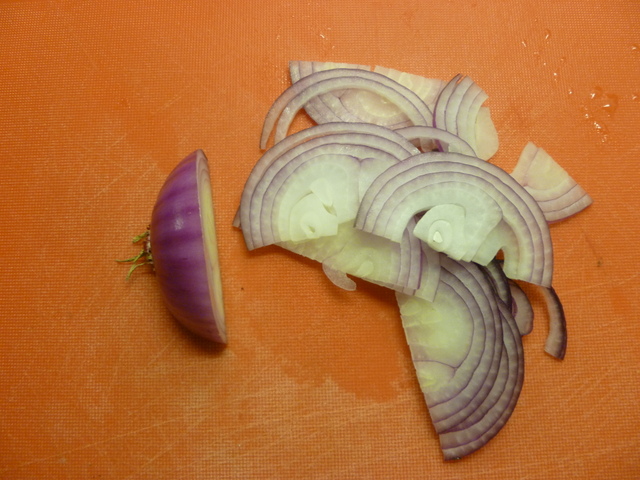
Sliced Red Onion

Not Your Lunch Time Friend

Raw onion: a lot like Marmite, it is a very divisive ingredient in any dish. Alliums in general are used to impart flavour to a wide range of food, both raw and cooked, but they are pungent and packed with sulphur compounds that make you cry and give you bad breath.

There is a growing trend amongst lunch venues to put red onion in a variety of salads and sandwiches almost everywhere I have been or travelled to. Why do they do this? Apart from making me really thirsty, raw onions are a little antisocial, especially if you have to return to breathe onion fumes all over your colleagues, and anyone that you happen to be having a meeting with that afternoon. I also think it is really lazy. There are several easy ways to avoid this, without compromising on flavour or crunch.

If I am going to be using shallots in a salad dressing, or taboulleh, I address the problem by soaking them in the vinegar of the dressing before I add the rest of the ingredients. A good 10 minutes in the vinegar will reduce the affect of sulphur compounds, as well as develop the flavour.

Similarly, if I am going to make guacamole, a 10 minute pre-soak of the onion in the lime juice sorts out the problem of onion breath. It really isn’t difficult, and in reality doesn’t add loads of time to your prep, you can do it first, then get on with another element of your salad.

I have been eating a lot of salads, not just because of the 52 Week Salad Challenge, but also because they are healthy, low in fat and they are a great way of tasting the best of the seasons.

In the past, I have omitted the raw onion in a salad, but there are a couple that really are made better by the crunch and flavour of onion, but I don’t benefit from the unquenchable thirst I get when I’ve eaten them in any amount.

Panzanella is one of my favourite salads, but it loses a lot by leaving out the onion. Keeping the onion slices as crunchy as possible is also integral to the necessary contrasts of the dish too. For this reason, soaking it in the vinegar is not the best way forward, as this will reduce the crispness of the bite a little.

I am sharing my recipe for panzanella, because it contains the easiest tip for avoiding onion breath, it’s a fantastic salad, and it uses up leftover bread. What’s not to like?

Panzanella

Scented With Summer, Not Onions

Recipe: Panzanella

Ingredients

This will serve two people on its own, or 5 as a side dish

4 thick slices of stale bread, cut into large cubes

400 g tomatoes, different varieties, if you can get hold of them. They need to be ripe, and at room temperature.

½ cucumber, in large dice

1 red onion, finely sliced

3 tbsp extra virgin olive oil

1 tbsp blackberry vinegar, or red wine vinegar if you don’t have blackberry

1 tbsp capers

6-8 anchovy fillets (optional)

salt and pepper

15-20 basil leaves

Method

If the bread you are using is not stale (although this salad is much better with stale bread), you can dry out the bread in a low oven, or one that has been turned off from cooking something else.

Chop and slice the tomatoes. If you have pretty heirloom varieties, slice some of these and set aside as a decorative touch later. I was using a mix of varieties, which included marmande, plum, tigerella and black Russian. I put the red ones into the salad, and sliced the tigerella and black Russian for the plate.

Combine the cucumber, tomatoes and bread in a large bowl, and set aside.

Cover the onion slices in boiling water, and leave them there for about 2-3 minutes. This removes the sulphur from the onion, but does not cook it, so you still get the crunch, but none of the bad breath. Drain the onion, and leave to drip while you make the dressing.

Whisk together the oil, vinegar, capers and the chopped anchovy fillets. Adjust the acidity or oil to taste, but bear in mind that the tomatoes are also going to add acidity. Season well with salt and pepper.

Add the onions and the dressing to the salad, and mix well. Set aside to allow the flavours to develop for at least a couple of hours, or overnight in the fridge, if you can, but serve it at room temperature.

Just before you serve, roughly tear the basil leaves and mix them in.

If you like, you can add punchy salad leaves, like spinach, mizuna and rocket to add extra bulk. Do this when you add the basil, or the dressing will cook them.

This is a great salad to serve at a barbecue, or summer picnic, or as a side dish. It is also the tastiest way to use up leftover bread.

4 Comments

Filed under Farmed

Gluten Free Cake

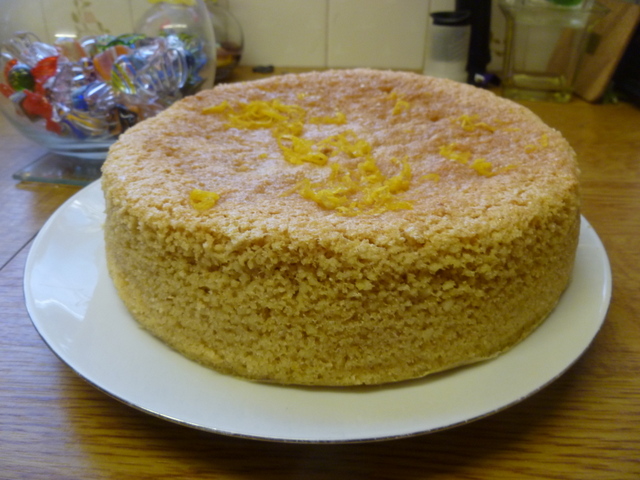
Lemon Torte

A Vote of Thanks

Like many people, I am fortunate enough not to have food allergies, so my cooking can revolve around whatever I fancy, and usually does. So, it is not often that you will see foods for restricted diets on these pages. However, I am also very careful to ensure that I cater for friends who are restricted in what they eat either by choice or for health reasons, and that when I do make special food that it has as much flavour as possible. I want people to feel that they have feasted rather than been subjected to bland food made with little imagination.

This cake is great for people who cannot eat gluten, as it is made entirely from ground almonds and egg. I have a couple of friends for whom this cake, or a variation of it, gets made regularly.

I always use whole almonds, and grind them up myself in my food processor. That way, you can make the meal as fine or as rustic as you like. I usually leave the skins on the almonds, because it does add to the flavour, and I like it that way.

Most recently, I made this cake for a friend of my Mum’s. They met in a maternity ward when they were having their eldest offspring (me, in Mum’s case), so I guess that you could say that I have known her for my whole life. She recently did me a huge favour, by taking up a bridesmaid’s dress that I am to wear at my Sister’s forthcoming wedding, and I wanted a way to thank her.

She has a restricted diet, and cannot eat flour, sugar, chocolate, or too much fibre. I know that she loves sweet things, however, and I thought that this would be the ideal cake for her needs. And what better way to say thank you than to show someone that you have thought of them?

In some ways this is a tried and tested recipe, but I needed to use a sweetener, and reduce the amount I used. I also removed the almond skins, by soaking them in boiling water, and popping them out of their skins once the water had cooled enough for me to put a hand in.

I was pleased with the result, and I thought that I would share this recipe with you, in case you want to bake something thoughtful for a friend with similar restrictions. After all dietary restrictions should not mean repetitive and restrictive diets.

Mum even liked this cake, despite not liking almonds. Mum’s friend was delighted with both the thought and the flavour.

Update: My friend tried this cake with ground almonds, and has pointed out that the amount needs adjusting for the much finer variety. I have reflected this in the ingredients list. Thanks to Julie for giving me some valuable feedback on my recipe, and for testing a new amount.

Recipe: Lemon Torte

Ingredients

300 g whole almonds (or 100 g ground almonds, if using them)

4 eggs, separated

100 g sugar substitute. I used Half Spoon by Tate and Lyle, which does contain some glucose, you may need a different one.

Zest of 1 lemon

1 tsp cinnamon

1 tsp ground ginger

Zest and juice of 1 lemon

1 tbsp sugar substitute

Method:

Heat the oven to 160°C.

Line a 20 cm spring form cake tin with baking paper. You don’t need to line the sides if you don’t want to, but make sure you grease them if you don’t choose to line them. You should line the base, or you will have to serve it on the metal tin base, which isn’t a good look

Remove the almond skins, by soaking them in boiling water. Once the water is cool enough to get your hand in, they should pop out of their skins easily if you apply a little squeeze. Or you can buy blanched almonds, and skip this step altogether.

I personally prefer the cake to have a bit of texture, so I grind up the almonds myself by pulsing them in a food processor, until they are a coarse meal. You can also buy ground almonds, which are much finer. Use these if you like.

Beat together the egg yolks, lemon zest and the sugar substitute until pale and creamy. Add the ground up almonds, cinnamon and ginger and mix in well.

In a clean bowl, whisk up the egg whites until they form stiff peaks.

Add a couple of tablespoons of the egg white to the almond and egg mix, and stir in well. This will loosen the nut mix slightly, so that you can add the egg white next, fold it gently in with a metal spoon, and not lose all of the air that you have painstakingly just whipped into it.

As soon as there are no streaks of egg white left, pour the cake batter into the tin, and bake it in the centre of the warm oven for about an hour.

The cake is done when a skewer poked into its centre comes out clean. Leave it to cool in the tin.

While the torte is still warm, make a sugar syrup by dissolving a tablespoon of sugar substitute into the zest and juice of a lemon, over a low heat. Pierce the cake in several places with the same skewer you used to test it, and then pour the syrup over the whole cake. The holes you have just made will help it to soak in.

Serve on its own, or with a little natural yoghurt. And always with a lot of thanks.

6 Comments

Filed under Feast

When Life Hands You a Lamb Rack

Herb Crusted Rack of Lamb

Pretty as a Mind’s Eye Picture

The other day the Big Guy was sent out for some chops to go with second helpings of the Jansson’s Frestelse. Instead, he came home with a beautiful French-trimmed rack of lamb. Of course, it was far too good to for the more rustic plans I had had for the chops.

I knew it would get a lovely herb crust, and be cooked medium rare, so that it was still juicy and melt-in-your-mouth tender. When I am thinking about a dish, I can often clearly visualise the food,  including exact colours and shades.  I get the best results when I have a really clear picture, and if I can get the dish to look as close to the mental picture as I can. I mentioned this to a friend once, and she seemed pretty surprised that my planning was so visual. I’m not sure if that is because it struck her as an odd method, or if it is because I am so linear in how I work in many other aspects of my life. For me it is natural, and obvious, since you eat with your eyes first. How do you develop a dish, or conceptualise it?

In my head, the crust of this dish was slightly darker than with breadcrumbs alone. I wanted something suitably autumnal, to go with the potatoes. I had initially thought to have chilli and coriander, but this differed significantly from my mental picture.

Then I realised that the colour was cumin. This brown, unassuming little seed would be fantastic in my crust, and it would be the right colour. So I settled upon cumin, rosemary and thyme for the autumnal flavour, and parsley for the greenness.

All good meat needs browning, because it loses so much flavour without the Maillard reaction to kick start the process, and add essential umami. Luckily, this also creates the perfect conditions to make a delicious gravy, or a sauce.

My vision was not of thick, plentiful gravy; instead, I made a fairly thin red wine sauce. I guess if it were served in a restaurant, they might call this a Jus. But it was just the Big Guy and me for dinner, so we didn’t need that level of formality.

I made a little too much of the crust, but that was fine, since you can sprinkle it on other dishes, and freezes well. I’m thinking I might top a stew with it, when next I make one. What do you think I should do with it?

Recipe: Herb Crusted Rack of Lamb with a Red Wine Sauce

Ingredients

For the Lamb:

1 tsp cumin seeds

40 g fresh breadcrumbs

3-4 sprigs thyme, leaves only

2 sprigs rosemary, leaves only, roughly chopped

Small bunch parsley, roughly chopped

Oil to moisten

1 French-trimmed rack of lamb allowing three cutlets per person

A little oil for frying

Dijon or French mustard for brushing

For the Sauce:

Trimmings from the lamb rack

Trimmings from an onion and a carrot if you keep a stock drawer or half of each, sliced

Splash of red wine

1 tbsp elderberry or redcurrant jelly

100 ml of stock per person

Method

Heat the oven to 220°C.

Toast the cumin in a dry frying pan until the scent fills the air above the cooker. Be careful not to burn it. Grind it to a fine powder in a pestle and mortar.

Make the crust. I used the end of an old piece of bread, and made fresh breadcrumbs by blitzing them in my food processor, until they were fine. I also often have breadcrumbs made this way in the freezer, because I won’t chuck something out if I can use it as an ingredient.

Once you have fine breadcrumbs, add the herbs and cumin and give it another quick blitz to blend it. Slowly add olive oil until the mixture comes together as a thick paste.

The lamb is likely to have a little fat and a sinew along one side. You can trim the fat, but leave a little around the bone, for flavour. The sinew must be removed, as this is tough. Don’t throw it away, It will help you make a tasty sauce later.

Put foil over the bones of the rack to prevent them from burning in the oven. Brown the meat in a hot frying pan with a little butter, to get the Maillard’s reactions going.

Once the lamb is browned on all sides, brush it with the mustard, giving an even coating. Put the breadcrumb crust in a shallow dish, and press the lamb into the breadcrumbs on all sides. Pat some breadcrumbs in, to ensure an even coating.

Put the meat into the hot oven for about 10 minutes if you want medium, turning once so that the crust browns on both sides. If you prefer your meat well done, then cook for up to 14 minutes, depending on the size. Once it is done to your liking, remove the meat from the oven, cover it in foil, and allow to rest for five minutes.

Make the sauce while the lamb is in the oven. In the same pan that you browned the meat in, brown the sinew and trimmings, with the onion and carrots. Don’t add any more oil to the pan. Once the vegetables have browned, but not burnt, deglaze the pan with the red wine. You really don’t need more than a splash. I do the Nigella trick of freezing any wine left in a bottle as ice cubes, and only used one, whereas I often use 3-4. Cook the wine out for a couple of minutes, then add the stock. Cook the sauce on a fairly high heat for about 5 minutes. Add the jelly, and cook until the jelly has dissolved.

Strain the sauce through a sieve. Remove the foil from the bones of the rack. Slice the rested meat into cutlets and serve with the sauce.

Leave a comment

Filed under Feast

I Don’t Know Who Jansson Was, But This Sure Is Tempting

Jansson's Frestelse

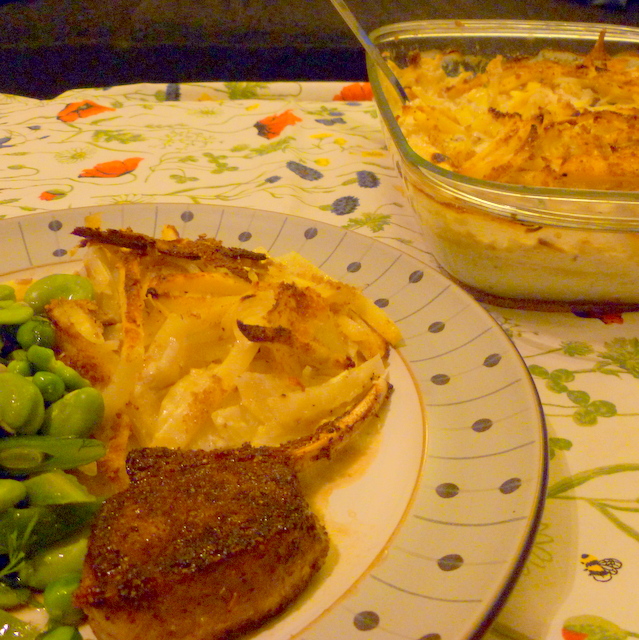
Jansson’s Frestelse

The weather is changeable again, and is blowing hot and cold. You can expect to see a much more eclectic mix on the blog of salads and more autumnal fare, while we wait for the season to make its mind up.

It has also shown me that the lighting in my living room lends my photographs an odd yellow tinge, now that it is getting darker earlier. Until I can be organised enough to make all my food in the day, I am going to have to try not to take photos in here.

Yesterday was a cooler day, and thoughts turned to comfort food for other reasons too. I have been thinking pretty hard about potatoes and cream. This means one thing, a traditional Swedish dish, called Jansson’s Frestelse, or Jansson’s Temptation. This is a lovely gratin of potato and cream, with the surprising, but brilliant addition of a little anchovy.

Swedes actually call a sweet preserved sprat ‘ansjovis’, so the Temptation will be slightly different. I haven’t found them outside of Sweden, so I use ordinary common or garden anchovy, preserved in oil.  And actually, the salty little things add a really unctuous quality, I think they are worth it.

You can make the gratin vegetarian by omitting the anchovy, but only do this for the vegetarians in your life. If you are one of these people who insist thy don’t like anchovy, and will remove them from pizza, I promise you will not notice them, as they will melt into the dish, but they add so much in the way of flavour.

I road tested this once, at one of the International dinners. I made two versions of the dish, one with anchovies and one without. The one with went quickly; we were eating the one without for the next few days.

I served it with some garden beans, and a lamb chop that had been rubbed with  Ras el Hanout, and pan fried to medium rare. It was an amazing meal, for little effort.

This is a very simple dish, and so good in colder weather. It is also an amazing alternative to mash. Give it a try.

Recipe: Jansson’s Frestelse (Temptation)

Ingredients

800 g waxy potatoes

1 onion

150 ml cream

150 ml milk

8-10 anchovy fillets

1/2 tbsp anchovy oil

Salt and pepper

Some breadcrumbs for scattering (optional)

Method

Preheat the oven to 180°C.

Cut the potato into thin matchsticks. It is easiest to use a mandoline, or you can get an attachment for some food processors. If you have neither, cut the matchsticks with a knife. This will give a larger surface area, and produce brilliant crunchy and soft textures, which improves the dish, so do take the time, even though it is a pain. This should be the spur for you to buy a mandoline. They aren’t all that expensive, and this is the second recipe in a week in which I’ve used one. As long as you keep your fingers clear, they are great, and this is coming from the woman who hates gadgets!

Slice the onion into thin half moons, and chop up the anchovy fillets.

Butter an oven proof dish, or roasting tin. Then you need to layer the dish. Start with a thin layer of onion, and season with salt and pepper. Next add a thick layer of potato, then a little anchovy. Continue to layer up in this order, but make sure that you finish with a layer of potato. Give it one last season with some salt and pepper.

Mix the cream, milk and anchovy oil in a jug. Pour half over the potato in the baking dish, and sprinkle over the breadcrumbs, if you are using some. They should be scant, they don’t need to cover the dish.

Put it in the oven for half an hour, then add the rest of the cream and  oil. Cook for a further 15 minutes, until the top is crunchy, and the potatoes are cooked through.

This is great the first day, and amazing reheated for leftovers. If you have enough left to reheat, you might want to cover it with some foil as it heats up, so that the lovely crust doesn’t burn.

2 Comments

Filed under Feast

Of Gluts and Gluttony

Courgette & tomato "Pasta"

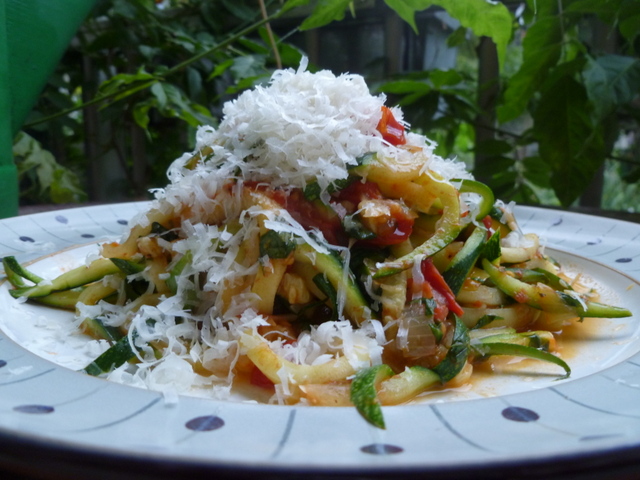
Courgetti Spaghetti

Have you ever planted too many courgettes, or even had an exceptional year, and not known what to do with your excess? I’m sure that this has happened at some time to most gardeners, and you have been desperately trying to give them away to friends, relatives, passing students, and anyone who knocks at the door. Not to mention trying to pickle, grate or shove them into fritters, soups, salads, stews, cakes and on your breakfast.

This year, many of the courgettes seem to have got off to a very slow start, due to the weather, but we are now finally starting to see them take off.

This is a recipe that I use both to use up excess courgettes, and also because it is a tasty, and unusual take on a ratatouille.  It is also a low carb alternative to pasta, as well as being a quick and easy supper.

I have made this for many years. Sometimes, I make it even lighter, by keeping the cherry tomatoes whole, leaving out the onion, and grating in some lemon zest. I find this version needs a little more parmesan, and that you need to mix this in over the hob.

This courgette pasta is actually a version of Pasta Neapolitan.Using the courgette as pasta is also a nice alternative with many other pasta sauces – I have also tried it with al’arrabiata and puttanesca to great effect, but I also imagine it would be good with pesto, carbonara, mushroom-based sauces, and even bolognese, if you are careful not to add too much liquid  to the sauce.

I like to use herbs liberally in this dish, for an extra fresh kick. Always thyme, and I like to add oregano. Rosemary or basil would also work well. Play around with it, and see what you like best.

Simple & in Season Blog Badge

I am entering this into Simple an in Season for August, hosted by Ren of Fabulicious Food. There is nothing more seasonal than using a glut of your vegetables, and this dish really couldn’t be simpler.

If you do try this recipe, please leave me a comment and let me know which herbs you used, I’m always interested to hear what people have done with my recipes, and learn new variations.

Recipe: Courgetti Spaghetti

Ingredients

1 Medium onion, finely diced

A Little olive oil for frying

2 Cloves garlic, crushed to a paste

4-5 Sprigs thyme, leaves only

200 g Cherry tomatoes, halved

2 Courgettes

A little lemon juice

2 Large sprigs oregano, leaves only, finely chopped

Salt and pepper to taste

A little freshly grated parmesan cheese to serve

Method

Sweat the onion off in a little olive oil, until the onion pieces are translucent. Add the garlic and thyme and cook out for a minute.

Add the cherry tomatoes, and cover the pan, to encourage the tomatoes to break down and cook out. Once the tomatoes have broken down a bit, uncover the pan, and allow to cook down on a low heat.

Top and tail the courgettes. Using a mandoline, and being careful of your fingers, make juliennes of the entire length of the courgette, to resemble spaghetti. You can julienne them by hand if you don’t have a mandoline, but this is time-consuming. Instead, take a vegetable peeler and peel the courgette lengthways to give you thin papardelle sized strips.

Cover the courgette strips with cold water with a little lemon juice in. This will stop the courgette from browning, while the sauce  cooks down.

When the sauce has been cooing for at least 15 minutes, and has thickened a bit, blanch the courgette strips in boiling salted water for 2 minutes. You want the courgette to retain some bite, but take the raw edge off. Drain well, and leave in a colander, for at least 10 minutes. You can squeeze a splash more lemon juice over them to prevent browning.

Because the courgette is much more watery than normal pasta, you want to cook the sauce down until it is fairly thick, otherwise the courgette will flood the sauce and dilute it.

When the sauce is almost too thick, add the oregano and mix through. Continue to cook on a low heat, and taste. You can add a little sugar (less than ¼ tsp) if you think you need a little more of the tomato flavour to come through. If you use very ripe tomatoes, you should not need this.

Add te well-drained courgette to the sauce, over the heat. You just want to combine the sauce and the courgette. The courgette is likely to start giving off water, so keep the heat on low while you mix  it all in, and season it to taste. Remove from the heat, and serve immediately, with a little parmesan cheese. Or leave the cheese off, for a simple, seasonal, vegan supper.

7 Comments

Filed under Farmed

Fairies That Can Really Pack A Punch

Marinated Tinkerbell Pepper Salad

Fairy Salad

I recently got hold of some small Tinkerbell Peppers, of assorted colours. They are like bell peppers, but smaller. They are officially a dwarf sweet pepper, but it has given me some ideas for what to call those that I grow, which sometimes turn out not to reach their full size!

I jest. I saved the seed, and I’ll be planting some of these to see if I can grow them next year. We’ll see how successful I am. I hope they’re not F1 hybrids.

Tinkerbell Peppers in Perspective

Fairy-Sized

I recommend this variety, they are small, but perfectly formed, and have quite a lot of flesh for such small peppers, and they have much better flavour than the greenhouse varieties that we get from supermarkets. They would be great for stuffing to use as canapés, on the barbecue or even simply in salads.

I always knew I was going to marinate these peppers, which I often do to larger varieties, to serve with homemade burgers and veggie burgers at barbecues. At the moment, I am also trying to find ways of injecting a lot of flavour into salads, without adding too much by way of fat (more on that soon).

I also have some very good smoked Maldon sea salt, which complements the smokiness of the charred peppers perfectly. I usually char the peppers on my hob, but these were tiny little things, and I wanted to add to the salad by charring some ciabatta, so I used my griddle pan. A fairly recently lit barbecue would also be a great way to char the peppers, and the bread can char just before you serve it. The delicate smoke of the salt enhanced the smoky flavour of the peppers.

It struck me that I could use the peppers and the marinade to dress a nice salad. However, the salad would have to stand up to the punchy marinade, so a normal butterhead lettuce wouldn’t cut it (and this would definitely be no place for an Iceberg). I think any of the mustard greens would be suitable, as would watercress, and some of the foraged greens that are abundant at the minute (e.g. wood sorrel, sorrel, fat hen, chickweed). I had rocket, chickweed and parsley in the garden, so I used those. I bulked it up with some baby spinach. The iron and peppery flavours were just what was needed.

I have also found apple mint and sumac great for adding a lot of flavour to salad leaves, without resorting to cheeses and too much dressing.  If you have any other tips for creating good flavours, I’d love to hear them.

This entry is part of the 52 Week Salad Challenge, where they are currently discussing pests. I know Michelle would love to hear from you if you have anything to add about the bane of slugs or other nuisances.

Recipe: Smoky Tinkerbell Pepper Salad

Ingredients

For the marinated peppers:

5-6 Tinkerbell peppers (or one or two large ones)

A little oil for the griddle pan

2 tbsp extra virgin olive oil

1/2 tbsp blackberry vinegar (or sherry or red wine vinegar will work, even balsamic if you have to)

1 clove garlic, very finely sliced

Small pinch of dried chilli flakes

Good pinch of smoked salt (or normal sea salt)

Black pepper to taste

For the salad:

4 thick slices of ciabatta

A little extra virgin olive oil

A bunch of rocket

A large handful of baby spinach

Bunch of chickweed, chopped if the stalks are long

Bunch of parsley, leaves only

¼ cucumber, diced

8-10 cherry tomatoes, halved

Method

Heat a little oil in the griddle pan.

Halve and deseed the peppers. Put skin-side down in the hot pan, and leave until the skin chars and blisters. You may need to press them down a little on the rounded bits to get the skin to char evenly. Don’t worry that the skins go black.

When the skins are blackened and blistered all over, place them in a plastic bag, a bowl covered with cling film, or in an airtight container, and seal. Allow to cool for 5 or so minutes, when you will be able to rub the skins off easily.

In another airtight container mix a dressing of the extra virgin olive oil, the vinegar, garlic, chilli flakes, the salt and a little pepper. The acidity of a dressing tends to be a matter of taste, so adjust this to your liking.

While the skinned pepper halves are still warm, add them to the marinade, cover, and set aside for a while – at least half an hour – to allow the flavours to mingle. At this stage, you can use the marinade peppers as a side dish or relish too, if you like.

Drizzle the ciabatta slices with some olive oil, and put in the warm griddle pan. You should be able to hear it sizzle, as you put them in. You want a nice striped toast to the bread, so once it is in, resist the temptation to keep moving and checking it.

I used ciabatta rolls, cut in half, so I only toasted the cut side. Leave this for at least 3 minutes, until you can smell the bread toasting. If you are using bread slices, then turn it over, and char the other side, again resisting temptation to move it around. The second side will need slightly less time. Leave to cool slightly.

Meanwhile wash the salad leaves and prepare the cucumber and tomatoes. When the bread is ready, dress the salad in the peppers and marinade, tossing to mix it well.

Serve the salad over the toasted bread, and pour over any remaining marinade.

You will have a smoky, hearty salad, that does not leave you wanting. The marinated peppers may have a fairy’s name, but they really do have a giant flavour.

2 Comments

Filed under Farmed, Feast