Category Archives: Feast

Gluten Free Cake

Lemon Torte

A Vote of Thanks

Like many people, I am fortunate enough not to have food allergies, so my cooking can revolve around whatever I fancy, and usually does. So, it is not often that you will see foods for restricted diets on these pages. However, I am also very careful to ensure that I cater for friends who are restricted in what they eat either by choice or for health reasons, and that when I do make special food that it has as much flavour as possible. I want people to feel that they have feasted rather than been subjected to bland food made with little imagination.

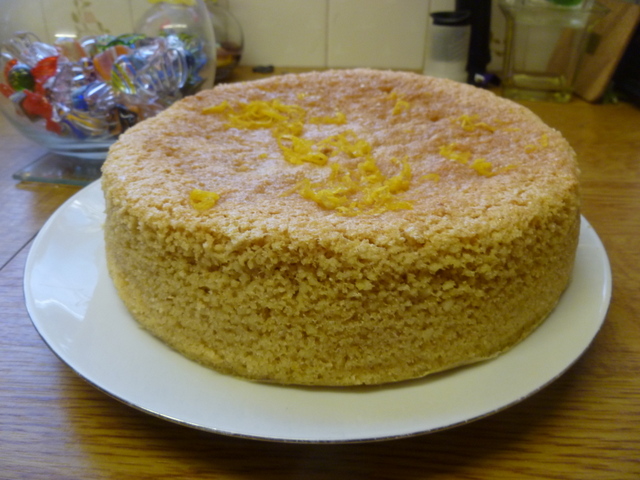
This cake is great for people who cannot eat gluten, as it is made entirely from ground almonds and egg. I have a couple of friends for whom this cake, or a variation of it, gets made regularly.

I always use whole almonds, and grind them up myself in my food processor. That way, you can make the meal as fine or as rustic as you like. I usually leave the skins on the almonds, because it does add to the flavour, and I like it that way.

Most recently, I made this cake for a friend of my Mum’s. They met in a maternity ward when they were having their eldest offspring (me, in Mum’s case), so I guess that you could say that I have known her for my whole life. She recently did me a huge favour, by taking up a bridesmaid’s dress that I am to wear at my Sister’s forthcoming wedding, and I wanted a way to thank her.

She has a restricted diet, and cannot eat flour, sugar, chocolate, or too much fibre. I know that she loves sweet things, however, and I thought that this would be the ideal cake for her needs. And what better way to say thank you than to show someone that you have thought of them?

In some ways this is a tried and tested recipe, but I needed to use a sweetener, and reduce the amount I used. I also removed the almond skins, by soaking them in boiling water, and popping them out of their skins once the water had cooled enough for me to put a hand in.

I was pleased with the result, and I thought that I would share this recipe with you, in case you want to bake something thoughtful for a friend with similar restrictions. After all dietary restrictions should not mean repetitive and restrictive diets.

Mum even liked this cake, despite not liking almonds. Mum’s friend was delighted with both the thought and the flavour.

Update: My friend tried this cake with ground almonds, and has pointed out that the amount needs adjusting for the much finer variety. I have reflected this in the ingredients list. Thanks to Julie for giving me some valuable feedback on my recipe, and for testing a new amount.

Recipe: Lemon Torte

Ingredients

300 g whole almonds (or 100 g ground almonds, if using them)

4 eggs, separated

100 g sugar substitute. I used Half Spoon by Tate and Lyle, which does contain some glucose, you may need a different one.

Zest of 1 lemon

1 tsp cinnamon

1 tsp ground ginger

Zest and juice of 1 lemon

1 tbsp sugar substitute

Method:

Heat the oven to 160°C.

Line a 20 cm spring form cake tin with baking paper. You don’t need to line the sides if you don’t want to, but make sure you grease them if you don’t choose to line them. You should line the base, or you will have to serve it on the metal tin base, which isn’t a good look

Remove the almond skins, by soaking them in boiling water. Once the water is cool enough to get your hand in, they should pop out of their skins easily if you apply a little squeeze. Or you can buy blanched almonds, and skip this step altogether.

I personally prefer the cake to have a bit of texture, so I grind up the almonds myself by pulsing them in a food processor, until they are a coarse meal. You can also buy ground almonds, which are much finer. Use these if you like.

Beat together the egg yolks, lemon zest and the sugar substitute until pale and creamy. Add the ground up almonds, cinnamon and ginger and mix in well.

In a clean bowl, whisk up the egg whites until they form stiff peaks.

Add a couple of tablespoons of the egg white to the almond and egg mix, and stir in well. This will loosen the nut mix slightly, so that you can add the egg white next, fold it gently in with a metal spoon, and not lose all of the air that you have painstakingly just whipped into it.

As soon as there are no streaks of egg white left, pour the cake batter into the tin, and bake it in the centre of the warm oven for about an hour.

The cake is done when a skewer poked into its centre comes out clean. Leave it to cool in the tin.

While the torte is still warm, make a sugar syrup by dissolving a tablespoon of sugar substitute into the zest and juice of a lemon, over a low heat. Pierce the cake in several places with the same skewer you used to test it, and then pour the syrup over the whole cake. The holes you have just made will help it to soak in.

Serve on its own, or with a little natural yoghurt. And always with a lot of thanks.

6 Comments

Filed under Feast

When Life Hands You a Lamb Rack

Herb Crusted Rack of Lamb

Pretty as a Mind’s Eye Picture

The other day the Big Guy was sent out for some chops to go with second helpings of the Jansson’s Frestelse. Instead, he came home with a beautiful French-trimmed rack of lamb. Of course, it was far too good to for the more rustic plans I had had for the chops.

I knew it would get a lovely herb crust, and be cooked medium rare, so that it was still juicy and melt-in-your-mouth tender. When I am thinking about a dish, I can often clearly visualise the food,  including exact colours and shades.  I get the best results when I have a really clear picture, and if I can get the dish to look as close to the mental picture as I can. I mentioned this to a friend once, and she seemed pretty surprised that my planning was so visual. I’m not sure if that is because it struck her as an odd method, or if it is because I am so linear in how I work in many other aspects of my life. For me it is natural, and obvious, since you eat with your eyes first. How do you develop a dish, or conceptualise it?

In my head, the crust of this dish was slightly darker than with breadcrumbs alone. I wanted something suitably autumnal, to go with the potatoes. I had initially thought to have chilli and coriander, but this differed significantly from my mental picture.

Then I realised that the colour was cumin. This brown, unassuming little seed would be fantastic in my crust, and it would be the right colour. So I settled upon cumin, rosemary and thyme for the autumnal flavour, and parsley for the greenness.

All good meat needs browning, because it loses so much flavour without the Maillard reaction to kick start the process, and add essential umami. Luckily, this also creates the perfect conditions to make a delicious gravy, or a sauce.

My vision was not of thick, plentiful gravy; instead, I made a fairly thin red wine sauce. I guess if it were served in a restaurant, they might call this a Jus. But it was just the Big Guy and me for dinner, so we didn’t need that level of formality.

I made a little too much of the crust, but that was fine, since you can sprinkle it on other dishes, and freezes well. I’m thinking I might top a stew with it, when next I make one. What do you think I should do with it?

Recipe: Herb Crusted Rack of Lamb with a Red Wine Sauce

Ingredients

For the Lamb:

1 tsp cumin seeds

40 g fresh breadcrumbs

3-4 sprigs thyme, leaves only

2 sprigs rosemary, leaves only, roughly chopped

Small bunch parsley, roughly chopped

Oil to moisten

1 French-trimmed rack of lamb allowing three cutlets per person

A little oil for frying

Dijon or French mustard for brushing

For the Sauce:

Trimmings from the lamb rack

Trimmings from an onion and a carrot if you keep a stock drawer or half of each, sliced

Splash of red wine

1 tbsp elderberry or redcurrant jelly

100 ml of stock per person

Method

Heat the oven to 220°C.

Toast the cumin in a dry frying pan until the scent fills the air above the cooker. Be careful not to burn it. Grind it to a fine powder in a pestle and mortar.

Make the crust. I used the end of an old piece of bread, and made fresh breadcrumbs by blitzing them in my food processor, until they were fine. I also often have breadcrumbs made this way in the freezer, because I won’t chuck something out if I can use it as an ingredient.

Once you have fine breadcrumbs, add the herbs and cumin and give it another quick blitz to blend it. Slowly add olive oil until the mixture comes together as a thick paste.

The lamb is likely to have a little fat and a sinew along one side. You can trim the fat, but leave a little around the bone, for flavour. The sinew must be removed, as this is tough. Don’t throw it away, It will help you make a tasty sauce later.

Put foil over the bones of the rack to prevent them from burning in the oven. Brown the meat in a hot frying pan with a little butter, to get the Maillard’s reactions going.

Once the lamb is browned on all sides, brush it with the mustard, giving an even coating. Put the breadcrumb crust in a shallow dish, and press the lamb into the breadcrumbs on all sides. Pat some breadcrumbs in, to ensure an even coating.

Put the meat into the hot oven for about 10 minutes if you want medium, turning once so that the crust browns on both sides. If you prefer your meat well done, then cook for up to 14 minutes, depending on the size. Once it is done to your liking, remove the meat from the oven, cover it in foil, and allow to rest for five minutes.

Make the sauce while the lamb is in the oven. In the same pan that you browned the meat in, brown the sinew and trimmings, with the onion and carrots. Don’t add any more oil to the pan. Once the vegetables have browned, but not burnt, deglaze the pan with the red wine. You really don’t need more than a splash. I do the Nigella trick of freezing any wine left in a bottle as ice cubes, and only used one, whereas I often use 3-4. Cook the wine out for a couple of minutes, then add the stock. Cook the sauce on a fairly high heat for about 5 minutes. Add the jelly, and cook until the jelly has dissolved.

Strain the sauce through a sieve. Remove the foil from the bones of the rack. Slice the rested meat into cutlets and serve with the sauce.

Leave a comment

Filed under Feast

A Box Where Sweets Compacted Lie

Foodie Penpal August

Choc Full

“Sweet spring, full of sweet dayes and roses,

A box, where sweets compacted lie”

From Vertue by George Herbert

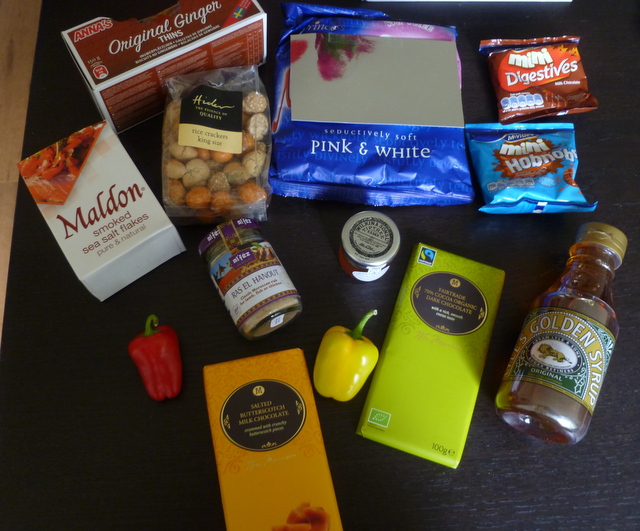
I thought that the title this month was appropriate for both the parcel that I sent, and the one that I received, as you can see from the photo above, which was jam-packed with goodies, and a recipe for a sweet treat!

This month, I was matched with Emma, and was to receive a parcel from Abbie, neither of whom have a blog (…yet, I believe at least one of them will be joining us soon 🙂 ), but you can go and check out Emma’s gorgeous cakey Facebook page, and you can see what amazing things Abbie has found on Twitter.

Contents of August Foodie Parcel

A Box of Sweets, Unconsolidated

Abbie was very clever with her box, as well as stuffing it to the gills. And it arrived in 3 days between her tweeting to say she’d sent it, and me receiving it. This is an absolute record.

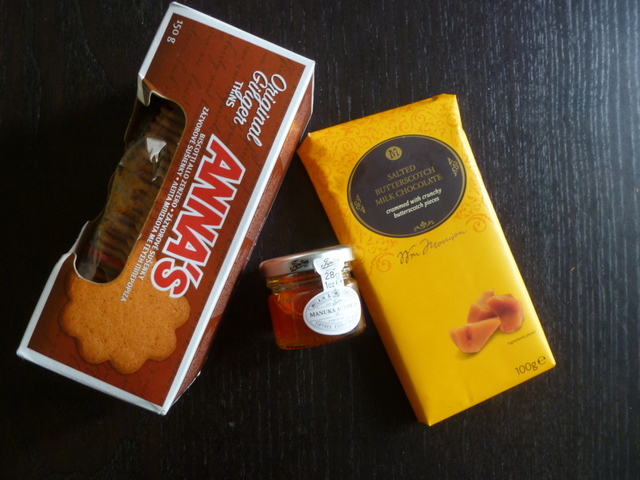
Swedish Biscuits, Manuka Honey, Butterscothch Chocolate

Some Compacted Sweets

For ages, I was thinking that the chocolate was a new brand called M. I am an idiot, and have just realised that it comes from that famous supermarket. Salted butterscotch chocolate, it is delicious, and you would be right in thinking that I have started this one already.

There is a small pot of manuka honey, which I am dying to try. Abbie also thought of the Big Guy, giving him some Swedish ginger thins. This is the first time we have had something that he can reminisce over, and I think I may not see many of these.

Smoked Maldon Salts, Rice Crackers, Ras El Hanout

Compacted Savouries

This wasn’t just a sweet box, though. I also got savoury goodies. I rubbed the Ras el Hanout on a lamb cutlet, and ate it as part of a meal filled with temptations. The rice crackers will make a great snack, but I have an idea that they will also make a really tasty crust for fish, so I think that will be an experiment that I will be making soon. I have heard of smoked salt, but never tried it. It is actually great, bringing a subtle smokiness to dishes. I am not usually a fan of salting things, but have been getting more into it, as I have had quite a few gifts of salt lately.

Tinkerbell Peppers

A Fairy Plate

It was Abbie who sent me the Tinkerbell peppers. She wrote a little card, to say that she had these every day in Ibiza. This was also the first of two recipes she sent me, along with the ingredients. This is genius, and I wish I’d thought of it myself! Abbie suggested that I grill the peppers, and serve them with a sprinkling of the salt. I took most of her advice, but this is what I did with them in the end.

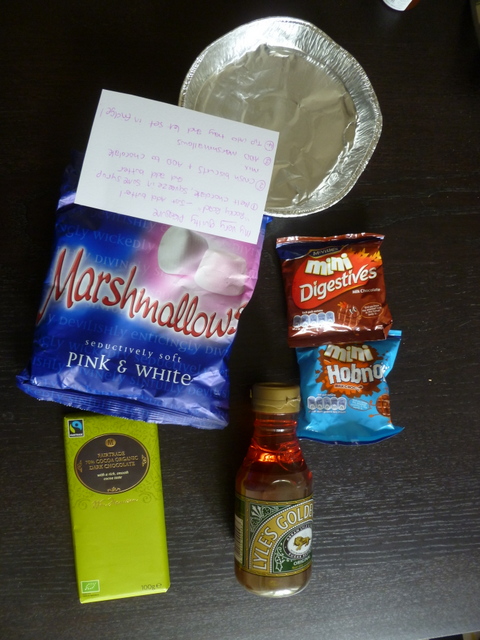
Rocky Road

Can you Tell What it is Yet?

She also sent me the recipe and ingredients to make up her Guilty Pleasure. She has given me permission to reproduce the recipe on ediblethings, so I will let you know about this next week.

Thank you so much for this parcel Abbie, not only has it been an inspiration for future boxes, and fantastic recipes, but I dread to think how much it must have cost you to post this little treasure trove. I am amazed!

Thanks also to the lovely Carol Anne of This is Rock Salt, who hosts and organises us European penpals. This is no mean feat, I can tell you.

Here’s the rough outline of how it works:

  • All interested parties in the UK and Europe – bloggers and blog readers alike – sign up by the form available at the bottom of this post
  • Participants are matched on the 5th of the month
  • Penpals send thoughtful, food related parcels, on or before the 20th of the month. The parcel must include something hand written – a note explaining the box’s contents, a recipe card, whatever you like. The price limit for the boxes is £10 – this is a limit, the point is not the cost, but the thought (no, really!)
  • Penpals open their boxes and rejoice!
  • At the end of the month, everyone blogs about their box, or writes a guest blog post if they are usually a blog reader and not writer. Everyone reads one another’s posts and rejoices some more. Posts are made available on Lindsay’s blog so we can all find each other easily

2 Comments

Filed under Feast

I Don’t Know Who Jansson Was, But This Sure Is Tempting

Jansson's Frestelse

Jansson’s Frestelse

The weather is changeable again, and is blowing hot and cold. You can expect to see a much more eclectic mix on the blog of salads and more autumnal fare, while we wait for the season to make its mind up.

It has also shown me that the lighting in my living room lends my photographs an odd yellow tinge, now that it is getting darker earlier. Until I can be organised enough to make all my food in the day, I am going to have to try not to take photos in here.

Yesterday was a cooler day, and thoughts turned to comfort food for other reasons too. I have been thinking pretty hard about potatoes and cream. This means one thing, a traditional Swedish dish, called Jansson’s Frestelse, or Jansson’s Temptation. This is a lovely gratin of potato and cream, with the surprising, but brilliant addition of a little anchovy.

Swedes actually call a sweet preserved sprat ‘ansjovis’, so the Temptation will be slightly different. I haven’t found them outside of Sweden, so I use ordinary common or garden anchovy, preserved in oil.  And actually, the salty little things add a really unctuous quality, I think they are worth it.

You can make the gratin vegetarian by omitting the anchovy, but only do this for the vegetarians in your life. If you are one of these people who insist thy don’t like anchovy, and will remove them from pizza, I promise you will not notice them, as they will melt into the dish, but they add so much in the way of flavour.

I road tested this once, at one of the International dinners. I made two versions of the dish, one with anchovies and one without. The one with went quickly; we were eating the one without for the next few days.

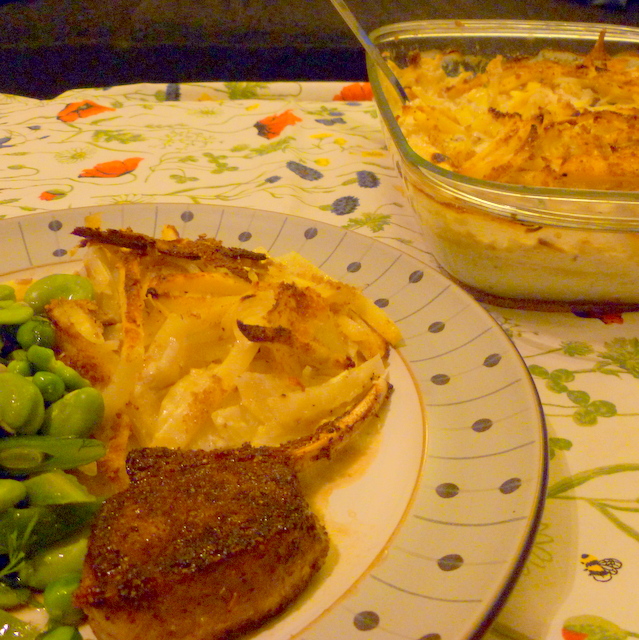
I served it with some garden beans, and a lamb chop that had been rubbed with  Ras el Hanout, and pan fried to medium rare. It was an amazing meal, for little effort.

This is a very simple dish, and so good in colder weather. It is also an amazing alternative to mash. Give it a try.

Recipe: Jansson’s Frestelse (Temptation)

Ingredients

800 g waxy potatoes

1 onion

150 ml cream

150 ml milk

8-10 anchovy fillets

1/2 tbsp anchovy oil

Salt and pepper

Some breadcrumbs for scattering (optional)

Method

Preheat the oven to 180°C.

Cut the potato into thin matchsticks. It is easiest to use a mandoline, or you can get an attachment for some food processors. If you have neither, cut the matchsticks with a knife. This will give a larger surface area, and produce brilliant crunchy and soft textures, which improves the dish, so do take the time, even though it is a pain. This should be the spur for you to buy a mandoline. They aren’t all that expensive, and this is the second recipe in a week in which I’ve used one. As long as you keep your fingers clear, they are great, and this is coming from the woman who hates gadgets!

Slice the onion into thin half moons, and chop up the anchovy fillets.

Butter an oven proof dish, or roasting tin. Then you need to layer the dish. Start with a thin layer of onion, and season with salt and pepper. Next add a thick layer of potato, then a little anchovy. Continue to layer up in this order, but make sure that you finish with a layer of potato. Give it one last season with some salt and pepper.

Mix the cream, milk and anchovy oil in a jug. Pour half over the potato in the baking dish, and sprinkle over the breadcrumbs, if you are using some. They should be scant, they don’t need to cover the dish.

Put it in the oven for half an hour, then add the rest of the cream and  oil. Cook for a further 15 minutes, until the top is crunchy, and the potatoes are cooked through.

This is great the first day, and amazing reheated for leftovers. If you have enough left to reheat, you might want to cover it with some foil as it heats up, so that the lovely crust doesn’t burn.

2 Comments

Filed under Feast

Fairies That Can Really Pack A Punch

Marinated Tinkerbell Pepper Salad

Fairy Salad

I recently got hold of some small Tinkerbell Peppers, of assorted colours. They are like bell peppers, but smaller. They are officially a dwarf sweet pepper, but it has given me some ideas for what to call those that I grow, which sometimes turn out not to reach their full size!

I jest. I saved the seed, and I’ll be planting some of these to see if I can grow them next year. We’ll see how successful I am. I hope they’re not F1 hybrids.

Tinkerbell Peppers in Perspective

Fairy-Sized

I recommend this variety, they are small, but perfectly formed, and have quite a lot of flesh for such small peppers, and they have much better flavour than the greenhouse varieties that we get from supermarkets. They would be great for stuffing to use as canapés, on the barbecue or even simply in salads.

I always knew I was going to marinate these peppers, which I often do to larger varieties, to serve with homemade burgers and veggie burgers at barbecues. At the moment, I am also trying to find ways of injecting a lot of flavour into salads, without adding too much by way of fat (more on that soon).

I also have some very good smoked Maldon sea salt, which complements the smokiness of the charred peppers perfectly. I usually char the peppers on my hob, but these were tiny little things, and I wanted to add to the salad by charring some ciabatta, so I used my griddle pan. A fairly recently lit barbecue would also be a great way to char the peppers, and the bread can char just before you serve it. The delicate smoke of the salt enhanced the smoky flavour of the peppers.

It struck me that I could use the peppers and the marinade to dress a nice salad. However, the salad would have to stand up to the punchy marinade, so a normal butterhead lettuce wouldn’t cut it (and this would definitely be no place for an Iceberg). I think any of the mustard greens would be suitable, as would watercress, and some of the foraged greens that are abundant at the minute (e.g. wood sorrel, sorrel, fat hen, chickweed). I had rocket, chickweed and parsley in the garden, so I used those. I bulked it up with some baby spinach. The iron and peppery flavours were just what was needed.

I have also found apple mint and sumac great for adding a lot of flavour to salad leaves, without resorting to cheeses and too much dressing.  If you have any other tips for creating good flavours, I’d love to hear them.

This entry is part of the 52 Week Salad Challenge, where they are currently discussing pests. I know Michelle would love to hear from you if you have anything to add about the bane of slugs or other nuisances.

Recipe: Smoky Tinkerbell Pepper Salad

Ingredients

For the marinated peppers:

5-6 Tinkerbell peppers (or one or two large ones)

A little oil for the griddle pan

2 tbsp extra virgin olive oil

1/2 tbsp blackberry vinegar (or sherry or red wine vinegar will work, even balsamic if you have to)

1 clove garlic, very finely sliced

Small pinch of dried chilli flakes

Good pinch of smoked salt (or normal sea salt)

Black pepper to taste

For the salad:

4 thick slices of ciabatta

A little extra virgin olive oil

A bunch of rocket

A large handful of baby spinach

Bunch of chickweed, chopped if the stalks are long

Bunch of parsley, leaves only

¼ cucumber, diced

8-10 cherry tomatoes, halved

Method

Heat a little oil in the griddle pan.

Halve and deseed the peppers. Put skin-side down in the hot pan, and leave until the skin chars and blisters. You may need to press them down a little on the rounded bits to get the skin to char evenly. Don’t worry that the skins go black.

When the skins are blackened and blistered all over, place them in a plastic bag, a bowl covered with cling film, or in an airtight container, and seal. Allow to cool for 5 or so minutes, when you will be able to rub the skins off easily.

In another airtight container mix a dressing of the extra virgin olive oil, the vinegar, garlic, chilli flakes, the salt and a little pepper. The acidity of a dressing tends to be a matter of taste, so adjust this to your liking.

While the skinned pepper halves are still warm, add them to the marinade, cover, and set aside for a while – at least half an hour – to allow the flavours to mingle. At this stage, you can use the marinade peppers as a side dish or relish too, if you like.

Drizzle the ciabatta slices with some olive oil, and put in the warm griddle pan. You should be able to hear it sizzle, as you put them in. You want a nice striped toast to the bread, so once it is in, resist the temptation to keep moving and checking it.

I used ciabatta rolls, cut in half, so I only toasted the cut side. Leave this for at least 3 minutes, until you can smell the bread toasting. If you are using bread slices, then turn it over, and char the other side, again resisting temptation to move it around. The second side will need slightly less time. Leave to cool slightly.

Meanwhile wash the salad leaves and prepare the cucumber and tomatoes. When the bread is ready, dress the salad in the peppers and marinade, tossing to mix it well.

Serve the salad over the toasted bread, and pour over any remaining marinade.

You will have a smoky, hearty salad, that does not leave you wanting. The marinated peppers may have a fairy’s name, but they really do have a giant flavour.

2 Comments

Filed under Farmed, Feast

Very Suisse!

Meringue Suisse

A Swedish Childhood Dessert

As you will know when I got my Foodie Parcel last month, I was very excited to receive a broken meringue as part of a lovely package.  I promised Teresa that I would blog the recipe for Meringue Suisse, which I knew I was going to make as soon as I saw the broken meringue.

This is a dessert that the Big Guy had often in his childhood. In Sweden. I am not really sure where the Swiss thing came from, although I could probably surmise something about Swiss chocolate, or the fact that it resembles the Matterhorn or something.

This time, I made the basic recipe, and used good quality vanilla ice cream from the shop. As with most simple recipes, the better quality the ingredients, the better the final dish will be. Teresa’s meringue and chocolate were both of such quality that I didn’t want to mess around with the recipe too much.

The basic recipe I give here is pretty simple, but you can play around with it, if you like. Try adding soft fruits (the Big Guy’s family add bananas, but I’ll be having none of that!). You can make it fancy by making your own ice cream or meringue, or you could even make praline or do a bit of sugar work. Crumbled amaretti biscuits could also be a very good topping.

What other toppings or additions would you choose?

Recipe: Meringue Suisse

Ingredients

Good quality vanilla ice cream

1-2 tsp slivered almonds

60 g dark chocolate, broken into chunks

15o ml whipping cream (to be used in 2 parts)

Knob of butter

1 meringue, broken into pieces

Method

Remove the ice cream from the freezer, so it can soften to a scoopable consistency.

Toast the almonds in a dry frying pan. You will need to watch them carefully, and stir them often, as they catch easily. Once they are a nice golden colour on both sides, remove from the pan, to prevent them from cooking any further.

Combine the chocolate, 50 ml of the cream and the butter in a saucepan. Cook over a very low heat until the chocolate has melted. Don’t stir it at this stage.

Meanwhile, whip up the remaining cream to soft peaks.

Once the chocolate has melted, remove from the heat and stir the sauce well to combine it. It may look a little grainy at first. Don’t worry, keep stirring it and it will become a smooth and glossy sauce. Allow to cool slightly, so that it does not melt the ice cream immediately.

Scoop enough ice cream for two people into a bowl, and combine with the meringue. You will need to have reasonably soft ice cream for this. Put the ice cream and meringue mix into serving bowls and top with the whipped cream.

Pour over the chocolate sauce and sprinkle with the toasted almonds. The chocolate sauce should go a wonderfully fudgey texture when it hits the cold of the ice cream.

This is a very easy dessert, but one that looks and tastes impressive. The only question is how will you top yours?

Leave a comment

Filed under Feast

Sauce Grib-ish

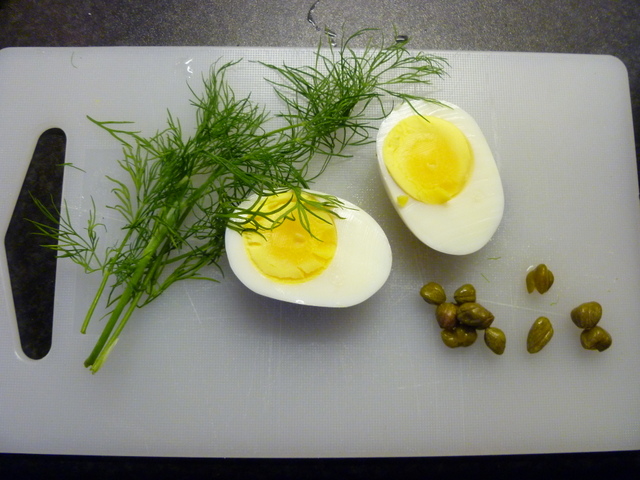
Dill, Boiled Egg & Capers

Ooh, Saucy!

I first had a dish like this whilst having dinner at my friend’s. He writes the excellent Morning Claret wine blog. He really knows his stuff, so if you want some good wines, and great writing, go and give him a visit. Both he and his partner are very accomplished cooks, and it is always a joy to be invited to their house for fine wines, great food and excellent company. His version had anchovies in it, and he served us boiled globe artichokes to dip in it. I loved it, and decided that I would have a go at recreating it.

A bit of research later, and I have found that it was a variation of one of two classic French dishes. Either Sauce Gribiche or Ravigote. Of course, as with any classic dish, there are a lot of variations and the lines are blurred between the two. It seems that ravigote is more like a vinaigrette to which chopped boiled egg has been added, and in gribiche, the yolk is used to make a mayonnaise, and the chopped white is added. This is sauce is not quite either of those things, so I have called it Sauce Grib-ish.

I first made this after an Easter egg hunt left me with quite a few boiled eggs to use up. It also needed to be vegetarian for the friends that I had coming over. It is so versatile, you can serve it as a dip, over asparagus, or with fish and chicken. I’m also going to try to make a potato salad with it, I think it will be a great combination.

I am entering this simple seasonal sauce into Herbs on Saturday at Lavender and Lovage, although I only use dill in the recipe given, it will also be really good with tarragon, chervil or even parsley.

Sauce Grib-ish

Sauce Grib-ish

Recipe: Sauce Grib-ish

Ingredients

This sauce is easy to scale up or down, depending on how many people there are. I have given the amount for two people to have as a sauce to go with vegetables or fish. Taste is the key to this dish, as you need to balance the richness of the egg with the acid of the lemon and/or caper vinegar. The amounts I give here are approximate, so keep testing and adjusting the sauce, according to taste.

1 egg, hard-boiled

2 tbsp capers plus vinegar from the caper pot

Juice of ½ a lemon (or just the vinegar from the capers)

Small bunch dill, finely chopped

Good quality extra virgin olive oil

Method

First, halve the egg, and remove the yolk. Then finely chop the white.

Mash the yolk with a little lemon juice or vinegar. You want the yolk to be a smooth, runny paste, about the same consistency as thick pancake batter.

Roughly chop the capers, and mix together with the dill, egg yolk and egg white. Taste and adjust for acidity, adding caper vinegar if needed.

Add some olive oil and taste and adjust again. The amount of olive oil you need will depend on what you want to use it for. For example, if you are serving it as a dip with crudités, you will want a thick sauce that will stay on bread, tortillas or short lengths of carrot and cucumber. If you want to serve it to accompany artichokes or asparagus, you will want a much thinner consistency, so add more oil. For potato salad, you will want it somewhere in between. The oil will also alter the acidity, so make sure you taste and adjust as you go along.

5 Comments

Filed under Feast

Cracked in the Box

Foodie Penpals July Box

A Box of Treats

It’s that time again when I can reveal my matches for Foodie Penpals. I have to say, I really am enjoying this, from deciding what to send out, and trying to make that as tailored as possible to my penpal; to receiving my own box and thinking about some great recipes to make with the contents.

This month, I was matched with Kay at KayTeasCakes and I got a parcel from Teresa from Rockspring Crafts.

Unfortunately, at the time of writing, I have just heard from Kay that her parcel has not arrived. I am away at the moment, and don’t have a tracking number, although I am trying to sort something out. I am really sorry that there has been this problem for Kay, but if I have to I will recreate her parcel and send it to her as soon as I get home. In the worst case scenario, Kay will get two parcels next month, but I hope that her parcel will arrive soon. Please go and cheer Kay up by marvelling at the beautiful cakes that she makes for her stall in Harringay, or even popping along and buying some if you are in the area.

I was very lucky to be matched with Teresa this month. She was also kind enough to notice that I am an expat, and ask me if there was anything I needed from home. I am really appreciating these offers from my penpals, it is nice that people think that there will be things I am missing.

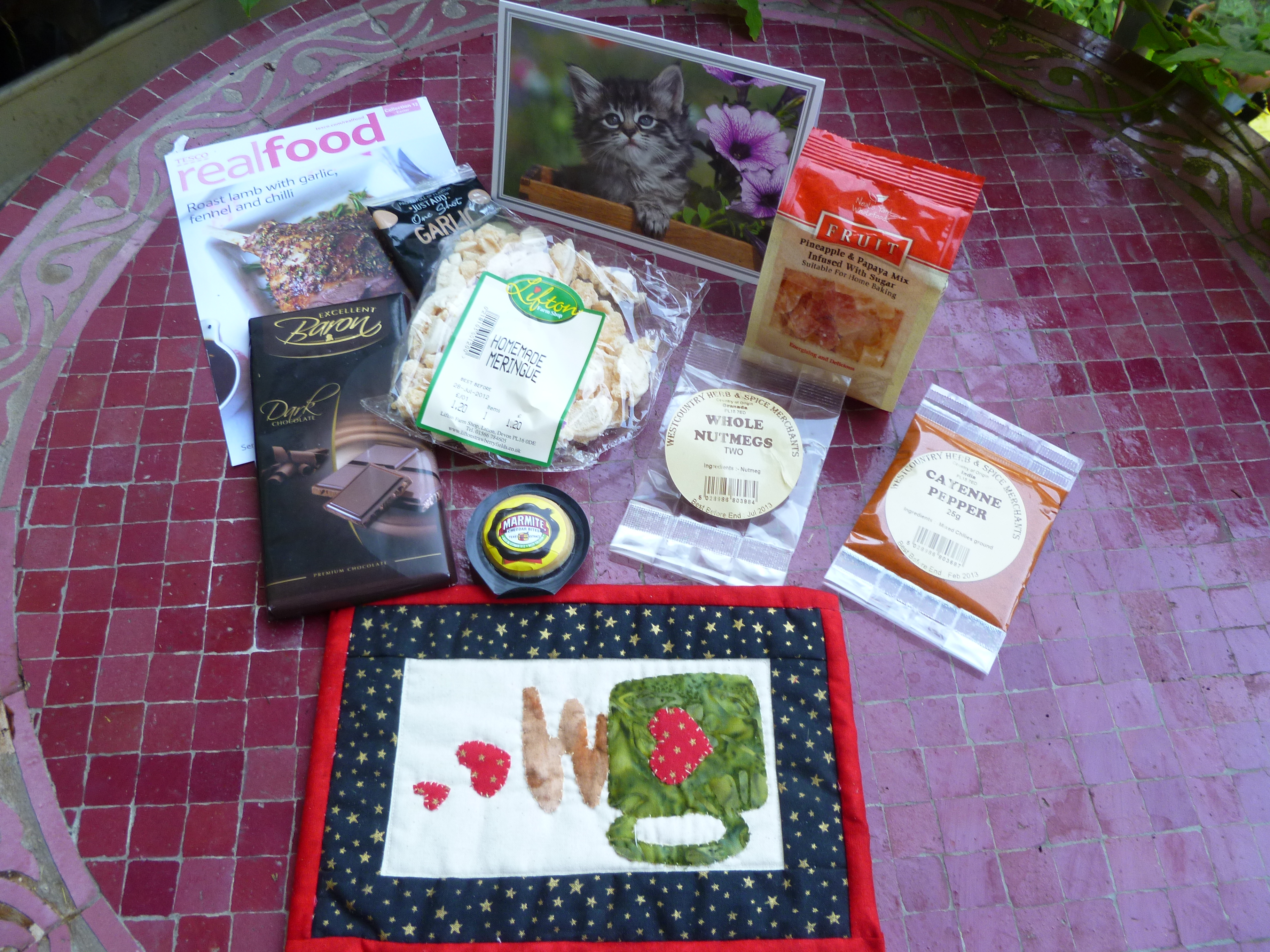
Teresa sent me a lovely box of goodies, some of which have really got me thinking. She obviously had a good time finding me unique items.  An added bonus is that she is a fellow Westcountry person, so, it has been great to get products from almost home!

Firstly, was a lovely lamb, with garlic, fennel and chilli recipe. I love lamb, and we can get very good Texel lamb here, so I know this is going to be a winner. There was also some pineapple and papaya. I make my own muesli (mostly because too many shop-bought mueslis have unwelcome banana chips in), and this has already featured as a very tasty addition. I am thinking of doing some baked goods with the rest soon. Of course, I shall blog it when I do. Also included was some onion salt. I have never used flavoured salts before, but this is a great addition to salad dressings, and I am sure it will be in many more things to come.

Foodie Penpal Cayenne Pepper and Nutmeg

Spice and More Spice Make all Things Nice

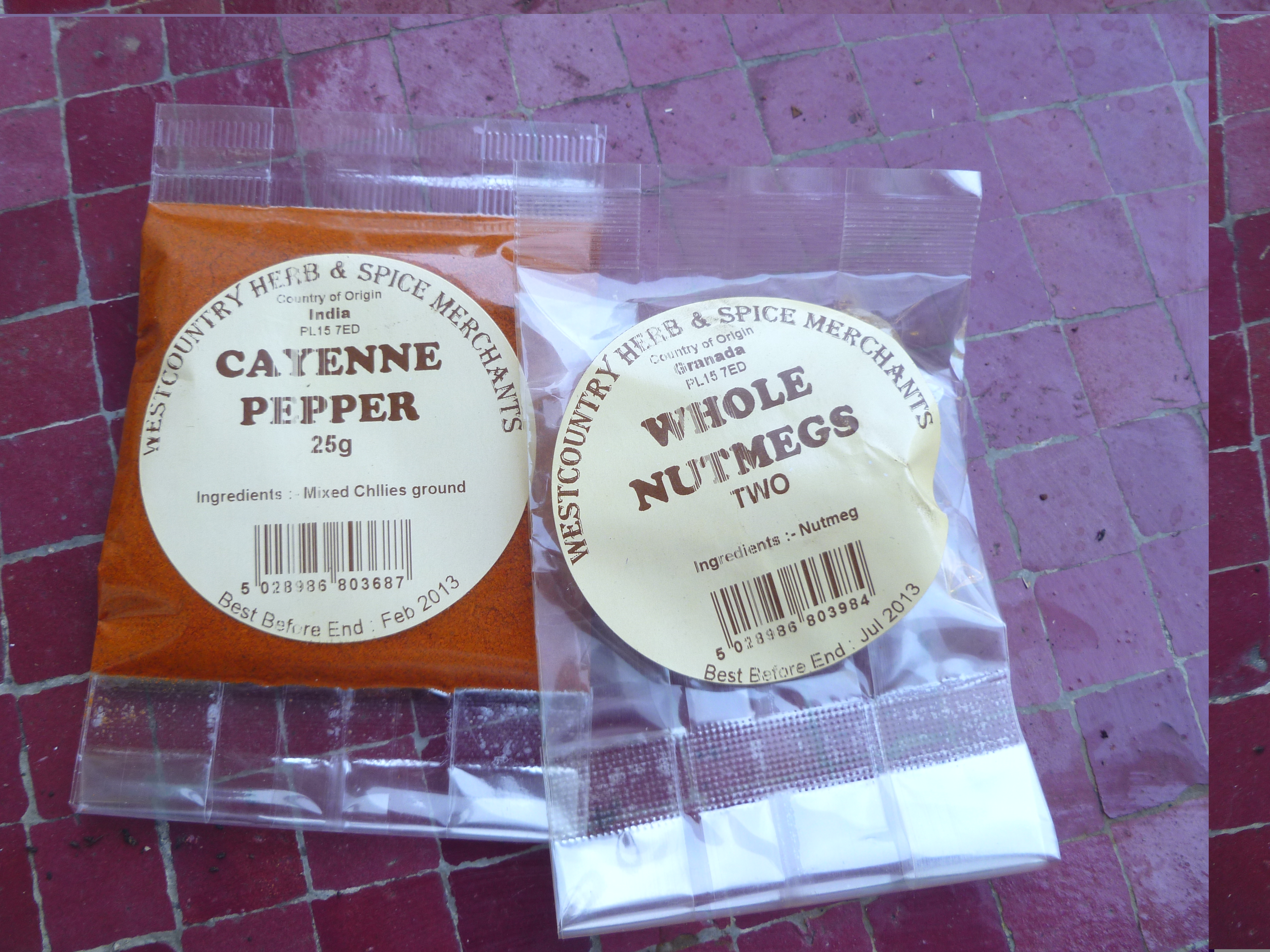
These spices will certainly come in handy. Spices form an essential part of my store cupboard, and I use both cayenne and nutmeg regularly. I have already grated a bit of nutmeg into some rogue nettles that popped up in my broad bean patch. I wasn’t about to let them go to waste, so I cooked them like spinach, and added butter and nutmeg after I had squeezed out all of the moisture. I love this way of eating nettles, and definitely recommend that you give it a go. They are also fantastic as a spinach substitute in curries and greek dishes, like spanakopita.

Foodie Penpals One Shot Garlic and Marmite Cheese

New For Teresa and Me

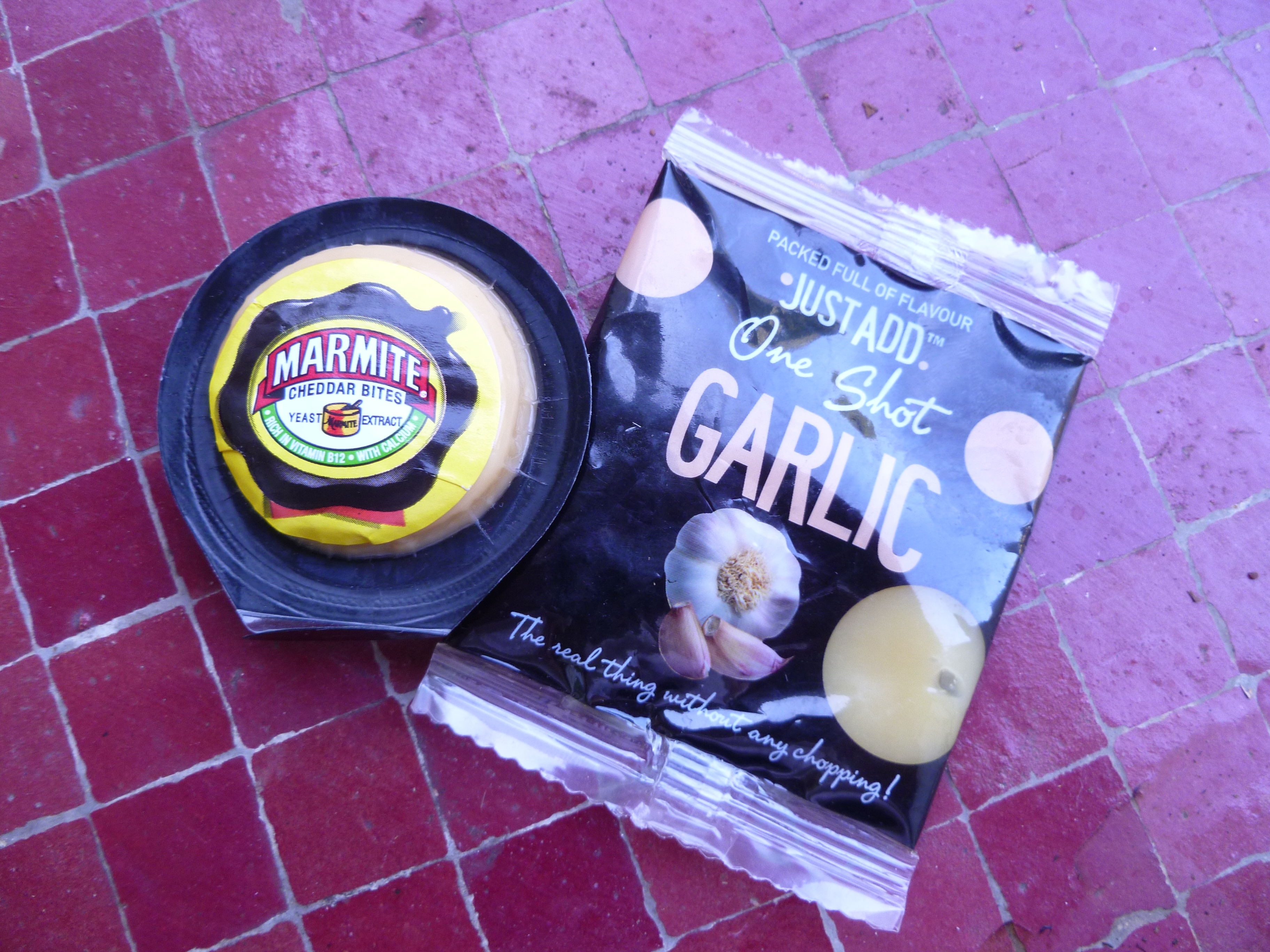
Teresa says that she enjoys finding a few new items to include in her foodie parcel. This time it was One Shot Garlic and Marmite Cheese. Originally there were three of these moreish little cheeses, but I think everybody gets one item that doesn’t make it as far as the photo, and this may have been mine this time. Ahem!

Foodie Penpals Meringue and Chocolate

The Makings of a Great Dessert

Teresa took a chance and sent me a meringue. Unfortunately, this was the cracked in the box that I refer to in the title. However, I am really pleased, because the two of these ingredients are the basis of a great dessert that I first had in Sweden. It is called Meringue Suisse, and I will make and blog that soon. It requires broken meringue, and I am lazy, so the Foodie Parcel has saved me a job.

A Hand Made Mug Rug

A Hand Made Mug Rug

To help pack things together, Teresa included a mug-rug that she made herself. . I am always in awe of people that can make their own things. I did roughly six weeks of needlework at school, and the teacher made me unpick and re-sew everything that I ever made. I caught her out once, when I just returned to my seat, and didn’t unpick nor re-sew anything, returning for her approval a little later, and she passed it. I found that really discouraging though, and have never attempted to make things with textiles again.

I really love my mug rug. Teresa makes them from scraps leftover from quilting and other projects that you can see on her blog, and of course, I love leftovers! She says that the idea is to have something bigger than a coaster & smaller than a placemat to hold a cuppa with space a couple of biscuits or treats. And look, that is exactly right.

Mug Rug, Tea and Biscuits

My Mug Rug in Action

Thank you so much Teresa, for such lovely treats, and to Carol Anne for organising Foodie Penpals in Europe.

Here’s the rough outline of how it works:

  • All interested parties in the UK and Europe – bloggers and blog readers alike – sign up by the form available at the bottom of this post
  • Participants are matched on the 5th of the month
  • Penpals send thoughtful, food related parcels, on or before the 20th of the month. The parcel must include something hand written – a note explaining the box’s contents, a recipe card, whatever you like. The price limit for the boxes is £10 – this is a limit, the point is not the cost, but the thought (no, really!)
  • Penpals open their boxes and rejoice!
  • At the end of the month, everyone blogs about their box, or writes a guest blog post if they are usually a blog reader and not writer. Everyone reads one another’s posts and rejoices some more. Posts are made available on Lindsay’s blog so we can all find each other easily

4 Comments

Filed under Feast

Birthday Brownies

Choc and Orange Brownie

A Birthday Treat

The other day was the Big Guy’s birthday. He loves chocolate, and I had some extraordinarily good chocolate with orange pieces that was given to me by my Foodie Penpal. I had been saving that chocolate for a special occasion, and what better than to make a birthday cake?

JD Gross Premium Equador Chocolate

Fit for a Birthday Brownie

I decided that a Brownie would be right up the Big Guy’s street. And that I would use the extraordinarily good chocolate as the chocolate chips inside. I used JD Gross Finest Chocolate Ecuador. It has very good candied orange in it, the pieces are still chewy, and spike the chocolate throughout. I boosted the orangey hit with a tablespoon of marmalade, but you can just use the marmalade if you can’t find the chocolate. Or you could use some chopped candied peel, if you prefer.

The first and last recipe for making brownies that I learned came originally from Nigel Slater. I just adjust the things I add, but always use this method and it has never let me down. If you make this you will understand why I go back to it time after time.

Recipe: Chocolate Orange Brownies

Ingredients

200 g good quality dark chocolate, broken into pieces

300 g golden, unrefined sugar

250 g butter

3 large eggs, beaten

1 tbsp marmalade

60 g plain Flour

60 g cocoa powder

½ tsp baking powder

Pinch of salt

100 g JD Gross Finest chocolate, very roughly chopped

100 g almonds, roughly chopped

Method

Preheat the oven to 180°C, and line a tin with baking paper. I use my roasting tray for this, and it is the perfect size. A largish square cake tin will also be fine.

Make a bain marie from a saucepan, with a little boiling water in the base (not more than 3 cm deep) and a bowl over the top. Don’t let the water touch the bowl. On a low heat, melt the chocolate in the bain marie. Don’t stir it too much, just let it sit, or you risk it going grainy. If there are floaty lumps of chocolate , just push them under the molten bits, and they’ll soon melt.

While the chocolate melts, start beating the butter and sugar together. I have a hand-held electric whisk. The butter & sugar must be softer than a gentle whisper, so I’d recommend this as a minimum, unless you are Geoff Capes.

What the butter & Sugar should look like for the birthday brownie

Pale and interesting

Keep going until the butter and sugar is almost as pale as consumptive Victorian. Please don’t skimp, because you are incorporating air, and it will help produce the most amazing consistency when you eat it later.

As soon as the chocolate has melted, add the marmalade. Once this has just melted, remove the bowl from the bain marie and leave it aside to cool a little.

If your butter and sugar is not quite ready, go back and whisk it some more. You need it to be almost runny, but not actually runny, there won’t be a lot of air in that, but trust me, you’ll know because it gets very creamy.

Sieve together the flour, cocoa, baking powder, and salt. This is also supposed to incorporate air, but I often don’t bother with just flour. I have never tested this, by baking one with and one without sifting, but I also don’t get flat cakes, either. However, when cocoa is involved, I always sift it, because cocoa can get a bit lumpy, and it will make your cake feel gritty, until you bit through a lump and get raw cocoa in your mouth.

Incorporate the beaten egg into the butter and sugar, a little at a time. Make sure that it is well mixed before adding more. You can also increase the speed at which you beat each time you add some egg.

Fold in the melted chocolate, chopped chocolate and nuts, using a metal spoon. You don’t want to knock all the air you took ages adding, so only mix until the moment there is no more pale butter streaks.

Fold in the flour and cocoa, and again, only mix until you see no more flour. Be gentle, this is time spent with your cake batter, not a sprint race.

Pour your batter into the prepared cake tin, and use a spatula to get the sticky bits from the bowl. Or if it is your Big Guy’s birthday, you can also let him take the rest of it with a spoon, or his finger.

Smooth the top of the batter in the tin, and put it in the oven for 30 minutes. The cake will sink slightly in the middle, this is perfectly acceptable (I’m not Mary Berry), and is because of the rich, gooey consistency.

Pierce the centre of the brownies with a skewer. In this recipe, unlike many cakes, you want the skewer to be a bit sticky. It should not have any raw cake mixture on it though. Again, you’ll have to trust me when I tell you that the difference is obvious. If it is not quite done, bung it back in the oven, but beware that the difference between raw cake mix and sticky is small, so it should take less than 5 minutes, check it after 3.

If you are going to eat this warm, and it really is tempting, leave at least an hour after it comes out of the oven, or it will be too liquid. These brownies solidify a bit as they cool. Divide them into 12 brownies after the hour.

Rich Choc & Orange Brownies

Everything a Good Brownie Should Be

The brownies are gooey and rich as a warm dessert, for sure. But they really are very, very good served cold, because they have that perfect combination of the crisp shell and rich, soft centre, studded with the nuts and chunks of that extraordinary chocolate.

Eat them on their own, if you must, but they are better with cream or a good vanilla ice cream.

These brownies also keep well in an airtight container, and remain moist and fudgey.

Leave a comment

Filed under Feast

Flowers and Spice and All Veg – Nice!

Moroccan Vegetable Stew with Cous Cous and Coriander yoghurt

Souk Food

The other day I wrote about going foraging with Liz Knight with Mum on her birthday. What I didn’t mention is that she also had one of the stalls at the Tudor Farmhouse Market. She sells all manner of spice rubs, sauces, and syrups at fairs and some shops, and they are also available online.

We came away with a honeysuckle and tarragon syrup, and a Wild Rose el Hanout, based on the Moroccan spice mix. The original translates as “head of the shop”and is a blend of the best spices that a merchant has on offer, and is therefore supposed to act as both a luxury product and the best marketing tool that the merchant as at his disposal.

As the name suggests, the Forage version uses wild roses and spice, giving a heady blend that is every bit as luxurious as the Moroccan version. Liz also recommends adding it to a fish and tomato stew, which I will definitely be trying. If you haven’t managed to get hold of a pot of this lovely spice rub, you can use Ras el Hanout instead.

You may also remember that I resolved to make more Middle Eastern food back in January. I had a Moroccan spice, although Morocco is not exactly the Middle East, I was thinking of the fragrant dishes and spices that also encompass much North African cuisine. This seemed like a good place to revisit those resolutions, and get the whole commitment to them kicked off again.

I made this for a vegetarian dinner party. Because I used fresh tomatoes, I found that the sauce was quite liquid. I actually liked it that way, but you could thicken this by using tinned tomatoes, or add some tomato puree to the stew about 15 minutes before the end of cooking.

It is traditional to keep the vegetables quite big in Moroccan cooking, which also cuts down on the preparation time, making this a pretty easy evening meal.

I garnished it with some yoghurt with chopped coriander stirred through, although it is perfectly good without it, so you can leave this out if you want a vegan dish.

Recipe: Moroccan Vegetable Stew and Couscous

Ingredients:

For the Stew: 

2 shallots, peeled and quartered

1 red pepper, cut into very large dice

2 cloves garlic, peeled and sliced

2 tsp wild rose el hanout

2 carrots, cut into chunks

1 large courgette, quartered lengthways, then in cut into chunks

1 aubergine, cut into chunks

About 400 ml vegetable stock (enough to come about 2/3 of the way up the pot)

1 tin chickpeas, drained and rinsed

4 tomatoes, quartered

Bunch coriander, including the stalks, chopped

For the Couscous: 

400 g couscous

500 ml vegetable stock

Zest of 1 lemon

1 tsp wild rose el hanout

2 tbsp good olive oil

This recipe serves four people

Method


On a low heat, soften the shallot for about 3-4 minutes in a deep saucepan. Add the pepper, and continue to soften. When you can see changes in the flesh of the pepper, after about another 5 minutes, add the wild rose el hanout, and the garlic, and cook until the fragrance hits you.

Add the carrots, courgettes and aubergine to the pan, and cook down for 5-10 minutes, until the courgettes and aubergines start to give and soften. You will need to stir them well when the veg first go in, to distribute the spice mix, then occasionally as they cook down.

Add the stock, and bring to the boil, cover, then reduce to a simmer. Cook until the vegetables are soft.

While the vegetables are cooking, make the couscous. In a large bowl, stir the wild rose el hanout and the lemon zest through the couscous. Add the warm stock, so that it covers the couscous by bout 1cm. Cover and set aside to allow the couscous to absorb the stock.

Add the chickpeas, tomatoes and the coriander to the stew, and warm through for five minutes.

Add the olive oil to the couscous, and fluff up with a fork.

Serve the stew atop the couscous.

I liked this couscous so much, it s difficult to imagine that I won’t be stirring through some wild rose el hanout every time I make it from now on. At least until the jar runs out.

Leave a comment

Filed under Feast