Monthly Archives: April 2012

Logical Progression

Duck Salad

Salad as Leftovers

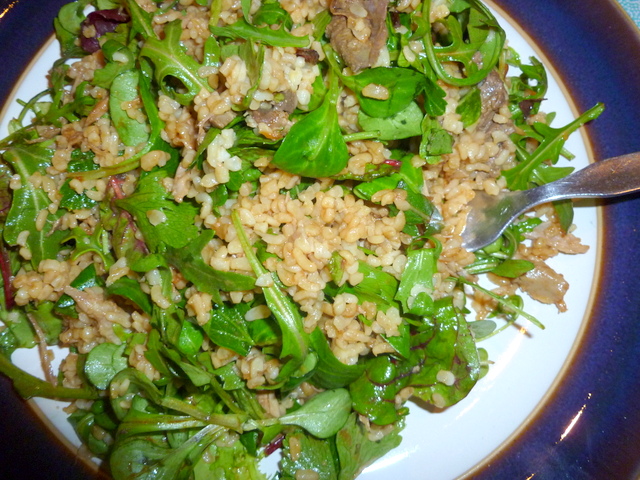
Having eaten fairly rich meals all week, today I was craving something a bit lighter.  I also had a little rocket, parsley and the cut and come again lettuce I planted earlier, so today’s post is both leftover loveliness, and my entry for the salad challenge.

Lately, I have been reading about using miso as a marinade for meats. Obviously, it was a little late to marinate my duck, but I was convinced that it would make a good dressing for a salad. I had the duck, and leaves, and decided that using bulgur wheat would add the bulk, and a lovely nuttiness and some bite to the dish. I would have liked to add some thinly sliced spring onion, but as they are out of season, I satisfied myself with the leaves and the dressing.

The resulting dish was substantial enough to satisfy, but light enough that we weren’t eating more rich food, which really hit the spot for me. Even though we had eaten the duck all week, I had made it different enough not to bore, and it was sad to actually come to the end of this versatile ingredient.

I do have one more dish to post on the topic, but I am travelling in the UK, and managed to leave the pictures on the hard drive at home. As it will be a step by step guide, I think the pictures will be necessary, but I hope that you have enjoyed Duck Week, in any case.

Recipe: Duck Salad

Ingredients:

100 g bulgur wheat

Hot vegetable or chicken Stock – to cover the bulgur by 2-3 cm

60 ml miso paste (I used the darker variety)

2 tbsp soy sauce

2 tbsp rice vinegar

4 tbsp sesame oil

2 cm piece of ginger, grated

Little water to thin

Remaining meat from a roast duck carcase

Small bunch parsley, leaves removed from the stalks.

100 g rocket

100 g cut and come again lettuce, or a mixed bag of salad

5cm chunk of cucumber, cut into matchsticks

Method

Pour the hot stock over the bulgur wheat, cover, and set aside for the bulgur to absorb the stock. I like it al dente, so I make sure that I test it after about 15 minutes. If the grains are as you like them before all of the liquid is absorbed, then drain them, and leave aside.

Meanwhile,  mix the miso, soy, rice wine vinegar, sesame oil, and ginger together to make a dressing. Taste, and adjust the soy or thin with a little water, as required.

When the bulgur is done to your liking, add the miso dressing, and set aside for 5 minutes to let the bulgur absorb the flavours of the dressing.

Mix in the duck, parsley, cucumber and salad leaves, and serve immediately.

2 Comments

Filed under Farmed

Progressions on a Theme

Duck & Mushroom Risotto

Woodland Flavours

Today I stripped the carcass, separating the meat from the bones and the skin. Of course, these will become stock, but I have something specific planned for this, of which more later. I also found an escapee clove of garlic, nestled in the back of the cavity. Roasted garlic is so good, there was no way that I was going to let that go, and it will only add to the flavour of today’s dish.

So, to a risotto, but this time I wanted to develop the flavour with earthy base notes of woodland and wild mushrooms, building the flavour layers as I went, instead of making a simple white risotto, and adding the flavour at the end.

You can dry your own mushrooms or buy them. If you were going to buy them, I would suggest porcini mushrooms. I was lucky, the Big Guy’s sister had been out in the woods and taken the trouble of gathering and drying the most amazing chanterelles and trompettes des mort. I got a jar full as a present, and I love them. I love that someone has taken the care to go and forage for them and preserve them, and I really love that she also knew that I would love some of them.

Dried mushrooms, particularly of the chanterelle variety, have a really deep, almost woody quality,and I knew that they would be perfect with this duck, and would help layer the flavours, as I could soak them, then add the soaking liquor to the stock.

Then I started thinking about red wine, but decided that a better match would be sherry. I only had the Pedro Ximénez that we bought for the sherry trifle, so I knew I couldn’t use a lot of it, for fear of making it too sweet. But it all builds up.

This has all the earthy richness that I wanted, given that the weather has taken a turn for the colder, despite it being spring.

Recipe: Duck and Mushroom Risotto

Ingredients

10 g dried mushrooms

400 ml boiling water

A little oil for frying

1 medium onion, finely chopped

Bay leaf

1 garlic clove, crushed

1 roasted garlic clove, mashed

4-5 sprigs thyme

200 g arborio rice

Splash Pedro Ximénez

500 ml chicken stock

150 g chestnut mushrooms, sliced

200 g cooked duck meat

2 knobs butter (to be used separately)

75 g Parmesan cheese, grated

Small bunch flat leaf parsley, roughly chopped

Method

Soak the dried mushrooms in the boiling water, and set aside while you prepare the rest of the vegetables.

Sweat the onion in a little oil, until translucent. Add both types of garlic and the thyme and bay, and allow them to sweat together.

Meanwhile, drain, and squeeze out the dried mushrooms, but do not discard the water that they were soaking in. Roughly chop the rehydrated mushrooms, and add them to the sweating vegetables.

Carefully pour the liquid that the mushrooms had been soaking in to the chicken stock, and warm them both on the hob. No matter how carefully the mushrooms were cleaned before drying, there will probably still be a bit of grit or debris in them. When you add the mushroom stock to the chicken stock, don’t pour the grit in. It is easy to see, and is heavier than the stock, so it is easily to avoid if you pour the stock in carefully, and maybe leave the last few ml, which will have the most grit in it.

Add the rice, then follow the method for the basic risotto. You will be developing some big, earthy mushroom flavours, by adding the rehydrating mushrooms, and using the mushroom stock. However, the duck can take it.

So, while the risotto is cooking down, fry the sliced chestnut mushrooms over a low heat with a little more thyme, and a little salt.

When you feel that the rice is nearly ready, add the duck meat, and the now cooked mushrooms with the last half ladle of the stock that you need. This will heat the meat without it going tough, and will help to bring the flavour of the chestnut mushrooms into the dish.

Once the last lot of stock has been absorbed, add a knob of butter and the parmesan, then season with a little salt and a lot of pepper. Finally, stir through the parsley, and serve with a peppery salad.

Not only is this risotto a great way to use up leftovers, but it is really earthy, with the mushrooms and the duck packing a real punch. Leftovers done like this really are not humble, and nor should they be.

Leave a comment

Filed under Feast, Found

Gravy, Gravy, Give Me a Meal for Two

Vegetables, Gravy & Polenta

It’s All Gravy

I read an article online somewhere (but can no longer remember where) about food waste, and was shocked that loads of people in the comments were saying that they hated leftovers, and even the thought of leftovers. On further reading, these people were just reheating their old meal. This has a place for some meals, especially if you take the leftovers to work for a cheap lunch. I have done this many times, but only for certain things – some foods just taste horrible when reheated in the  microwave.

To me, the whole point of leftovers is actually what might be termed “upcycling” in other areas that use waste. I have mentioned before that I am not fond of the term “food waste”, when describing bits and bobs of perfectly edible food. Once you stop seeing leftovers as the same tired (or even stale) meal from dinners past, and start seeing leftover food as ingredients it’s like opening a gate to a whole new world of delicious dinners. This is where you can really let your creativity flow – the trick is actually to get  meal that is a reminder of that lovely supper, but is different enough to maintain interest, and keep you excited about the ingredient. After all, it is this kind of thinking that has led to a number of delectable pie fillings, moussaka, or shepherds pie, not to mention numerous soups, and stir fries!

I love gravy. I always make mine from scratch, and it is an invaluable way to stretch out leftovers. The gravy I made for the duck was actually with rabbit stock (I may also have mentioned that I like to make stock too…), which was actually more meaty than I had anticipated. I think I will use chicken stock for making gravy to go with a duck in the future.

It was still great gravy, and I have been plotting the best use of this. Because of the glaze, the gravy had already got a hint of Asian spice, so I was thinking along the lines of chinese flavours. Having eaten meat yesterday, I wanted the dish today to be mostly plant based. For some reason, I fancied pak choi as well. Then I had it – it was close enough to pak choi in oyster sauce, and so I decided  I was going to do something like this. I knew that the gravy would be great in a dish like this, and would be a lovely balance for the iron tang of the greens.

I also have a thing about polenta. I love it with any dish with a sauce to mop up. I often have it instead of mashed potatoes to accompany stews and casseroles. And it is so easy. I made up a wet polenta, which should have a similar consistency to mash, but it holds gravy better in delicious pools, cuddled by the fluffy maize. If you do not share my joy in cornmeal, this dish would also be great with rice.

Of course, making polenta means that you can fry any leftovers up the next day until a golden crust has formed. Then you can eat it with a tomato based ragu; or a few mushrooms in garlic; or some shredded duck; or some herbs and tomatoes; or…well, I think you  get the picture.

Recipe: Asian Inspired Gravy and Greens

Ingredients

A little oil or duck fat for frying

1 onion, sliced

1 leek, sliced

100 g mushrooms, sliced

2 cloves garlic, crushed

Pinch chilli flakes

1 medium carrot, sliced

Pak choi – ½ large or 2 baby ones

2 star anise

200 ml gravy

Water to cover

150 g polenta

700 ml boiling water

75 g grated cheese (eg piquant belegen or mature cheddar)

Method

Prepare the vegetables. Cook the onion in the oil, on a medium heat, until they are translucent. Add the leek and the mushrooms, and cook until the mushrooms look done to you. You don’t want the leeks to catch, so you will need to stir the veg.

I like my carrots to retain their crunch, so I don’t ike them to sweat for too long. If you are like me, add them now. If you like them softer add them with the onion at the start of cooking.

Add the garlic and chilli, and cook until the scent hits you, them pour in the gravy, star anise and any water that is necessary to cover the vegetables. Reduce the heat to a simmer.

Start with 700 ml of boiling water in a deep saucepan. Shake the polenta into the water, and whisk to combine. If you do it the other way around, you will get lumpy polenta, and it won’t cook through properly. I often use stock to add flavour to the polenta, bu the gravy was rich enough to carry it in this case, so water was fine.

As you whisk the polenta will thicken, and start to sputter. You can turn the heat down a little at this point, and allow it to cook through for 5-10 minutes, whisking occasionally.

As the polenta is sputtering away, cut the pak choi in half or quarters lengthways. You want the stalks to remain attached to each other, so it retains it’s shape. Add it to the gravy mixture, and push it under the liquid, so that it wilts.

When the polenta is cooked, add the cheese, and a fair bit of pepper, and stir it in thoroughly.

Serve the polenta so it forms a sort of well on the plate, with the gravy and vegetables on top.

Leave a comment

Filed under Feast

Cor, Love a Roast Duck

Roast Duck with a Marmalade Glaze

Marmaduck

This week, I am posting the series of posts that I failed to prepare properly before I went away on the permaculture course. I am going to document a roast duck, that fed the Big Guy and I for a week, over the course of this week. This will make me look like much more of a carnivore than I really am, because of the lamb I ate at Easter. But you can expect a number of salad and vegetable related posts to follow, I promise

As you know, I  had some marmalade left that I couldn’t sell, and have been plotting its use. As well as the flapjacks, I have been ruminating on making a meat glaze.

I have seen marmalade based glazes for ham, and chicken wings, but neither of these really hits the spot for me. Also, I didn’t want to have to strain the orangey bits from the marmalade because, having taken the trouble to hand cut them and cook them, I didn’t see the point in wasting them. So, I thought about this some more. Suddenly, I remembered duck a l’orange, that classic dish so popular in the 70s – the decade where everything was brown and orange, from the wallpaper to the food. This had to be the way forward, after all, centuries of French cooks (and a decade of British dinner parties) can’t be wrong.

Duck always makes me think of asian flavours, like star anise and ginger. In many Northern European languages, the orange translates as the Chinese apple, so I knew that this fusion would also be welcome. So I ruminated some more, and finally decided upon this recipe.

I also have a number of meals with leftovers (that may, in turn create other meals in a some kind of recipe tumblr) that will follow this, so there was really no other choice than to use a whole duck. The leftover meals will feature a logical progression in coming posts.

So, we bought an organic, free range whole duck. Disappointingly, it was minus the giblets. I like the giblets, and they really contribute to a stock – indeed, you can get a twofer on stock if you have giblets, as you can make a quick stock with them, then have a slower cooked one with the bones later on. This would have made an amazing gravy. Why don’t they do this any more? If you are going to eat meat, I think that you should eat all of the animal, it shouldn’t have to die for the best cuts only. Plus, you know, duck liver on toast would have been nice.

The duck did come with a lot of quills under the skin. Since the skin was to hold the glaze, and considering how long I had been thinking about it, I wanted nothing to spoil my enjoyment of the crisp, glazed skin. So, the quills had to go. I turned myself cross-eyed trying to remove them all. There is probably a really easy technique to doing this, and if you know what it is, please let me know in the comments.

The disadvantage of the way I come up with recipes is that I often decide to make things without having attempted the techniques that underly them. It is the same with this recipe – I have never cooked a duck before. Not being one to be beaten by a little lack of technique, I turned to the internet. There I found the Hungry Mouse. She has a beautifully illustrated step by step guide to slow roasting a duck, with an alternative glaze. As soon as I saw it, I knew that this was the way I was going to cook my duck. Essentially, the slow roasting and turning will sort of confit the duck, which may have made an interesting take on rillettes, but not this time.

Anyway, this all worked out in the end, because by the time I’d finished cogitating, and had done my research, bought the bird, and plucked it properly, it turned out it was my birthday weekend, St Patrick’s day, and the last matched in the 6 Nations, so I decided to cook up a storm for the Big Guy and I before it all kicked off for the weekend. A friend also popped by, and she ended up staying for a three course dinner. And very welcome she was, too.

Recipe: Marmalade Glazed Duck

Ingredients

1 medium duck

½ orange, cut into quarters

Few sprigs of thyme

3 garlic cloves, left whole

For the Glaze:

3 tbsp marmalade (orange will also do, but I had clementine)

1 tbsp Cointreau

Juice of ½ an orange

1 tsp ground ginger

2 star anise

Small pinch dried chili flakes

For the Gravy:

Juices from the roasting tray – making sure you have removed as much of the fat as possible. Keep the fat in a jar, you will definitely need this later.

2 tbsp plain flour

Small glass of red wine

500 ml stock. Duck stock would be good, if you managed to snaffle some giblets. I used rabbit stock, which was surprisingly meaty.

Method

Cook the duck according to Hungry Mouse’s very-easy-to-follow directions and photos. The only thing I did differently was that I stuffed the bird with some aromatics (orange, thyme, garlic), which you shouldn’t pack in too tightly, it is important that air can circulate around the cavity. And I didn’t truss the legs up. The butcher (not my usual one) had “kindly” lopped off all the bits that don’t have a lot of meat on them, including everything below the bird’s drumstick, and the wing tips. Most people would appreciate this, but for me this was just even less to go in the stock pot. It also meant that there was nothing to truss or tuck up, so I didn’t.

The glaze is very easy to make, put all of the ingredients into a pan, and melt them on a low heat. Let them simmer for five minutes, then remove from the heat and allow the spices to steep in the liquid.

Once the bird has been cooking for four hours (and you have turned it, as per the directions), and you have removed the last of the fat, then glaze it with the spiced marmalade mixture. While you are doing this, turn your oven up to maximum and let it come up to temperature.

I used a pastry brush, and made sure I had glazed all of the skin, including the parsons nose. Keep brushing over the bird until there is no more glaze left.

Put the bird back into the oven, for 5-10 minutes, while the oven is high. I was also roasting some potatoes in some of the duck fat. To ensure that I was crisping the duck, not burning the potatoes, I put the potatoes on a low shelf and the duck on a higher one. When the duck was done, I turned the oven back down, put the potatoes on the top shelf and added a rhubarb and apple crumble, which we had with ice cream for dessert. Of course, this bit is optional.

Allow the bird to rest. It is really important to rest meat, it makes it a lot juicier, and relaxed meat is less likely to be tough. For steaks and cuts of meat, a good rule of thumb is to rest it in a warm place for half of the cooking time. Obviously, this doesn’t apply to a joint that you have cooked for four hours. Unless you want to eat the bird cold, in which case, go right ahead. Instead, I covered it with tin foil and a couple of tea towels then I set it aside for the time it took me to make a gravy, and for us to eat our starter (wild garlic salad with quails egg, and ramson pesto – which will feature in a salad post soon).

Make the gravy while the bird rests. First, heat up the stock in a pan.

Even removing as much of the fat as you can, you will still have enough to make the beginnings of a roux. Stir the flour into the fat and roasting pan juices. Put the roasting tin on the heat, and cook the flour out for a minute or two, stirring, so it doesn’t catch.This is so that your gravy doesn’t taste like raw flour later.

Deglaze the pan using the red wine. You will need the heat fairly high, and you will need to poke at all the stuck on meaty bits, so that they come away from the bottom of the dish.

If you want to be cheffy, or don’t want any lumps in your gravy, then strain the deglazed juices through a sieve. I usually just use a whisk to combine the fat and flour, so I don’t get huge lumps, and don’t bother to sieve it. Either way, add it to the stock, and continue to heat while you eat your starter, to allow the gravy to thicken

Roast Duck, Kale, Vichy Carrots & Roast Potatoes

Dinner is Served!

I served this with some braised kale, vichy carrots, and potatoes roasted in the duck fat. It was definitely a good match for the glaze, which made really crispy skin, even though the meat was falling off the bone. A really good start to a busy weekend.

4 Comments

Filed under Feast

Spring Lamb Soup

Spring Lamb Soup

Lovely, Lovely Leftovers!

So yesterday I promised you a great recipe for the leftovers from my Bulgarian-ish  lamb. I’m not going to disappoint you, and neither will this soup. Once you have already made the lamb, it really is very minimal effort to make.

This sort of thing is really the best way to use up leftovers – minimal effort, but just different enough that it is not just a repeat of the meal from the day before. Oh, and delicious, of course!

You will use up the vegetable sauce, and the meat, and add bits of your own. If you don’t like chicory, then you can use baby gem lettuce in the same way instead. I might be nice to add a thinly sliced spring onion with the peas, or instead of the peas. If you don’t have parsley, you can try mint. that’s the other great thing about dishes like this, they really are completely adjustable to what you like and what you have in the cupboard.

Recipe: Spring Lamb Soup

Ingredients

150 g Puy lentils

4 heads chicory, the forced kind

A little oil for frying

200 g broad beans (podded weight)

1 l vegetable sauce leftover from Bulgarian-ish Lamb

200 g cooked lamb

100 g peas, shelled or frozen

2-3 drops Worcestershire Sauce

Small bunch parsley, finely chopped

Method

Cook the puy lentils in plenty of water, until they are almost done. Don’t salt the water, it makes their skins tough. Drain when they have reached this stage.

Meanwhile, halve the chicory, or cut it into quarters if it is large, but it is really better to get smaller ones. Heat the oil in a frying pan. When the oil has warmed, add the chicory, flat side down at first, and cook for a minute or two until the leaves start to colour, then flip them over to colour on the other side. Remove from the heat when they are coloured on both sides.

Cook the broad beans in boiling, unsalted water for three minutes, then drain them and double pod them. I think the reason that people think that they don’t like broad beans is because no-one has taken the trouble to double pod them. It isn’t all that much effort, and the results really are worth it. Unless you have the tiny baby beans, in which case they are fine just as they are.

Heat up the vegetable sauce, add the lentils, lamb and the chicory, and cook for five minutes. Add the beans and the peas and cook for a further minute. Season with a little Worcestershire sauce. Stir through the chopped parsley, and serve with crusty bread.

The whole meal takes less than 20 minutes to prepare, and what could be better, tastier, or easier than that?

1 Comment

Filed under Feast

Bulgarian(ish) Lamb

Bulgarianish Lamb

Lovely Lamb to End Lent

Lamb is traditional for Easter dinner in many cultures.

My American friend was already bringing a ham, that she baked according to a cherished recipe from her grandmother, to our international feast. It was delicious, and really well cooked, in a delicious sauce, some of which is sitting in my fridge, waiting for me to come up with a way to use it.

A baked ham for Easter is traditional in both the US and in Sweden.

However, I have a tendency to continue to invite people to dinners, and I would be horrified if people were to go away hungry (often resulting in us eating a lot of leftovers, but that is really no trouble). True to form, I had invited more people than I had told my friend about, and I wanted to make sure that we all had enough to eat. So I fell back on some more traditions and made a lamb dish.

A few years ago, the Big Guy and I had the pleasure of a trip to Plovdiv in Bulgaria. A friend of a friend had recommended the Puldin restaurant, and we had eaten an excellent meal there. My memory was that it was also pretty reasonably priced, despite what the Lonely Planet says, but I can’t really say for sure anymore. Either way, if you go to the beautiful, historic town of Plovdiv, I recommend this restaurant. The settings are gorgeous, and the series of rooms are both sumptuous and adorned with lovely art, frescoes and even a Roman wall in the room where we ate.

For some reason, my memory of this meal was stirred by trying to think of a different way to serve lamb, so that it would not overpower the ham. My memory is that I had a lamb dish that may (or may not) have been called St George’s Lamb. I may not remember the exact name, but I certainly remember the dish. The meat was meltingly tender, and came cooked with carrots and peas. Interestingly, it had been cooked in white wine, which really cut through the fatty richness of the meat. The vegetables had been added near the end of cooking, so they still retained a nice crunch. It was a truly remarkable dish.

Unfortunately, the Puldin does not seem to have a website (or at least not using our alphabet – they use the cyrillic alphabet in Bulgaria), so I have been unable to check if they still carry the dish to see if I got the name right , or go from a description on a menu. But that memory of a dish was the perfect thing to go on a plate that will star a baked ham, for a hungry person, so I decided to have a go at an approximation anyway.

There are a few Bulgarian lamb dishes on the web, but none really seemed to resemble the dish I had eaten in Puldin. I was pretty much on my own, so I decided to dive in and do my best in any case. I did find these two recipes, which I used as inspiration.

This is what I came up with

Recipe: Bulgarianish Lamb

Ingredients

1.5 kg leg of lamb, bone in – I found some lovely organic Texel lamb,

For the Marinade:

1 l water

400 ml white wine. I used an Auxerrois from Limburg, so it was local, and fruity enough to balance the lamb.

½ unwaxed lemon, sliced

50 ml tarragon or white wine vinegar

3 dried or 5 fresh bay leaves

2 tsp dried oregano

Freshly ground black pepper

For the sauce:

Salt

4 tbsp oil

4-5 cloves garlic

3 carrots

150 g cherry tomatoes

3 medium potatoes

4 sticks celery

1 small onion

1 tbsp tomato puree

Little cold water to make a thin paste

1 tbsp plain flour

Method

Pour the marinade ingredients over the lamb, and allow to marinate overnight. If the lamb is large, turn the meat regularly in the marinade.

Dry the lamb on kitchen paper, keeping the marinade aside for later.

Cook the whole garlic cloves in the oil. Remove them when they start to colour, and set aside. Be really careful not to allow the garlic to burn, you want a nice brown colour, but no black. Burnt garlic is bitter, and you do not want it in the sauce.

Salt the meat and brown the meat well on all sides. Be careful, it will spit, even if you have dried it well.

Soften the vegetables in the same oil, including the garlic used earlier. Meanwhile, remove the peel from the slices of lemon from the marinade, and make a thinner paste with the tomato puree and cold water.

Add the flour, and the tomato paste to the vegetables, and cook through for a couple of minutes. Don’t be tempted to skip this step, or the sauce will taste of raw flour. Add the lemon pulp to the pan, you can leave it on top of the vegetables, no need to stir it in.

Return the leg of lamb onto the top of the vegetables, and pour over the retained marinade. Bring to the boil, skimming off any scum that forms. Simmer on a low heat for up to three hours. You want the meat to be really tender and falling off the bone, but not overcooked, which will dry it out, despite being cooked in liquid.

Once it is done, allow the meat to rest in a warm place.

Pass the vegetables and the cooking liquid through a food mill (or you can blend them) to make the sauce. Remove the bay leaves before you pass them through the food mill, you don’t want to grind them, it will render your sauce inedible.

There will be quite a lot of sauce. Put it back on the hob in a clean pan, and reduce it by about a third. Taste at this point, and season with salt, pepper and some lemon juice, if required. The sauce should have a bit of a citrus kick to cut through the richness of the lamb.

Serve slices of the lamb, along with whatever veg you like, and allow your guests to pour the sauce over, as they choose.

You will have quite a lot of sauce left, and the bone of course, as well as some of the meat. Make stock with the bone, to be used on future lamb dishes (it is particularly distinctive, so may not be suitable for multiple meats, as is chicken and beef stock.

Don’t throw out the rest of the leftovers, I have a great recipe that will help you use them all up (of course!).

2 Comments

Filed under Feast, Fed

Southern Cross Buns

Southern Cross Buns

One a Dollar, Two a Dollar…

I have been searching around for ingredients for an Easter dinner for my friends. These are mostly the same friends who came for the International Christmas Dinner, so I wanted something that would encompass all of our traditions, as well as a nod to the Dutch. Some of these recipes will appear here in the coming days, as they are much less specific to Easter, but this one couldn’t be delayed.

One of the traditions that I found out about was the Australian one. For friends from the Southern Hemisphere, Easter heralds the start of autumn, and thus is naturally a little less about rebirth and rejuvenation, even though they  do continue to keep many of the same traditions as us in the North (hint: eggs and chocolate feature in all Easter traditions, as far as I can tell).

According to this website, there are a few key differences. Anyone who has seen an episode of Border Security will know that Australians are none too keen on letting in non-native animals, due to the havoc that they wreak. It is no surprise then, that they have replaced the Easter Bunny with the much more native Bilby. However, my chocolate work needs a lot more practice, and it is certainly not up to making small chocolate marsupials without a mould.

So, I was very happy when I saw the fact that the Aussies have taken the hot cross bun, and made their own version. With chocolate.

I had already decided to make traditional Hot Cross Buns for dessert. Strictly speaking, they are served on Good Friday, but as it is my tradition to break the rules for international dinners, I am going to serve them for Easter Sunday itself. And I get to do two kinds. We will serve them toasted, to be smeared with butter moulded in the shape of a lamb, which is a Dutch tradition.

Boterschaap

Aw Look, a Butter Lamb! We Named Him Wonky

I made the British buns using the recipe from the River Cottage Bread Book, by Daniel Stevens. Then, I adapted it to make what I am calling Southern Cross Buns, which I think are good for any occasion, and you can keep the cross, since they are named after the Australian flag.

And I photographed the steps for you.

Recipe: Southern Cross Buns

Ingredients

For the Bun:

250 g strong white bread flour (plus some for dusting)

250 g plain white flour

2 tbsp cocoa powder

125 ml warm water

125 ml warm milk

1 sachet dried yeast (7 g)

10 g salt

50 g caster Sugar

1 egg

70 g plain chocolate chips

30 g candied peel (orange only if possible)

Zest of ½ orange, grated

6 green cardamom pods

For the Cross:

75 g plain white flour

100 ml water

For the Glaze:

1 tbsp apricot jam

1 tbsp water

Method

You may remember that I made my own candied peel. This is not compulsory, but it does make it a lot easier to use only the orange peel for this recipe. If you have (or wish to make) your own candied peel, chop it finely before you start the rest of the steps.
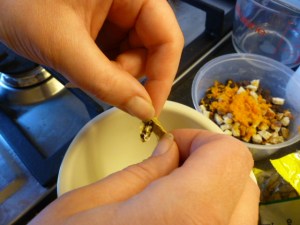
Extracting cardamom seeds from the pods

Remove the Seeds from the Cardamom Pods

Also lightly crush the cardamom pods to release the black seeds inside, and grind these to a coarse powder with a pestle and mortar.

Sieve together the flours and the cocoa. I usually skip the sifting step in a recipe, but this will help prevent the cocoa from forming lumps.Mix together with the sugar, salt and yeast

Make a Well in the Centre of the Dry Ingredients

Make a Well in the Centre of the Dry Ingredients

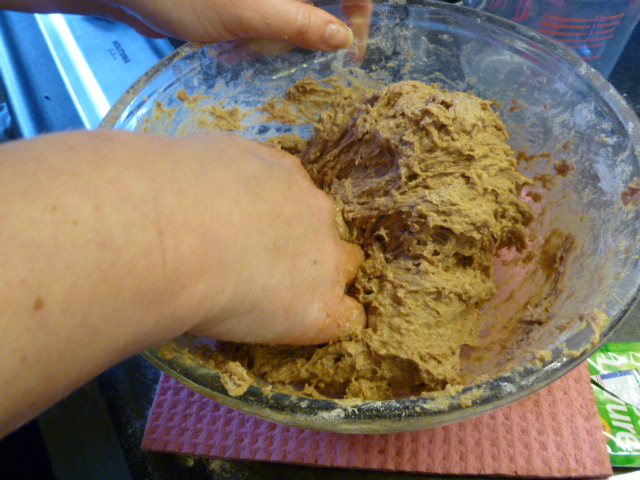
I found that mixing boiling water from the kettle, and cold milk from the fridge, the resulting liquid was warm, but not too hot for the yeast. You can use a food mixer with a dough hook for this recipe, but I am gadget-averse, so I had to do it with my hands. whichever way you choose, the dough is fairly sticky. Pour the liquid into the well, and mix.

After Mixing in the Milk & Water

After Mixing in the Milk & Water

Once it looks a bit like this, add the butter and the egg. This is when it gets sticky. Mix it well, so that you cannot see lumps of butter in the mixture anymore.
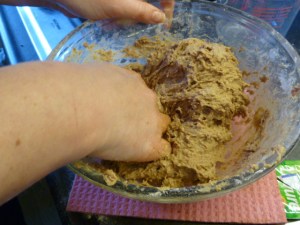
The mixture will get a little smoother

The mixture will get a little smoother

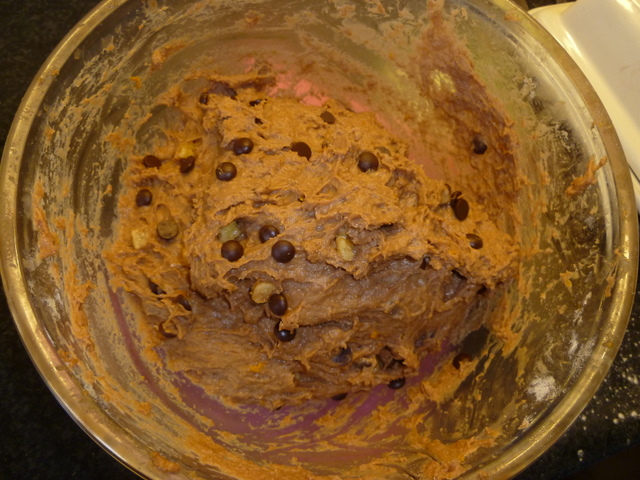
Then add the chocolate, candied peel and the ground cardamom. Knead this in well.

When it loos like this, cover it and leave it to prove

When it looks like this, cover it and leave it to prove

Try and leave it somewhere warm. It should take about an hour. I left it a bit longer, because I was busy with getting a lamb cooked, and other things. It was fine, and still rose nicely. Knock back – by punching the air out of it.
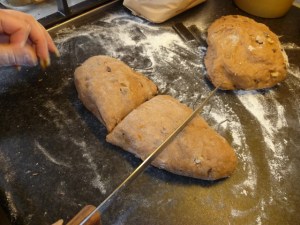
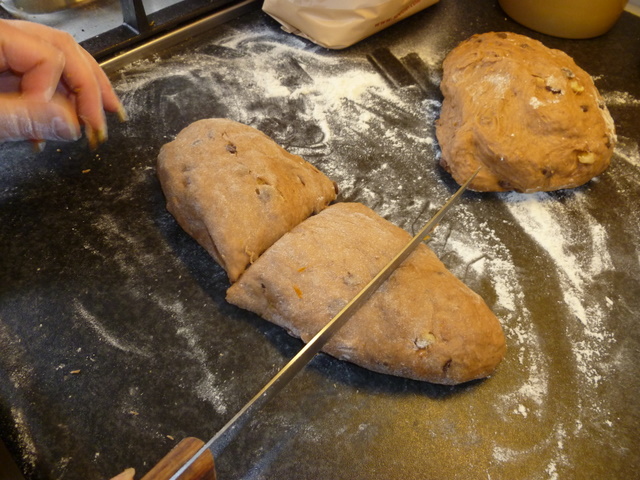
Cut the dough into eight equal(ish) pieces

Cut the dough into eight equal(ish) pieces

I got the proportions mostly right when I cut it. Only one was smaller than the rest. Make it easier on yourself by cutting the dough in half, roughly shaping each half into a thick sausage which you cut in half, then half again. It should be fine, if the sausage doesn’t taper too much.

Shape each piece of dough into a round. The following steps are straight from the River Cottage book, but they work really well, so they are the steps you need. Put the flat side of the dough on a lightly floured counter.

Bring a piece of the dough into the centre and press lightly

Bring a piece of the dough into the centre and press lightly

Each time that you do this, turn the dough a little, then repeat. Do this until all the dough is folded into the middle, and press firmly. Flip it over onto the other side. If you are not that confident in working sticky dough, like me, then you will probably want to flour the work surface again a little bit. More confident bakers work focaccia, which is a much wetter dough, so you will probably be fine. I found that I didn’t need to flour the buns later, because they were fine after I floured the surface.

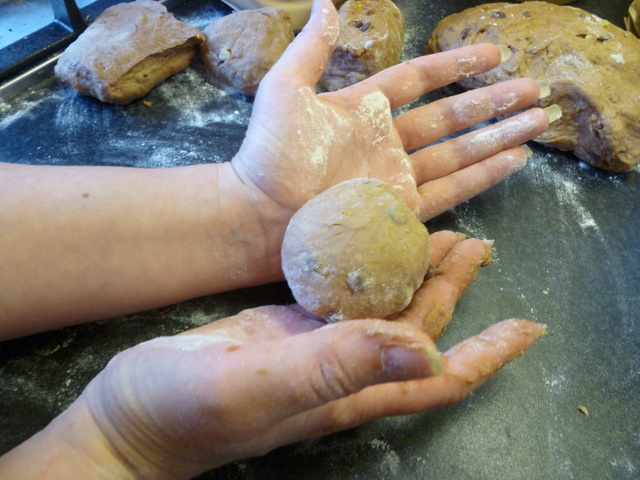
The next bit is difficult to describe. You need to stretch the top of the bun, while tightening the pinch at the bottom. To do this, you need to flatten your hands, place the heel of one hand against one side of the roll, and the fingers of your other hand on the other side.

Step one of turning the bun

Step 1: flatten your hands at either side of the bun

Next you need to move your hands in opposite directions, and bring them together under the bun, so that it spins. This will stretch the top of the dough.
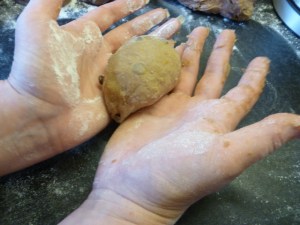
Step Two: Spin the bun, by moving hands in opposite directions

Step 2: Spin the bun, by moving hands in opposite directions

You will end up with your hands in the opposite configuration to that in which you started.

Step Three: how your hands end up

Step 3: how your hands end up

Do this little move three times per bun. Then put it on a board, and dust it lightly with flour, if you didn’t do it on the work surface.
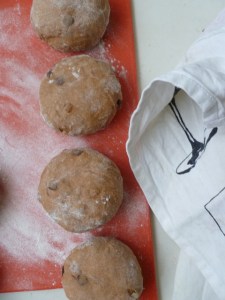
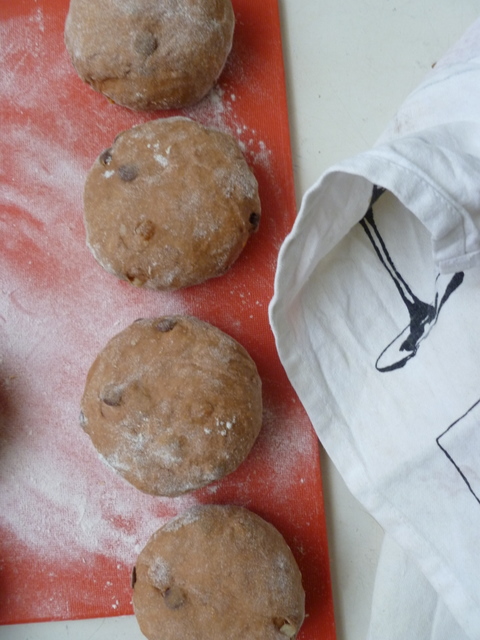
Place them on a lightly floured board and leave to prove for another half an hour

Place them on a lightly floured board and leave to prove for another half an hour

Preheat the oven to 200°C

While the  buns are proving, mix up the flour and water, with a whisk. This will form your cross. I think the paste needs to be fairly thick. If you get the thickness right, I don’t think you need the amount of flour I have given here. I think mine was too thin, because the contrast on the ordinary bun was not good enough, so I didn’t get a cross. The contrast between the chocolate buns was much better, due to their brown colour. However, for you I have upped the ratio of flour to water. My advice would be to start with 50 g flour, and very slowly add the water, until you get a thick batter. it should leave ribbons when you pour it from a spoon, not run off.

Once you have a good consistency for the paste, and the buns have proved, then you need to make the cross. Transfer the buns to a baking sheet. Put the flour paste into a sandwich bag (or piping bag, if you have all the fancy equipment) and snip off a really small corner – be careful, the piped line is much bigger than the hole appears. Pipe the paste over the bun in a straight line, then again, at right angles to the first.

The piping bit is tricky, and needs a fairly steady hand

The piping bit is tricky, and needs a fairly steady hand.

I have to admit to a few drips where there should be none. They wiped off easily enough, but I had a thin paste. It is best to be as careful as you can.

Put the baking tray in the oven, and bake for between 15 and 25 minutes. Mine took nearer 25 minutes, so keep an eye on them. Like most bread-based products, they sound a little hollow when tapped on the bottom, when they are done.

While the buns are in the oven, melt the apricot jam and the water to make a glaze. Glaze them by painting the jammy liquid  over the top of each bun as they come out of the oven.

Leave them to cool on a wire rack.

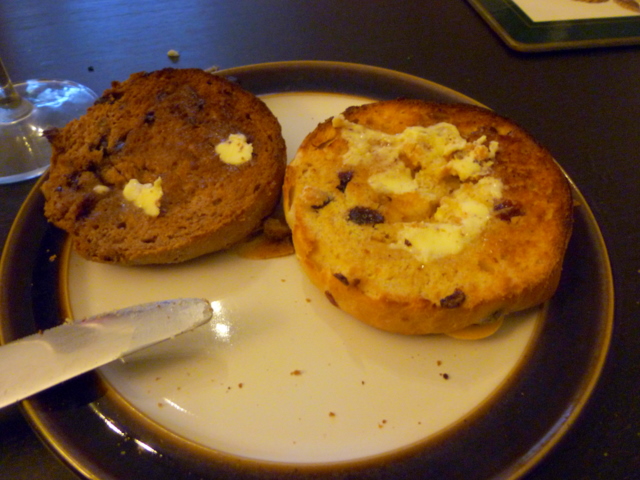
Toasted Hot Cross Buns

Toasty!

Toasted is the correct way to serve these. Possibly slathered with butter from a wonky sheep.
4 Comments

Filed under Feast

Roots and Permaculture

Varzea da Gonçala

Where I Have Been Lately

Hello! I am back from a little sojourn in the Portuguese countryside, where I have been on a fantastic Permaculture Design Course.  I intended to get a load of posts done to be posted over the time that I was away, but as usual, I was behind, and doing them on the journey. I got to the venue to discover that there was no frivolous internet access (due to the tariff system in rural Portugal) and no mobile reception, so things didn’t work out as I had planned (and not planned, in many ways). I am not sorry, it was glorious to be away from it all, and was incredibly good for the soul.

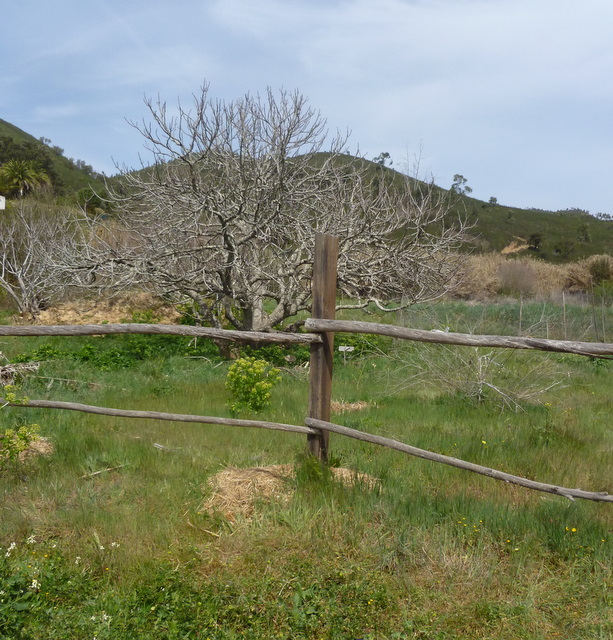
Fig tree at the Varzea, Late March 2012

The View From the Classroom

I will post those other posts over the coming days, along with a few Easter posts, which should probably come first,  but I really want to tell you all about the course and what I got up to first. Partly by way of explanation for the absence, but also because I really want to recommend a permaculture course. This was a birthday present from the Big Guy, so I knew little about it before then. Lucky me!

Me & Permanent Varzea Residents

Me & Permanent Varzea Residents

The course itself was run at Varzea da Gonçala, a lovely small holding just outside Aljezur in the Algarve, and set in a valley (hence the lack of phone reception), not too far from the Atlantic. The Varzea operates on permaculture principles, producing its own fruit, vegetables, and eggs, and they have chickens and pigs to help work and feed the land. It is important to the people who  live and work there to demonstrate that permaculture is effective for everyone, and that it really works. It is why they have called their website ‘I Can Feed Myself’, to underline the point. Chris and Kris, who run it, along with the people who work with them, are excellent hosts and teachers. We also had  amazing food for our stay.

Feast Fit for a King at the Varzea

Feast Fit for a King (Our Last Night)

We ate like kings, with everything from jacket potatoes, to lasagne, to beautiful fresh salads of rocket, mustards, chard, lettuces, fresh herbs, nasturtium leaves and flowers, borage, peppers, you name it. I may not have sown these seeds, but I definitely got my hands dirty to tend to them, so these will form part of the 52 week salad challenge for me, and I don’t feel like it is cheating. The food was fantastic, prepared with love, and was so fresh.

Peter Cow Giving a Lecture

Teacher!

Our main tutor was Peter Cow, who runs Living in Circles, and there were sessions from other permaculturalists, including the people who live on the Varzea.

The Big Guy really couldn’t have chosen a better course. We learned about the principles of permaculture, and the design method, as well as putting it to practical use. I got to play with the compost and do some gardening, and I have learned some valuable skills. Peter is also keen on applying permaculture to the wider world, as well as the personal one. I will admit that I was not really looking forward to this, but I actually found it immensely useful. I have been able to get a different perspective on a couple of things, which have been holding me back in many ways.

The group of people I was on the course with were also brilliant. I have never worked with a group that was so on track, and with no little fighting and falling out, despite being such vastly different people.  Each of them brought a lot of different knowledge to the course, and it was so great to share this with everyone. One guy also lives in the same town as me, so I hope that we can continue to meet and maybe do some digging together!

Making a Wooden Spoon

Spooning!

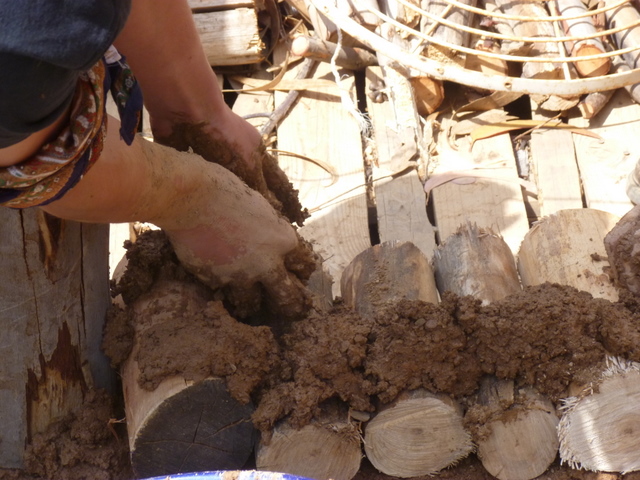
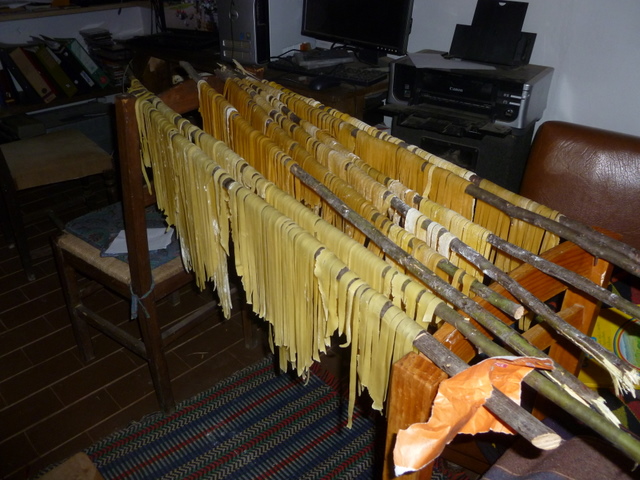
We even practiced some new skills – both on the course, and in the breaks. As well as learning about swale construction, and building a stackwall. I got an insight into perspective in drawing, which has inspired me to give sketching a go – something I never felt equipped to do before. I helped to teach others how to make pasta. I even know how to make a wooden spoon. I’m just putting the finishing touches to one, albeit that it was produced with a little help from my friends. I really feel like I came away a craftswoman.

Constructing a Stackwall from Cordwood

Constructing a Stackwall from Cordwood

In fact, I have been so inspired by the course, I am trying to expand my use of permaculture and permaculture design. I have some plans for friends’ balconies – and before any of those said friends start to panic, don’t worry, permaculture has a lot to do with water catchment and no-dig, so you won’t become slaves to your pot plants. I am planning to implement my own polyveg system in my own garden, and I will be blogging about it here. I had intended to start a new blog for the gardening stuff (and had a great name lined up…) but the idea of permaculture is that you should take advantage of and increase beneficial relationships, and to me there is no better relationship than that between food and food production. So I am going to capture it here, and try to expand the communities of interest that could talk to each other. I am even going to try and design myself into a new career and direction, but I need a bit more work on that.

Finished Stackwall

Look What We Made!

Peter runs and collaborates on a number of permaculture courses, all of the details of which are available on his website. He is also really in tune with group dynamics and very skilled at getting very different people to work together and gel. You might like to go along to a course, or ask him to teach at one of yours.

Drying Homemade Pasta (No Pasta Machine)

Look What Else We Made!

The Varzea also offer a range of courses, as well as holiday accommodation and camping, for groups, individuals or families. You can get hands-on experience and teaching in permaculture practice. As well as having access to delicious, organic food from the land that they work. An ideal get away from the petrochemical farming and urban landscapes we have come to know, I really cannot recommend this place enough, not to mention the hospitality and the welcome you will enjoy here.

I hope that you will also come to share my enthusiasm for permaculture, and share the fruits of my labour (and the recipes that they inspire). Thanks for coming this far.

Contacts for Varzea da Gonçala

Contacts for Peter Cow

NB: I do not represent, nor am I being paid to blog about the permaculture course,or the Varzea.  I am just so enthused by the experience, and the people I met that I wanted to blog about it.

4 Comments

Filed under Farmed, Feast, Fed