Category Archives: Farmed

Garden Companions and a Lemony Salad

Foraging Spot, De Bretten, Netherlands

Pretend it’s a Salad!

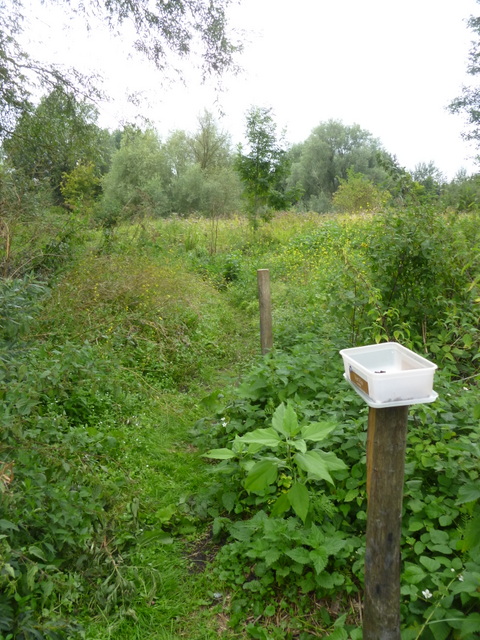
Well, it has been a little while since I posted, which I blame on having broken my camera. It also means that I am about to do something that you should never do on a food blog, and that is publish a post without a photo of the food. I did have a corker to share, but it is lost, so you will have to wait until next I make this recipe. In the meantime, please enjoy the view from one of my favourite foraging spots, complete with convenient resting place for my containers.

In this area, people have also planted a guerilla garden. It has been here as long as I have been coming, and probably longer. You may be able to make out Jerusalem artichoke in the picture, and there are potatoes, pumpkins and corn at various times of the year. There is also a lot of mint, which I think was planted initially, but the conditions in the Netherlands are perfect for this herb, and now it is running rampant.

I may have mentioned that we are trying to eat healthily but with all the flavour, and one of the salads that really fits the bill is fattoush. This is a Lebanese salad that uses sumac and lemon to give a really zingy dressing. I have been buying sumac, but I’m delighted to learn that you can actually forage for this plant. It is a native of North America, but apparently it has been a popular garden and municipal plant in the UK. I shall be looking out for it here too.

Despite trying conditions for many of our crops this year, our herbs have gone crazy. So, I didn’t need to forage the mint for this recipe, but at least I’d have known where to go. I don’t take any of the other plants in the guerilla garden, because they are clearly loved and cared for, but there is enough mint here to keep Cuba in mojitos for a decade.

I am also proud to say that this salad contained my first ever Little Gem lettuce.

Since my course back in March, I have been trying to garden according to permaculture principles.  Part of this is that you try to avoid bare soil in an effort to preserve the soil microbiology, take advantage of microclimates, and to prevent the army of local cats from pooing near your veg.

OK, that last one is more a principle of mine, since they used to see our dug over soil as a litter box, little*ahem* darlings. But it does adhere to the principles of  using and valuing diversity, letting a problem become the solution, and (literally) reducing waste 🙂

Based on companion planting charts that are widely available on the internet, I decided to underplant my asparagus with lettuces, marigolds, and chicory. These included red velvet, a leaf lettuce called “Australian Yellow”, a mixed salad, and the aforementioned Little Gems. Most of them have done well, apart from the red velvet. I think this is because a cat got to the spot that night I planted the seed.

So with parsley and mint in abundance and Little Gems and radish doing well, garden fattoush was the salad of choice. A lot of flavour, with the potential of foraging. Could you ask more from a salad?

I’d be really interested in hearing about other people’s efforts at companion planting. Do you have any particular favourites that grow well, or help against pests? Please do share them in the comments.

Recipe: Fattoush Salad

Ingredients

2 pita breads, diced

1 tsp oil for frying

2 Spring onions (or more if really like them), finely sliced

Zest and juice of one lemon

3-4 tbsp extra virgin olive oil

1 tsp sumac

200 g cherry tomatoes (or baby plums), halved

½ cucumber, chopped into large dice

small bunch radishes; roots quartered lengthways, and smaller leaves

2-3 Little Gem lettuces, leaves only, chopped in half

Large handful of flat leaf parsley, leaves whole and stalks finely chopped

Smaller handful of mint, leaves only, roughly chopped

Method

In a frying pan, heat a little oil until it is quite hot. Fry the diced pita breads until they are golden. You will need to stir them occasionally. Drain onto kitchen paper.

While the bread is frying, mix together the lemon juice and zest, the good olive oil, the sumac and the spring onion. Leave aside for a  few minutes to take the raw edge off the onion.

Combine the tomatoes, cucumber, salad leaves, herbs and the radish roots and leaves in a large bowl. Dress the salad with the dressing, and toss well.

Add the pita bread, stir briefly, and serve immediately.

Sounds appetising, doesn’t it? I’m sure you can picture this one without a photo.


19 Comments

Filed under Farmed

Simple Ways to Avoid Onion Breath

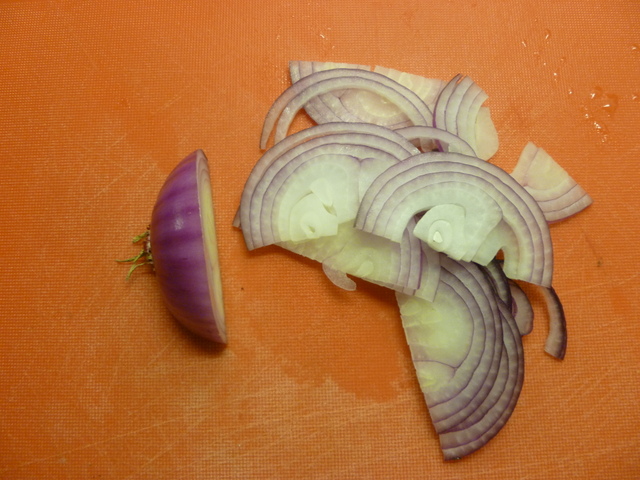
Sliced Red Onion

Not Your Lunch Time Friend

Raw onion: a lot like Marmite, it is a very divisive ingredient in any dish. Alliums in general are used to impart flavour to a wide range of food, both raw and cooked, but they are pungent and packed with sulphur compounds that make you cry and give you bad breath.

There is a growing trend amongst lunch venues to put red onion in a variety of salads and sandwiches almost everywhere I have been or travelled to. Why do they do this? Apart from making me really thirsty, raw onions are a little antisocial, especially if you have to return to breathe onion fumes all over your colleagues, and anyone that you happen to be having a meeting with that afternoon. I also think it is really lazy. There are several easy ways to avoid this, without compromising on flavour or crunch.

If I am going to be using shallots in a salad dressing, or taboulleh, I address the problem by soaking them in the vinegar of the dressing before I add the rest of the ingredients. A good 10 minutes in the vinegar will reduce the affect of sulphur compounds, as well as develop the flavour.

Similarly, if I am going to make guacamole, a 10 minute pre-soak of the onion in the lime juice sorts out the problem of onion breath. It really isn’t difficult, and in reality doesn’t add loads of time to your prep, you can do it first, then get on with another element of your salad.

I have been eating a lot of salads, not just because of the 52 Week Salad Challenge, but also because they are healthy, low in fat and they are a great way of tasting the best of the seasons.

In the past, I have omitted the raw onion in a salad, but there are a couple that really are made better by the crunch and flavour of onion, but I don’t benefit from the unquenchable thirst I get when I’ve eaten them in any amount.

Panzanella is one of my favourite salads, but it loses a lot by leaving out the onion. Keeping the onion slices as crunchy as possible is also integral to the necessary contrasts of the dish too. For this reason, soaking it in the vinegar is not the best way forward, as this will reduce the crispness of the bite a little.

I am sharing my recipe for panzanella, because it contains the easiest tip for avoiding onion breath, it’s a fantastic salad, and it uses up leftover bread. What’s not to like?

Panzanella

Scented With Summer, Not Onions

Recipe: Panzanella

Ingredients

This will serve two people on its own, or 5 as a side dish

4 thick slices of stale bread, cut into large cubes

400 g tomatoes, different varieties, if you can get hold of them. They need to be ripe, and at room temperature.

½ cucumber, in large dice

1 red onion, finely sliced

3 tbsp extra virgin olive oil

1 tbsp blackberry vinegar, or red wine vinegar if you don’t have blackberry

1 tbsp capers

6-8 anchovy fillets (optional)

salt and pepper

15-20 basil leaves

Method

If the bread you are using is not stale (although this salad is much better with stale bread), you can dry out the bread in a low oven, or one that has been turned off from cooking something else.

Chop and slice the tomatoes. If you have pretty heirloom varieties, slice some of these and set aside as a decorative touch later. I was using a mix of varieties, which included marmande, plum, tigerella and black Russian. I put the red ones into the salad, and sliced the tigerella and black Russian for the plate.

Combine the cucumber, tomatoes and bread in a large bowl, and set aside.

Cover the onion slices in boiling water, and leave them there for about 2-3 minutes. This removes the sulphur from the onion, but does not cook it, so you still get the crunch, but none of the bad breath. Drain the onion, and leave to drip while you make the dressing.

Whisk together the oil, vinegar, capers and the chopped anchovy fillets. Adjust the acidity or oil to taste, but bear in mind that the tomatoes are also going to add acidity. Season well with salt and pepper.

Add the onions and the dressing to the salad, and mix well. Set aside to allow the flavours to develop for at least a couple of hours, or overnight in the fridge, if you can, but serve it at room temperature.

Just before you serve, roughly tear the basil leaves and mix them in.

If you like, you can add punchy salad leaves, like spinach, mizuna and rocket to add extra bulk. Do this when you add the basil, or the dressing will cook them.

This is a great salad to serve at a barbecue, or summer picnic, or as a side dish. It is also the tastiest way to use up leftover bread.

4 Comments

Filed under Farmed

Seeds with a Story

Seedy Packet August 2012

A Packet of Seeds

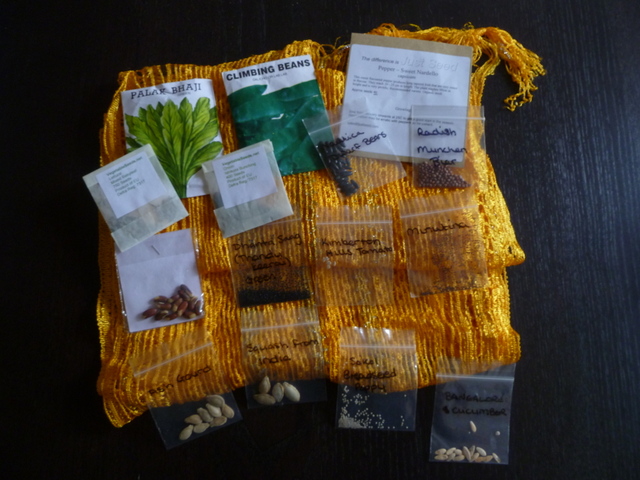
I am pleased to report that Sally got my seeds on Tuesday, and she sent me a lovely e-mail to say that she enjoyed my packet. I did my best to include seeds with a story, since I struggle to find heirloom varieties over here.  I often have to get them from the UK, and all the suppliers that I talk to laugh, since a lot of their seed is grown over here in the Netherlands. I find this pretty frustrating, as there are very few varieties on offer here and even less choice if you want organic seed. Not to mention the crazy seed miles that they have to travel. Anyway, I’m glad that Sally liked her parcel; I hope to be able to save some more seed, so I should have some more variety in the future.

Yesterday, it was my turn. As I mentioned in my last post, my penpal Charlotte has been to India. Lucky me, I got lots of lovely seeds from India, and some from elsewhere too. Charlotte was really good at getting plants that suit my shady garden, or my sunny windowsill, as well as being some of my favourite things to eat.

From India, I got:

  • Bangalore cucumber mix – with a random tomato seed. Charlotte picked up a pack of cucurbits, including some oblong ones, and there were a few random seeds in the pack, which she shared with me too.
  • Ash gourd, which is a popular Ayurvedic plant in India, particularly good for strengthening the digestive system, and protecting against indigestion and urinary tract problems. I am lucky not to currently suffer frequently from either, but now I can make sure they stay away!
  • Unknown squash, Charlotte couldn’t be sure of more than that, because the packet was in Mayalam. She postulates it is a winter squash, and recounts an unsuccessful attempt at explaining what a courgette is when she was trying to find out more.
  • A variety of yard long beans. Unknown, as again the packet was in Mayalam. I can’t wait to be able to grow these, I love beans and surprise varieties are always welcome.
  • Some Lab Lab beans. I am assured that these have beautiful flowers. I am already trying to think of some construction that will show them off near the house.
  • Palak Bhaji and Dhanta Saag, both of which are leafy greens, possibly amaranth types. They will be a different flavour to add to my salads and as cooked greens.

And it doesn’t stop there, Charlotte also sent me seeds that she enjoys, and that she chose because I prefer things that you can eat. All of the seeds she sent have a story, but I particularly enjoyed some of the stories with these seeds.

The stories and the seeds are:

  • Kimberton tomatoes; a yellow tomato variety developed by the members of Camphill Village, an intentional community in Kimberton, Pennsylvania for people with developmental disabilities. They grow their own fruit and veg, and develop varieties of plants. Charlotte is actually from a town very near to this community, so these are seeds from both her home and her homeland. She mentions that the packet says “Grown and selected for many years by the late Hupert Zipperlin from Camphill Village, Kimberton”, so thank you to Hupert for these seeds too.
  • Sokol Breadseed Poppy. Charlotte sent me these because the seeds are easy to collect, due to the unique way the seed heads form. She thought that they would be interesting for me, despite the fact that I don’t grow many flowers. I have previously not seen much point in flowers, but I am trying to garden using permaculture principles. I am seeing increasing uses for many flowers, and have learned a lot about edible flowers, and parts of flowering plants. I’m looking forward to benefiting from an abundance of beauty as well as the tasty seeds next year.
  • Nautica Beans, which are a particular favourite of Charlotte’s. She says that they are thin, tender and tasty, and remained so for the duration of her trip to India. She says she thinks they are amazing, and may not grow any other variety of bush beans. High praise indeed, I’m looking forward to these in a thousand different dishes already.
  • Minutina (Buckhorn Plantain) was chosen because I like to eat weeds. Or what others may consider weeds, in any case. I have found most of them to be delicious. Foraging is even better when you don’t have to look too hard.
  • Radish Munchen Bier, which are podding radishes. You don’t eat the root; you wait until they go to seed and eat the seed pods. I’ve never tried these before, so I’m looking forward to these too. Charlotte recommends stir frying them.

I also got Nardello peppers to grow indoors and some bunching onions and mixed lettuce, which will be great for the 52 week salad challenge.

You may have noticed the glorious yellow scarf underneath the seeds in the photo. Charlotte also sent me this, another present from India. Isn’t it beautiful? And as we head into winter, or even if we get another summer like this one, it is a vibrant reminder of sunshine, and happy hours in the garden.

Thank you, Charlotte. There is certainly a lot to challenge me, and a lot of brilliant plants to look forward to.

Anyone can join the Seedy Penpals, whether you have a window box or a wood. I can vouch for the fact that people have enjoyed the first one, and that you get some great surprises and new and interesting plants. If you are interested, see here for more details and how to join up for the next swap, which will be in the spring. New seeds, new varieties, new friends. What’s not to like?

11 Comments

Filed under Farmed

Seedy Survey August 2012

Seedy Penpal Blog badge

So, here we are. It is time for the first Seedy Survey. Please do join in, and add your link to the widget. If you don’t have a blog, but would like to write up what you got, Carl and I are more than happy to host your write up,  drop us a line.

If you don’t think that a blog post is for you, you can also add a comment here to talk about your parcel, we don’t want anyone to feel left out.

I have been really cheered to see all the chatter about #SeedyPenpals  on Twitter, it seems that you have enjoyed seeing what you have, and I know a few of you have already got seedy and planted up your haul. Brilliant progress, and I thank you all for taking part and for your enthusiasm.

I would also like to thank Ian at Foodies Heaven, who really ran with it, and set up this forum, if you’d like a place to chat about your Seedy Packet, or growing things in general.

We have also launched the Resources Page, with information on seed saving, autumn sowing, and growing in general. We’ll update this regularly, so let us know if there is anything that you think should be up there.

We have had a few teething problems, and we are learning as we go.  I’d like to say thank you for your patience, and encourage you to give us some feedback, so that we can improve. We got over 4 people joining  this time (and more for the next round already), so we would like this to become a regular thing.

My first match was with Sally of Constant Gardener. She is not wrong, she is a very experienced gardener and garden writer, so I fear that I have not really set her a challenge with my Seedy Packet, but I hope that she likes the seeds I sent. I remain hopeful that they will arrive with her today, as the post office promised. I got a bit of a flu, in the heat wave, and couldn’t post it on time (terrible, as one of the hosts I know, but I did let her know – it’s all in the communication people). I’ll let you know when they arrive.

I was matched with Charlotte, who tweets here. She was in India for work, and has unfortunately been a bit unwell since she got back, so I am still waiting for my Seedy Packet too. As my best friend would say, god never pays his debt with money! Again, we have kept in touch, so I know that it will arrive, and I’ll get things planted for the winter, so no worries. I’ll let you know what I get. And I hope that Charlotte feels better soon.

The great thing about Seedy Penpals is that it happens twice a year, so it doesn’t matter too much if you join in a little late (as llong as you have discussed this with your penpal), plus there is also Seedy Cuttings, where you can link to updates on your progress at the end of non-swap months, if you want to.

I have really enjoyed Seedy Penpals, and have been bowled over by the response. It has been great to meet many of you, and to learn a bit more about the growing habits of friends old and new.

If you aren’t sure what to write about your Seedy Packet, you could try using the questions in the Seedy Survey as a starting point. I know a number of you have already written up some great posts. The link widget should post to both Carl’s and my blogs, so you will only need to post it once.

If you would like to join in, you can sign up any time, and we will remind you closer to the time about the exchange. If you feel that you cannot participate for whatever reason, then just let us know at the time, so you don’t need to worry that you are obliged to do something, we all understand that life happens.  You only need to sign up once, so that’s a job less for you at each exchange.

I’m really looking forward to reading your experiences in the links and in the comments.


3 Comments

Filed under Farmed

Of Gluts and Gluttony

Courgette & tomato "Pasta"

Courgetti Spaghetti

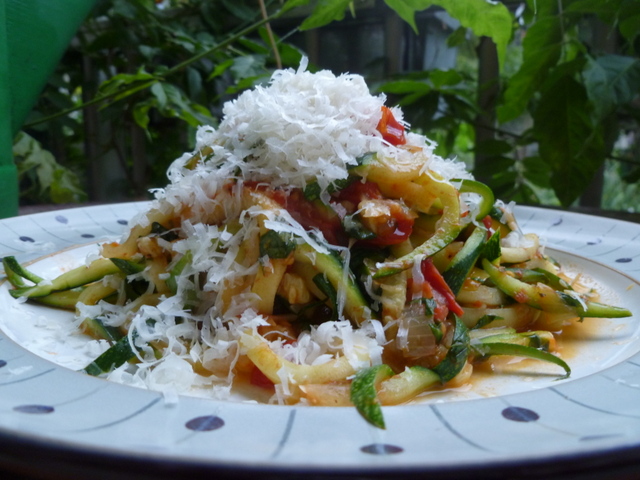
Have you ever planted too many courgettes, or even had an exceptional year, and not known what to do with your excess? I’m sure that this has happened at some time to most gardeners, and you have been desperately trying to give them away to friends, relatives, passing students, and anyone who knocks at the door. Not to mention trying to pickle, grate or shove them into fritters, soups, salads, stews, cakes and on your breakfast.

This year, many of the courgettes seem to have got off to a very slow start, due to the weather, but we are now finally starting to see them take off.

This is a recipe that I use both to use up excess courgettes, and also because it is a tasty, and unusual take on a ratatouille.  It is also a low carb alternative to pasta, as well as being a quick and easy supper.

I have made this for many years. Sometimes, I make it even lighter, by keeping the cherry tomatoes whole, leaving out the onion, and grating in some lemon zest. I find this version needs a little more parmesan, and that you need to mix this in over the hob.

This courgette pasta is actually a version of Pasta Neapolitan.Using the courgette as pasta is also a nice alternative with many other pasta sauces – I have also tried it with al’arrabiata and puttanesca to great effect, but I also imagine it would be good with pesto, carbonara, mushroom-based sauces, and even bolognese, if you are careful not to add too much liquid  to the sauce.

I like to use herbs liberally in this dish, for an extra fresh kick. Always thyme, and I like to add oregano. Rosemary or basil would also work well. Play around with it, and see what you like best.

Simple & in Season Blog Badge

I am entering this into Simple an in Season for August, hosted by Ren of Fabulicious Food. There is nothing more seasonal than using a glut of your vegetables, and this dish really couldn’t be simpler.

If you do try this recipe, please leave me a comment and let me know which herbs you used, I’m always interested to hear what people have done with my recipes, and learn new variations.

Recipe: Courgetti Spaghetti

Ingredients

1 Medium onion, finely diced

A Little olive oil for frying

2 Cloves garlic, crushed to a paste

4-5 Sprigs thyme, leaves only

200 g Cherry tomatoes, halved

2 Courgettes

A little lemon juice

2 Large sprigs oregano, leaves only, finely chopped

Salt and pepper to taste

A little freshly grated parmesan cheese to serve

Method

Sweat the onion off in a little olive oil, until the onion pieces are translucent. Add the garlic and thyme and cook out for a minute.

Add the cherry tomatoes, and cover the pan, to encourage the tomatoes to break down and cook out. Once the tomatoes have broken down a bit, uncover the pan, and allow to cook down on a low heat.

Top and tail the courgettes. Using a mandoline, and being careful of your fingers, make juliennes of the entire length of the courgette, to resemble spaghetti. You can julienne them by hand if you don’t have a mandoline, but this is time-consuming. Instead, take a vegetable peeler and peel the courgette lengthways to give you thin papardelle sized strips.

Cover the courgette strips with cold water with a little lemon juice in. This will stop the courgette from browning, while the sauce  cooks down.

When the sauce has been cooing for at least 15 minutes, and has thickened a bit, blanch the courgette strips in boiling salted water for 2 minutes. You want the courgette to retain some bite, but take the raw edge off. Drain well, and leave in a colander, for at least 10 minutes. You can squeeze a splash more lemon juice over them to prevent browning.

Because the courgette is much more watery than normal pasta, you want to cook the sauce down until it is fairly thick, otherwise the courgette will flood the sauce and dilute it.

When the sauce is almost too thick, add the oregano and mix through. Continue to cook on a low heat, and taste. You can add a little sugar (less than ¼ tsp) if you think you need a little more of the tomato flavour to come through. If you use very ripe tomatoes, you should not need this.

Add te well-drained courgette to the sauce, over the heat. You just want to combine the sauce and the courgette. The courgette is likely to start giving off water, so keep the heat on low while you mix  it all in, and season it to taste. Remove from the heat, and serve immediately, with a little parmesan cheese. Or leave the cheese off, for a simple, seasonal, vegan supper.

7 Comments

Filed under Farmed

Fairies That Can Really Pack A Punch

Marinated Tinkerbell Pepper Salad

Fairy Salad

I recently got hold of some small Tinkerbell Peppers, of assorted colours. They are like bell peppers, but smaller. They are officially a dwarf sweet pepper, but it has given me some ideas for what to call those that I grow, which sometimes turn out not to reach their full size!

I jest. I saved the seed, and I’ll be planting some of these to see if I can grow them next year. We’ll see how successful I am. I hope they’re not F1 hybrids.

Tinkerbell Peppers in Perspective

Fairy-Sized

I recommend this variety, they are small, but perfectly formed, and have quite a lot of flesh for such small peppers, and they have much better flavour than the greenhouse varieties that we get from supermarkets. They would be great for stuffing to use as canapés, on the barbecue or even simply in salads.

I always knew I was going to marinate these peppers, which I often do to larger varieties, to serve with homemade burgers and veggie burgers at barbecues. At the moment, I am also trying to find ways of injecting a lot of flavour into salads, without adding too much by way of fat (more on that soon).

I also have some very good smoked Maldon sea salt, which complements the smokiness of the charred peppers perfectly. I usually char the peppers on my hob, but these were tiny little things, and I wanted to add to the salad by charring some ciabatta, so I used my griddle pan. A fairly recently lit barbecue would also be a great way to char the peppers, and the bread can char just before you serve it. The delicate smoke of the salt enhanced the smoky flavour of the peppers.

It struck me that I could use the peppers and the marinade to dress a nice salad. However, the salad would have to stand up to the punchy marinade, so a normal butterhead lettuce wouldn’t cut it (and this would definitely be no place for an Iceberg). I think any of the mustard greens would be suitable, as would watercress, and some of the foraged greens that are abundant at the minute (e.g. wood sorrel, sorrel, fat hen, chickweed). I had rocket, chickweed and parsley in the garden, so I used those. I bulked it up with some baby spinach. The iron and peppery flavours were just what was needed.

I have also found apple mint and sumac great for adding a lot of flavour to salad leaves, without resorting to cheeses and too much dressing.  If you have any other tips for creating good flavours, I’d love to hear them.

This entry is part of the 52 Week Salad Challenge, where they are currently discussing pests. I know Michelle would love to hear from you if you have anything to add about the bane of slugs or other nuisances.

Recipe: Smoky Tinkerbell Pepper Salad

Ingredients

For the marinated peppers:

5-6 Tinkerbell peppers (or one or two large ones)

A little oil for the griddle pan

2 tbsp extra virgin olive oil

1/2 tbsp blackberry vinegar (or sherry or red wine vinegar will work, even balsamic if you have to)

1 clove garlic, very finely sliced

Small pinch of dried chilli flakes

Good pinch of smoked salt (or normal sea salt)

Black pepper to taste

For the salad:

4 thick slices of ciabatta

A little extra virgin olive oil

A bunch of rocket

A large handful of baby spinach

Bunch of chickweed, chopped if the stalks are long

Bunch of parsley, leaves only

¼ cucumber, diced

8-10 cherry tomatoes, halved

Method

Heat a little oil in the griddle pan.

Halve and deseed the peppers. Put skin-side down in the hot pan, and leave until the skin chars and blisters. You may need to press them down a little on the rounded bits to get the skin to char evenly. Don’t worry that the skins go black.

When the skins are blackened and blistered all over, place them in a plastic bag, a bowl covered with cling film, or in an airtight container, and seal. Allow to cool for 5 or so minutes, when you will be able to rub the skins off easily.

In another airtight container mix a dressing of the extra virgin olive oil, the vinegar, garlic, chilli flakes, the salt and a little pepper. The acidity of a dressing tends to be a matter of taste, so adjust this to your liking.

While the skinned pepper halves are still warm, add them to the marinade, cover, and set aside for a while – at least half an hour – to allow the flavours to mingle. At this stage, you can use the marinade peppers as a side dish or relish too, if you like.

Drizzle the ciabatta slices with some olive oil, and put in the warm griddle pan. You should be able to hear it sizzle, as you put them in. You want a nice striped toast to the bread, so once it is in, resist the temptation to keep moving and checking it.

I used ciabatta rolls, cut in half, so I only toasted the cut side. Leave this for at least 3 minutes, until you can smell the bread toasting. If you are using bread slices, then turn it over, and char the other side, again resisting temptation to move it around. The second side will need slightly less time. Leave to cool slightly.

Meanwhile wash the salad leaves and prepare the cucumber and tomatoes. When the bread is ready, dress the salad in the peppers and marinade, tossing to mix it well.

Serve the salad over the toasted bread, and pour over any remaining marinade.

You will have a smoky, hearty salad, that does not leave you wanting. The marinated peppers may have a fairy’s name, but they really do have a giant flavour.

2 Comments

Filed under Farmed, Feast

Salad Daze

Boiled Egg and Salad

Salad as Protein

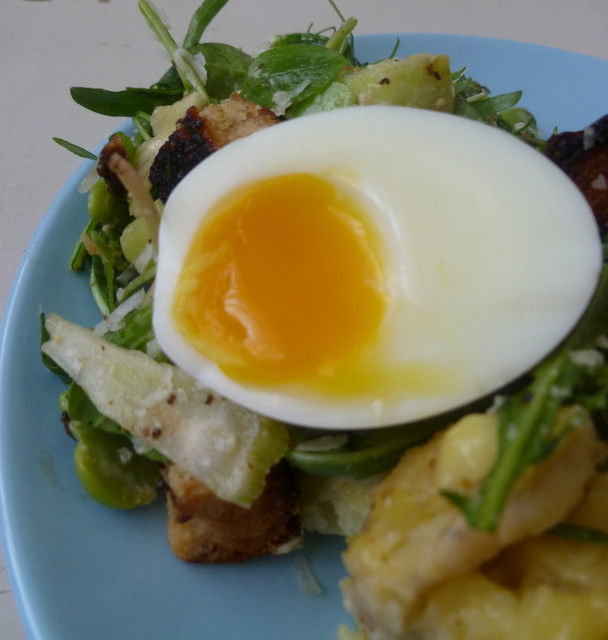
Obviously, we are now at the height of the salad season. I have an abundance of rocket, leaf salads, radishes, cress, mustard greens and more. And yet, I am about to do a post that focuses largely on the less usual salads and ingredients that I have been having since last I updated you on the 52 week Salad challenge.

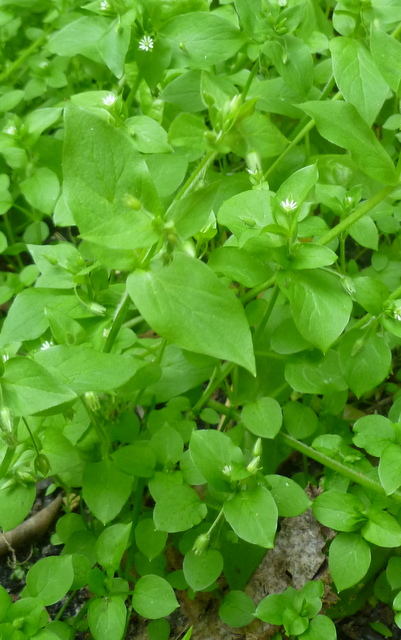
Chickweed Stellaria media

Salad as Easy

I remain loyal to chickweed, and luckily it seems to remain loyal to me. I have been eating it for what seems like months now. I remember that I lamented the lack of chickweed back in the spring, and thought that the conditions in the Netherlands were not suitable. It turns out that I was wrong. Chickweed loves the growing conditions here, but it does appear about 6 weeks after it would in the UK. It has kept me and the guinea pigs happy for quite a while. I have no idea why people write this off as a weed, I think it is delicious.

Mixed Salad with Broad Bean Tips

Salad as a New Kind of Shoot

Back in June, I was also including broad bean tips to my salads. These really are the gardener’s treat, as they don’t keep well, so must be used fresh from the plant. This year, I was also fortuitous in that I hadn’t quite got round to eating my dock and digging it up. I have discovered that blackfly love dock much more than my beans, so they remained pretty free from these sap suckers. Since dock is edible, and has proven to be so effective, I shall probably not be so hasty to remove it all in future, as long as it stays out of my raised beds.

Salmon Fishckes, collaboration salad, Taboulleh & Sauce Grib-ish

Salad as Leftovers

This past month, herbs have also featured heavily. I am finding that herb fennel, dill, mint, basil, and parsley have become a regular addition to my salads, as well as providing me with lots of tabbouleh, and sauces.  I have also been adding herbs to salad dressings. I’ve always used thyme, of course but lately, my oregano has gone crazy, so I have been looking for recipes to use it in. I found this lovely oregano, mint and lime dressing by Laura of How to Cook Good Food. It was an entry in Karen’s Herbs on Saturday Challenge, and has been on heavy rotation in our house since I came across it. It is really a salad dressing for summer.

Mixed Family Salad

Salad as a Family Affair

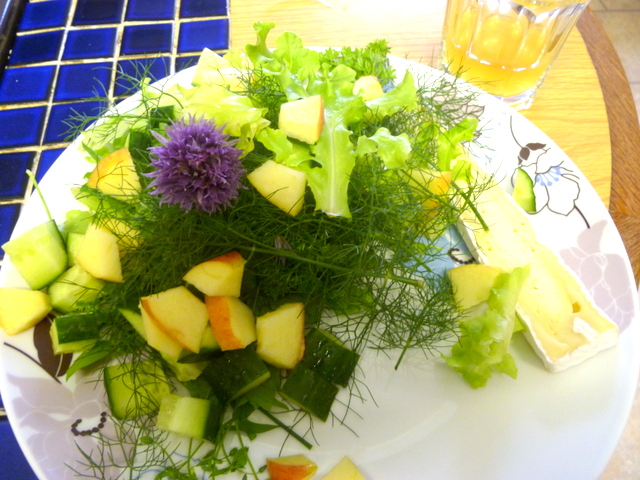
Back when it was my Mum’s birthday, I made a lovely collaborative salad of leaf lettuce from my sister’s garden, fennel, mint and chives from my mum’s garden, and foraged chickweed. I also added carrot and radish leaves, and was very happy when it all went at her birthday barbecue. I also livened up a simple pasta and chive salad, by mixing in a separated chive flower. I think I converted one of Mum’s friends, who was pretty amazed when she found what it was. She didn’t know chive flowers were edible, but said she would try them from now on.

Summer Vegetable Nage

Salad as Soup

Another herb that has been featuring in my cooking of late is chervil. Although you rarely see chervil in the shops it is really easy to grow, and I have many pots and planters with it. I love this delicate little herb, and it makes a great addition to any salad. It goes so well with broad beans and peas too, as you can see from this vegetable nage I made a while ago.

Something else I really love, especially when the weather is a little too cold for salad is to braise lettuce, beans and peas in a good stock. A dish that is made even better by the addition of a little chervil just before serving.

Braised Salad, Beans & Peas

Salad as a Side Dish

(c) P. Caspar 2012

Recipe: Braised Lettuce, Beans and Peas

Ingredients

This will serve four people as a side dish

100 g podded weight broad beans

100 g shelled weight fresh peas

2-3 Little Gem lettuce, depending on size. This dish also works well with Witloof chicory, and other firm hearted salads

400 ml chicken or vegetable stock

Small bunch chervil, finely chopped

Method

Briefly cook the beans and peas in unsalted boiling water. You can use the same pan, but the beans will need 3-5 minutes, depending on size, and the peas will need 1-2, so add the peas to the pan after the beans have had a couple of minutes. Once they are cooked, drain and refresh in cold or iced water.

Double pod the beans.

Halve and rinse the little gems. You need to keep the stalk, so that the lettuce stays together during the cooking.

In a sauté pan, heat a little oil. Once hot, add the lettuce and cook briefly. You want a little colour on the leaves, but be careful, as they will burn easily. Turn them once to get similar colour on each side. If you prefer a thicker sauce, you could stir in about a tbsp. of flour at this point, and cook it out briefly. I don’t often bother with this stage, unless I am going to use this as a soup.

Add the stock, and cover. Bring to the boil then simmer for about five minutes. Add the peas and beans and heat through for another minute or so. Just before you serve, season a little, if needed and stir through the chervil.

This makes a great accompaniment for most main courses, or you can shred the lettuce a little when it is cooked, stir through a little cream, and serve as a light soup.

4 Comments

Filed under Farmed

Introducing… Seedy Penpals!

Seedy Pen Pals Blog Badge

For the last few weeks, Carl Legge and I have been Tweeting up a storm about #SeedyPenpals. Today, I am very pleased to announce that we have launched Seedy Penpals!

If you follow me or Carl on Twitter, then you may have an idea of what it is about. For those who don’t, or who managed to miss it, this is a place to swap seeds, make friends, and share knowledge or learn more about different kinds of plants.

For this inaugural round, you have until Wednesday 1st August to sign up for the first match. We will then match people up by the 5th August and then you will have until Wednesday 15th August to contact your penpal, and send out your chosen seeds.

There will be the opportunity to blog and tweet about your parcels, and each month, Carl and I will host Seedy Cuttings, where you can add links to your updates or leave them in the comments for all to share. We welcome anyone who is resident within the EU (due to seed export restrictions to other areas), but you don’t need to be an expert gardener, we’d love you to join if you are a complete novice or have green hands, whether you have a window box or a country estate. You don’t need to be a blogger or a tweeter either, there are plenty of opportunities to guest post, comment, or even just join in for the joy of getting a growing present twice a year.

Over the coming weeks, we intend to build a resource that people can share, and a space to ask for advice, or simply to brag that you’ve managed to grow a mighty oak from that tiny acorn you were sent in your parcel! We have a few ideas, which we will be adding soon. Would you like to see anything that would be useful to you?

We are also open to feedback, so please do have a look, and I’d love to hear your comments.

This penpals scheme was inspired by the Foodie Penpals scheme, which is the brain child of Lyndsay at The Lean Green Bean. It was initially suggested by Karen from Samphire, during a chat on Twitter about the Foodie Penpal scheme, and Carl and I agreed. We have had a lot of help and advice on logistics from Carol Anne at Rock Salt, who runs the Foodie Penpal scheme in Europe. I’d like to thank them for a great idea (I’m in my second month of Foodie Pen pals) and especially to Carol Anne for the advice.

Carl also deserves a lot of credit for the lovely blog badge that he came up with. I really think it is beautiful, and totally out of my skill set. It is another brilliant incentive to come and join in, because if you do, you can have this lovely badge on your blog, or even your wall.

I hope to see you all in the Seedy Penpals, and I’d appreciate it if you can tell all your friends too.

Let’s get Seedy!

3 Comments

Filed under Farmed

The Queen of Tarts

Asparagus & Lancashire Cheese Tart

The Knave of Hearts, He Stole the Tart

When I got some Lancashire Cheese from my foodie penpal, I knew I had the start of a great dish. When the Big Guy brought home what was likely the last bunch of local asparagus that we will see this season, I knew exactly what that dish would be.

Lancashire cheese and asparagus are a marriage made in heaven. The sharp flavour of the cheese would be perfect to go with the chlorophyll hit that you get from seasonal asparagus. Add to this fresh herbs, and put it in a tart, and you really are onto a winner.

Maybe it’s my imagination, but as well as the negative environmental impact, I think that asparagus that has been flown across the world has lost a lot of it’s green flavour. For these reasons, I won’t buy it. Maybe it is also the anticipation of this short-lived season that makes it taste better,  who knows?

I made my own pastry for this. Any offcuts will freeze well, wrapped in greaseproof paper, or you can be economical with the oven, and make a few jam tarts, or even unseasonal mince pies with the offcuts. This is something that I learned from my mother. We would rarely have a pastry dish without her baking some little sweet treat to use it up.

I used chervil and parsley in this recipe, because I grow them both, and I love chervil. If you have difficulty finding chervil, then you can substitute them both for a good bunch of chopped dill.

This quiche was actually better cold, when the cheese really sang out against the asparagus. Making this dish great for a picnic. You know, for when the summer actually arrives…

Asparagus & Lancahshire Cheese Tart

Forget the Knave, Watch out for Teddy Bears…

Recipe: Asparagus and Lancashire Cheese Tart

Ingredients

For the Pastry: 

100 g plain flour

50 g cold butter

Pinch of salt (or just use salted butter)

Cold water, less than 30 ml

For the filling: 

1 bunch of asparagus

100 g shelled weight broad beans

8 eggs, beaten

100 ml cream (or milk)

Small bunch chervil, finely chopped

Small bunch parsley, finely chopped

Salt and pepper (to season egg mix)

100 g Lancashire cheese, grated

Method

Rub butter into flour, until it resembles breadcrumbs. Slowly add the water until it forms a dough. You may not need it all.  It must be cold, not tepid, so it’s best not to measure out the water and let it sit while you rub in the butter. When it has formed a dough, you don’t want to work this too hard, so just shape it into a ball.

Wrap the pastry in clingfilm, foil or a plastic bag, and put in the fridge to rest, for about an hour.

Arrange the asparagus. First, snap off the woody bit at the end of the stem. The point at which it breaks naturally will be where the tender, edible part of the stem starts. This will vary according to how long the asparagus has been cut. Don’t discard these  tough ends, they make a great soup.

Arranging the asparagus spears

Power Arrangement

Cut the asparagus stems to size so that you can arrange them in a wheel around your flan dish. Cook the asparagus spears in boiling salted water for about 3-6 minutes, depending in the width of the spears. Cook the offcuts of the asparagus with the broad beans, in boiling water for a maximum of 2 minutes, depending on the size of the pieces. Drain all of the cooked vegetables and run under cold water as soon as they are done. you want them slightly underdone for this dish, as they will cook a bit more in the tart later.

Double-pod the beans, which may seem like a pain, but will be worth it later.

Preheat the oven to 200°C.

Grease a flan dish. I have a silicone one, but you may prefer a metal one with a loose bottom, either are good.

Roll out the pastry evenly, to about 1mm thick. Carefully slip it over the rolling pin, and line the flan dish with it. Cut a bit of the excess pastry from over the edge of the dish, and form a ball with it. Use this to gently press the pastry into the corners, and any fluted edges that you may have on the flan dish. This is thin pastry, and  will be using a liquid filling, so you want to avoid  putting holes in it, or the filling will leak, and burn. Using the dough ball, and not your fingers (especially not the nails) will help prevent tears and holes.

You can either trim the pastry to the edge of your flan dish, or leave a bit of an overhang. Pastry will shrink when it cooks, so I prefer to leave an overhang, which I trim off after the blind bake.

I sometimes coat the warm pastry trimmings in a light dusting of icing sugar and serve as a sweet snack. I can’t bear to throw away any of the edible things!

If you choose to trim the pastry, then you will need to gently pinch it up between your thumb and forefinger, to raise it above the sides of the flan dish, thus compensating for shrinkage (difficult to accomplish if your pastry is thin enough).

Now you need to blind bake the pastry case. Gently prick all over the base with a fork, as evenly spaced as you  can, without going through the pastry. Cut some greaseproof paper so that it overlaps the pie dish by about 3 cm each side. Scrunch up the greaseproof, as if you were scrunching up a piece of paper that you were about to put in a wastepaper basket. This will help the paper to line the pastry case and get into the corners and fluting better. Put an even coating of blind baking materials in the pastry case, on top of the spread out grease proof paper. Both the pricking and the blind bake will help prevent the pastry from rising, during the initial baking process.

You can get special ceramic beads for your blind bake, but these are expensive. It is cheaper to use dried beans from your store cupboard,or at a push a thick layer of rice. Beans are better, because you can still cook with them after they have been used as blind bake, and  they are heavier than rice. Once the rice has been used as blind bake, it can’t be cooked, so re-use it as blind bake.

Put the tart shell, with the blind bake into the oven and allow to cook for at least 10 minutes, or until the pastry case is crisp, and does not have any “damp” patches. Remove the blind bake, and put the tart case back into the oven for about 5 minutes, or until it starts to brown.

If you need to, trim your pastry case at this point. Or leave it, if it doesn’t look too scruffy.

Pastry Case Sealed with Egg Wash

Glazed and Confused

Since you are using a liquid centre, it is a good idea to seal the pastry case, to help prevent leaks. To do this, brush the case with a little of the beaten egg that you are about to use for your filling. Put it back in the oven for a couple of minutes until the egg wash has given the tart case a shiny, browned finish.

Add the cream, chopped herbs and the cheese to the beaten egg, and mix well. Season with a little salt (because the cheese is also salty) and a good grind of pepper.

Sprinkle the beans and asparagus offcuts onto the base of the tart, then arrange your larger spears over the top in your desired design.

Pour over the filling, and give the tart a shake, to make sure that the filling is evenly distributed in the case.

Place back in the centre of the oven, cook for 10 minutes, then reduce the temperature to 160°C. Cook for a further 30 minutes, or until the filling is just cooked, but retains a little wobble.

2 Comments

Filed under Farmed

A Soup for Summer

Summer Vegetable Nage

Summer Soup A-Swimming

For the past two years I have been experimenting with poaching. I have poached chicken, fish and even lamb. I love the tenderness that poaching lends meat, and it makes it really difficult (though not impossible) to  over cook.

The basis of a really good poached dish is the poaching liquid itself. This can be really simple, such as using water and maybe a few drops of vinegar when poaching eggs. More commonly, the poaching liquor, or nage is used to impart flavour and herbal notes to the thing you are poaching.

Nage comes from the French verb nager: to swim. The basis is a really good stock, and probably adding extra vegetables, which are then discarded.

Lately, nage has come to mean a delicate broth that gets served with the dish, but that can hold its own on the plate. The vegetables that were added for flavour are usually still removed. I hate wasting perfectly good food like this, and have been thinking that the basis of a poaching nage would make a delicious soup in its own right.

I had a vegetarian friend coming to dinner, the weather was stuffy, and I had broad beans, peas and herbs reaching their peak in the garden. I decided that I would experiment. The peas and beans should impart their soft sweet taste of summer, and the other vegetables needed a little bite. Unless you have few teeth, soft mushy vegetables are not pleasant, and certainly not what I wanted to represent a light summer soup. I served this dish as a delicate starter.

One of the herbs that I have in my garden is chervil. This delicate herb is often quite difficult to find in shops or markets in the Netherlands and the UK, but it really easy to grow, in the garden or on a windowsill. It has a delicate aniseed flavour but it really can add a lot to a salad, soup, fish or chicken dish, and will add a lot to a herb sauce. I really recommend that you have a go at growing this delightful little herb.

Herbs on a Saturday Challenge badge

Because I have used chervil and parsley in the soup, I am entering it in the June Herbs on Saturday, hosted by Karen Burns Booth at Lavender and Lovage. I really feel that this summery dish really captures the light herbal notes that are perfect for June.

The lemon zest trick was inspired by Nathan Outlaw, I think, but I’m not really sure where it came from. Don’t miss out that step though, it is important.

This soup really needs a good stock. You won’t be able to make it with a powder or a stock cube, it will be far too salty, and will also take away from the light herb flavours. Luckily, using the trimmings from the vegetables from this dish and a cabbage leaf or two, you can make a really good stock to use as the basis of the dish, with no waste. You definitely won’t regret it.

Recipe: Summer Vegetable and Herb Nage

Ingredients

Juice and zest of a lemon

700 ml of good quality vegetable stock (no cubes please)

100 g peas, shelled weight

200 g broad beans, shelled weight

2 shallots, finely chopped

4 summer carrots, finely chopped

1 bulb florence fennel, tough outer leaves removed and finely chopped

4 sprigs chervil, finely chopped (including stalks)

Small bunch curly leaf parsley, finely chopped (including stalks)

Any fronds from the fennel, finely chopped.

Salt to season

Method

Cook the lemon zest in a dry pan until you can smell the essential oils have been released. You will need to keep stirring, to help prevent burning.

Add the stock to the pan, and bring it to boiling point. Then lower the heat and simmer it for five minutes. Take it off the heat, and let it cool.

Cook the beans and the peas in unsalted boiling water. You can use the same pan, if you like, but the peas will need to go in after the beans have been cooking for a couple of minutes. Please take care not to over cook the vegetables. They really only need minutes, although the exact time will depend on their size. You will definitely not need longer than five minutes, even for large beans.

When cooked, drain the vegetables, and run them under a cold tap, or add to an ice bath to stop them cooking any further. Double-pod any broad beans bigger than half a centimetre in length. I know that this can seem like a hassle, but it really is necessary, and will give a much better balance of flavour overall.

When the stock is completely cold, add the lemon juice.

The next stages are very quick, so as not to overcook the vegetables, so please make sure that you have done all the chopping, don’t be tempted to continue chopping stuff while something  else cooks.

Soften the shallots for a minute or two on a low heat. You don’t really want the flavour of your best extra virgin olive oil here, so use a light olive oil, or sunflower oil. Be very careful, shallots can catch quickly, and you don’t want them to even start to colour. Keep stirring them.

Add the carrot and the fennel to the shallot, and sweat them all off for a minute, again, not allowing them to colour.

Add the cold stock, and bring it up to boiling point. Reduce to a simmer, and cook until the vegetables just begin to soften. This will take no longer than five minutes, as the vegetable pieces should be quite small.

Taste and season with a little salt if you need to. You don’t need pepper for this dish, it will totally change the delicate balance of the flavours.

Add the peas and beans, and simmer for about a minute to allow them to warm, but not really cook more.

Finally, stir through the chopped herbs and serve this light, refreshing summer soup immediately.

6 Comments

Filed under Farmed