Edible Things – Live and Cooking at Neighbourfood!

The Neighbor Food Market

The Neighbor Food Market

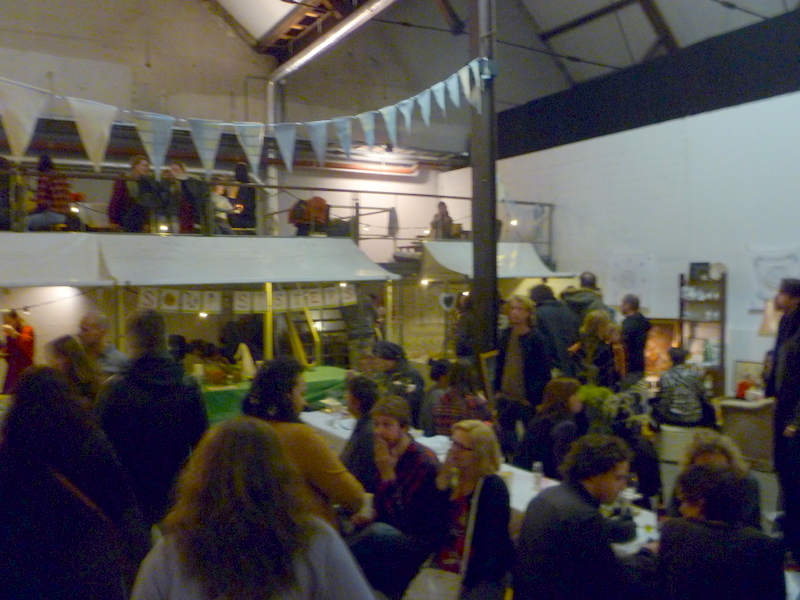
I have some exciting news, that I would like to share. You may remember that I was really inspired and excited by the Neighbourfood Market last month. I am delighted to let you all know that I have taken the plunge, and have arranged myself a stall for my homemade food. I have never done this kind of thing before, so I thought that this time I would try not to go overboard.

As I hope that you can tell from reading ediblethings, I love making home cooked food, from scratch. I want to do this for the people who come to the neighbourfood market, and share my love of food. Wherever possible, the food will be organic, but as I am just starting out, not all the food will be 100% organic this time.

I will be making Jacket Potatoes. There is not really a tradition of baking potatoes in the Netherlands in the same way as we do in the UK, at least in the shops and take aways, but so far market research has been promising. I want to do the ones we are used to, with a nice crispy outer skin. I have been experimenting with some jackets, and think I have the right one now.

The menu in full is:

Jacket Potato

or Baked Sweet Potato

with your choice of filling from:

Mexican Chile

Vegan Chile

Homemade Beans

Cheese & Chive

‘Stampotato’ with boerenkool- with or without rookwurst

There will also be a small selection of seasonal marmalade and citrus curds which I will be selling.

Because I am so obsessed with making jams and preserves, I am always on the lookout for jam jars. If you bring me jam jars, you can have a discount on your purchase from edible things, although I am still calculating costs, so details of how much will follow.

So, I really hope that you will join me at the Westergasterrein in Amsterdam this Sunday between 10 and 3. Of course, there will be loads of stalls, and other produce and food available, so why not check it out, even if potatoes are not your thing!

The idea is that we all have a mind for sustainability, so you are encouraged to bring your own plate and cutlery. Washing up facilities are provided. And they have made arrangements to donate the leftovers to the homeless. So, not only can you enjoy great food and a gezellig atmosphere, you will be reducing waste at the same time, and we all know how much I hate waste, don’t we?

Gezellig Good Food at the Neighbourfood Market

Gezellig & Good Food

8 Comments

Filed under Uncategorized

A Stock From Scraps

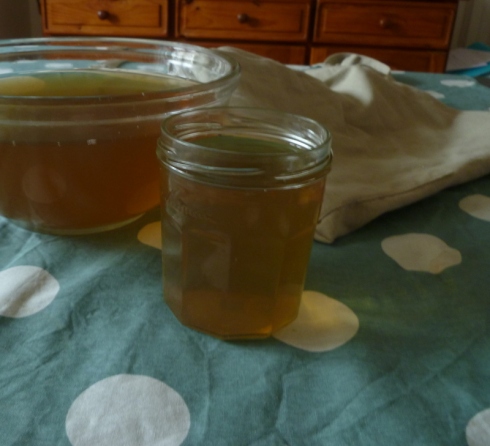
Vegetable Stock

The Basis of Many, Many Meals

Today’s recipe was inspired by a request from a friend who reads Edible Things. It is great to hear from people, so if you have any requests, let me know, and I can blog about those too.

If you have a recipe you’d like to see, or something to inspire, please feel free to get in touch or find me on twitter.

Anyway, my friend asked about how to make vegetable stock, particularly in reference to making stock from scraps. Obviously, she has come to exactly the right place. I never throw anything out if I can help it. I was accused of being from the 1950s when I admitted to an acquaintance that I make my own stock. He doesn’t know what flavour he is missing out on!

In my freezer, there is an entire drawer given over to scraps and offcuts of one kind or another.  I keep them separate in bags or freezer containers (for the meat products), ready to be used later. I routinely keep and freeze the stalks and outer leaves of cabbage; the tough outer leaves of fennel; carrot tops and peel; the tops of leeks; and the root and tip of onions that I have chopped for other dishes, and the stalks of any herbs where I have only needed to use the leaves.I would probably also keep the gnarly bits at the bottom of a head of celery too, if it weren’t for the fact that I have guinea pigs that eat them.
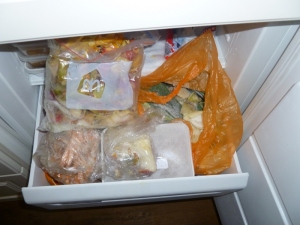
Frozen Food Trimmings

Stock Drawer

Currently there are also apple cores, lemon and orange zests, bones from a chicken, pork fat and rind, and a whole load of vegetable offcuts and peels. There will be a use for all of these in various stocks, jellies, sauces, or something.

I actually don’t like the term food waste when talking about unloved offcuts and trimming. There is so much you can do with them, up to and including composting, which I also do, but only when I have got the maximum value from them first.

Obviously, I know that most people do not have the freezer space or the geekiness to save stuff like I do, but if you do nothing else with your “waste”, do give stock a go. I guarantee that it really easy, and will really improve the flavour of soups, stews, sauces and gravies.

I make a number of different stocks, so I bag my veggies separately, because  I don’t want cabbage in a chicken stock, for example. If you have limited space, put them all into the same bag and chop them up a little. If you have no freezer space at all, you can make a quick stock using scraps, and supplementing it with the odd celery stick or whatever. The finished stock will keep in the fridge for a couple of weeks, in an airtight container, so you can still add it to dishes (NB it will be shorter for meat stock), and have great-tasting stock.

You can pretty much use what you want in a stock. I know that some people use potato peelings in stock, although I personally don’t like the flavour it lends. Some people also choose to put the papery onion skins in, although this will mostly impart a yellow colour, so again, I tend not to bother. Similarly, beetroot tops and peel can be used, but it will both colour and flavour the stock.

I have used pumpkin, pea pods, lettuce that looks as though it is going over, the ends of aubergine, tomato skins, mushroom trimmings,asparagus ends, the leaves of celariac,  beets and carrots at different times. As long as you wash the vegetables thoroughly before freezing, or putting straight into the stock pot, it really is up to you, and experimentation is the key for your tastes, and the dishes that you cook with.

There are a few vegetables that you cannot use the leaves from, and this includes rhubarb (which are a vegetable, but used as a fruit), aubergine and parsnip leaves. I have used the vines of tomatoes, but not the leaves.

The basis for most stock is the triumvirate of celery, carrot and onion (or leek – they are the same family).This is the basis of both meat and vegetarian stocks. It is really a question of balance. In the recipe below, I have outlined the rough proportions that I used. For vegetable stock, I try to use a cabbage (or broccoli stalks, or chard or something similar) in my veg stocks, because it gives a depth of flavour.

As you get more used to scrap stock, you will also develop a sense of the proportions of each that you want. I can do it by eye now. It does not take long to gain confidence in this technique. And believe me, you will really be glad that you gave it a go.
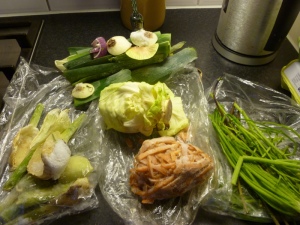
Basic Stock Amount, by eye

An Eyeful

You also don’t have to wait until you have the same amounts as I do. You can make stock with the ends of one leek, the peel and tops from one carrot and a single cabbage leaf, if that is all you have. Really, nothing is set in stone for this, the ingredients are down to what you have.

Recipe: Vegetable Stock

Ingredients

250 g leek/onion trimmings(frozen weight)

150 g carrot peel

2 celery stalks, (it weighed about 150 g)

50 g herb stalks, including mint, parsley & thyme (if making meat stock, I would most likely leave out the mint stalks)

50 g cabbage stalks & leaves

100 g fennel leaves

2 dried bay leaves. I have a bay tree, so I usually use fresh bay, if you are doing so, double the amount given in your recipe

10 or so peppercorns

3 cloves

pinch salt

You can also use other spices. It will depend on what you want to use the stock for. I use pepper and cloves for a generic stock, but if I wanted an asian one, I would add cinnamon and star anise. But, when I want to make a pho, or something, I take my generic stock and add the spices at the time. Again, this is a matter of your own taste.

2½ l cold water (or enough to just cover the vegetables that you have, although bear in mind that they will float)

Method

I  use a very large saucepan for making stock (my stockpot), but even if you have an average sized one, you will need a well-fitting lid for it.

Put all of the vegetable trimmings in the pan. I chuck them in from frozen, having washed them before I froze them. You can also put fresh ones in, it doesn’t matter. Cover the vegetables with cold water, and put the lid on the pan.
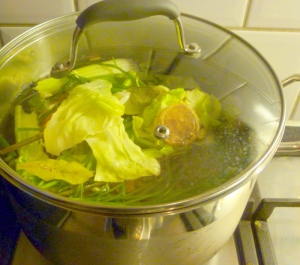
Stock ingredients with water to cover

Put a Lid On It

Bring the water up to the boil, then turn it down to a gentle simmer. Keep the lid on the pan while it simmers.
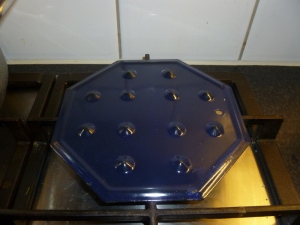
A Simmer Plate

My Simmer Plate

I have a simmer plate, which I like to use, because I can turn the hob down to the lowest setting, and it distributes the heat more evenly across the pan. They are not essential though, so  don’t worry if you don’t have one. Let it simmer for about an hour (longer for meat stocks, depending on the size of the bone that you have).

Allow it to cool with the vegetables still in it, then strain the liquid. This is your stock. If you are still reluctant to throw away your vegetables, you can take a little of the stock and the veg, and blend it up, and you have the very tasty basis of a soup that you can either eat like that, or add more things to for bulk. Every aspect of making stock is about taste, not waste. If you are making meat stocks, obviously, you should remove the bones before you do this.

The stock can be used as is. If you have limited freezer space, you can boil the stock to reduce it by half, which will concentrate the flavour. Don’t use a lid on your pan for this stage.

I measure off half litres and put them in into individual containers (usually take away ones are fine, they stack and they have lids), which I label and freeze. I find that this is a convenient amount to use in most recipes.

They are easily defrosted on a worktop, or if you are less organised, you can heat them in a microwave or a pan ready for immediate use.

If you don’t have a lot of space, concentrate the stock, you can freeze them in ice cube trays, then transfer them to a bag once frozen.

Whichever way you freeze it, don’t forget to label, as there is nothing more irritating than forgetting them in the freezer, then scratching your head a few weeks later when you find them again.

So there you go; cheap, practically effortless, and really tasty stock, that you know is right for you. It doesn’t contain any hidden ingredients, so you know it will be suitable for your friends with special dietary requirements or preferences. And you have the basis for many soups, dishes, sauces and whatever you like really. This stock of scraps is really much, much more than the sum of its parts!

Update: I have entered this post into Turquoise Lemon’s No Waste Food Challenge, which is all about fennel for the month of April
Turquioise Lemon's No Waste Food Challenge

14 Comments

Filed under Feast

Tabouleh or not Tabouleh?

That is the question.

Winter Vegetable Tabouleh

Salad as Substantial

The snow caught me out last week. I knew it was coming towards the end of the week, but it arrived a few days early, was preceded by a very hard frost, and caught me on the hop. I hadn’t harvested my salad greens, and they have been under a really good coating of snow ever since. I did manage to get the solitary fennel bulb that I had left, and had that in a risotto, so it didn’t make a salad.

I had also not got round to sowing microgreens, although I have now corrected that. I am waiting on radish, rocket, basil, chervil and beetroot to sprout and grow their first true leaves.

Sprouted Chickpea Bread

Salad as Bread

My poor planning left me with no other choice but to go for sprouted seeds. I put a sprouting mix (which looked like it contained chickpeas, aduki beans and lentils), and some separate chickpeas to work. I followed many of the other bloggers, who have been sprouting seeds for weeks now. Inspired by Joanna, who commented on the blog of Gilly in Ariege, I made bread with the chickpeas, and then added the mix to a sandwich that I made with it. I hope to share the bread recipe, but it needs a bit of work first.

Sprouted Salad Sandwich

Salad as a Sandwich

As last week was all about the sprouts, this week has been filled with thoughts of using flat leaf parsley. I have two pots that I sowed last year, which live on my windowsill, so that I always have access to parsley. The cold weather left me wanting, and with a desire for something more substantial than sprouted seeds.

I kept coming back to the idea of a tabouleh. They should be really leafy, and vibrant with flat leaf parsley, fine bulgur wheat, tomatoes and onions. Most commonly found as part of a mezze, it cleanses the palate, and is a fresh and light dish.

I already knew that I was going to make a lot of changes, because I wanted a more substantial dish, I didn’t have enough parsley to make it the star, and tomatoes are not in season. In addition to all of this, I had some pumpkin and an aubergine to use up, so the focus shifted to a more winter-based dish.

The dish still had the vibrancy from the parsley, but it also had bulk from using larger bulgur wheat, and winter warmth from using cooked vegetables and the spice. But, is it tabouleh?

Ingredients

Half a small pumpkin

Few sprigs of thyme

2 Garlic cloves

Small pinch of chilli flakes

Vegetable oil for roasting and frying

Aubergine

150 g Bulgur wheat

300 ml Vegetable stock

2 tbsp Lemon juice

Zest of ½ a lemon, finely grated

Extra virgin olive oil

½ tsp Sumac

Large bunch of flat leaf parsley, stalks removed & roughly chopped

Peel & deseed the pumpkin, and chop it into small dice. Put it into an oven proof dish, sprinkle with chilli flakes, thyme leaves and salt and pepper, and a splash of oil, along with a garlic clove still in its paper. Give it a good toss around, so that the oil and chilli can coat the pumpkin. Stick it into an oven at 180°C and leave it to roast until the rest of the ingredients are ready.

Chop the aubergine into small dice, of a similar size to the pumpkin. Heat a little oil in a frying pan. When the pan is hot, add the aubergine and cook until it is brown. You may need to add a little oil, as it is quite absorbent, but it will release liquid again as it cooks, so don’t add too much. You want this to fry, not braise. Don’t have the heat too high for this stage, let it fry gently.

Meanwhile, heat up the stock. When it is boiling, pour it over the bulgur wheat. The stock should cover the wheat by about a centimetre. Cover the bowl over, and set aside for about 15 minutes, During which time the bulgur will cook and absorb the stock.

Finely mince the second clove of garlic. You will need this a bit later.

Make a citrus vinaigrette with the lemon juice and the extra virgin olive oil. I always start with the lemon juice, and then slowly pour in the oil, whisking constantly to form an emulsion. I taste it regularly to see when I have a good balance between oil and citrus. Add salt and pepper to taste, and pour some over the bulgur wheat. Set aside for another 10 minutes, so the bulgur can take on the vinaigrette flavour.

Don’t worry if you have a bit of dressing left over, it keeps well in the fridge in a sealed jam jar. You could use it on next week’s salad challenge!

While the bulgur wheat is soaking up the vinaigrette, add the minced garlic to the aubergine, which should be nicely browned by now. The garlic will not take that long to cook, and will give the aubergine flavour.

Stir the aubergine and the pumpkin into the bulgur wheat, with a half teaspoon of sumac, the lemon zest, and the roasted garlic, which you should now be able to squeeze from its papery jacket. Stir through the parsley, and serve immediately.

I served mine with some sautéed mushrooms and leeks. It might not strictly be a salad, and it is definitely not a traditional tabouleh, but it was warm and satisfying, which was just what I needed tonight.

7 Comments

Filed under Farmed

Random Erwtensoep of Kindness

Busy Shipping Canal near home

So Cold, Even the Gulls are Ice Skating

I first heard about the Random Soup of Kindness Challenge on Vanessa Kimbell’s blog via Twitter. I was immediately drawn to it, because it is a brilliant idea, but also it reminded me of the people  that I used to work with in a former life, when I was an Energy Efficiency Advice Centre manager.

Every year in the UK (and other places, but it is marked in my home country) thousands more vulnerable people (i.e. the elderly and those with certain medical conditions) die in the winter than the summer. This is called Excess Winter Death (EWD), which claimed over 20,000 people in the UK in the winter 2009 -10. The figures are getting better, but it is still a shocking amount of people.

The causes of excess winter deaths are complex, but a good deal of it can be attributed to people in poor housing conditions being unable to  heat their homes, either for practical or economic reasons. This, in turn, exacerbates ailments and medical conditions, making them susceptible.  I have met elderly people who regularly have to decide if they have lunch or if they put their heating on for an hour.

People who cannot afford to adequately heat their homes are said to be in Fuel Poverty. It affects lots of households, not just the elderly, and the situation will only get worse with rising fuel prices and in the current recession. I am priviledged enough to never have been in fuel poverty, but I have live in a very inefficient rented home. I know first hand how miserable it is to be cold. It is not something that I would want for my neighbours, especially those who can’t move around much to keep warm.

Frozen Boat

Frozen In

I loved this challenge, because it is a really practical way that everyone can help someone address the issues associated with being cold. Please have a go at this easy way to reach out to the vulnerable people in our own communities, make sure they are OK, help them out in this desperately cold weather, and offer them internal heating and a good meal.Of course, not all elderly people are in the same position as I describe above, but who would say no to a friendly visit and some hot soup? It really can make a real difference to your neighbours, and won’t take too much effort on your part. And that is the least that you will get from having a go.

Having got the necessary, if somewhat shocking stuff out of the way, I’d like to tell you about my first foray into Neighboursoup. I say my first foray, because I got so much out of it that I am definitely going to do this again.

Frozen Canal View

Frozen Canal - Near my Street

I live in a great street where all the neighbours are pretty friendly, and we all have a chat if we see each other, or help out with the odd pint of milk, or bucket of water or whatever, here and there. I love it, it feels good to know that there are other human beings in your street, instead of just other people, if you see what I mean. It is the first time I have lived somewhere with such a sense of community since I was a little girl.

One such neighbour is an older gentleman, who is the most helpful man. He is always ready to lend a hand by taking you to the garden centre; or helping us find a scrap metal merchant when we discovered someone had dumped a ton of old metal pipes in our pond; or look out for the flat if we are away. He has been invaluable to us as a neighbour. I am always trying to give him something back, but he doesn’t often let me. He has occasionally accepted chutneys and jams from me, which he repays with more jam jars. I really feel that I owe him.

As soon as I heard about this challenge, I knew this would be the way that I could get to repay his kindness, do him a good deed, and one that he would not be too proud to accept. I also knew that I would have to make him a traditional Dutch soup, because he does seem to have traditional Netherlander taste (for example, he refuses to even try my marmalade!).

There is no Dutcher soup than Erwtensoep (pronounced ur-teh soup), which is a thick, stewy blend of split peas, pork and vegetables, served with a smoked sausage. I have to admit that I have never really fancied this soup, given that I hate peas, and I did try a really horrible version when I come here on a trip as a student.  But, I knew that it would be exactly the right soup for my neighbour, so I decided it was the right soup for the challenge.

Since I had no idea what a really traditional erwtensoep should contain, I had to go digging for a recipe. I stumbled across this one, which seemed like it was as good a place as any to start.

I remained pretty loyal to the proportions given in the recipe, but I had purchased a half kilo of split peas, and couldn’t see any other use for them, so I added all of it, and adjusted up the meat and water accordingly. I stuck with the amounts of the various vegetables, but I used larger ones than suggested too. So the actual proportions were:

500 g Split peas

2.5 l Water

1 Dried bay leaf. I would normally use 2 fresh, but I only have a small bay tree, which I am trying to be really kind to, having lost another one last winter.

500 g belly pork

3 large leeks

1 medium celariac

1 large carrot

4 potatoes

Handful celery leaves. It is common to find ‘leaf celery’ sold as a pot herb in the Netherlands. If you can’t find this, you can use the celeriac leaves, lovage, or flat leaved parsley, as a suitable substitute.

1 smoked sausage.

Because this is a really common dish here, I was able to find this sausage in my organic butcher’s shop. I have never seen it in a butcher’s in the UK, but it is basically the same as the smoked sausages you can get in the chiller cabinet  – e.g. this one from Matteson’s, although I am sure there must be others available.

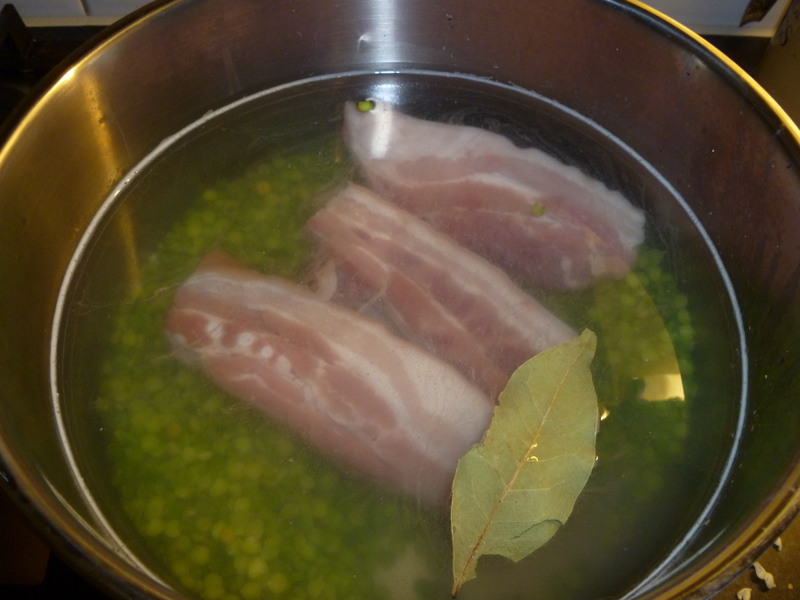
First Stage of Making Erwtensoep

At this stage, I was still thinking it would not be for me

I followed the recipe, and found that it took about an hour on a low simmer for the pork to be cooked so that you could easily shred the meat. The original recipe does not make that clear, but I guess it depends on the cut of the meat you use (should be fatty meat, that benefits from slow cooking).

I did not want to reintroduce a lot of the fat and the rind back to the soup. Of course, hating waste as I do, that is currently in my freezer to wait until I have a ham bone to make stock with.

I would have put a ham bone in the pot with this lot, to enrich the soup, but it was -14°C this weekend, so I guess many Netherlanders were making the same soup, so the butcher had run out.

This amount made LOADS of soup, and it filled about two thirds of my huge stock pot. It was enough for quite a few batches, so I gave soup out to four elderly neighbours, and still had enough left over for us to have some too. Much to my surprise, I actually really enjoyed it. I hope that my neighbours also decide it is Lekker (tasty)!

Erwtensoep

Erwtensoep - Warming, Kind and Tasty - Who Knew?

It was brilliant to go and chat to people and practice my broken Dutch with them. People were very happy to receive their random soup of kindness. It gave me more of a warm glow than the soup itself did.

Unfortunately, my Dutch is not good enough to explain what a blog is to these elderly neighbours, so I gave up on the idea of trying to ask if they minded me taking a photo of them with said soup. You’ll have to imagine the look of joy on their faces.

So, I hope that you decide to join in the random soup of kindness. You don’t even have to have a blog to write about it on. You needn’t spend much money or time on a soup, but the sense of having contributed something really good to your community will be worth it in spades.

I am certain that you will get much more out of the experience than the time you put in. I have repaid kindness shown to me; met a few new people; been able to practice my Dutch; found out that I have been closed-minded to the delights of a pea soup; and have been glowing brighter than the readybrek kid because I did something nice for other people. I am already thinking about what soup I can do next that will be acceptable to my neighbours. I am thinking a pumpkin one, which I can also give to neighbours for whom pork may not be an option

Like with most voluntary acts, it really was a case of give a little, gain a lot!

Random Soup of Kindness Logo

4 Comments

Filed under Feast

Tiramisu – Another Day Another Trifle

Tiramisu

A Mere Trifle

(c) J. Casper 2011

This is another take on  a trifle, of course, continuing in the spirit of eating well and using up what you have. This also appeared at the international Christmas dinner, but is great for any occasion.

The history of this dessert is uncertain, but it seems to be a lot younger than my family’s sherry trifle. However, purists would argue that my recipe is not a tiramisu, but at the time I served it, I didn’t think that “Coffee and Custard Layer Construction” had quite the same ring to it. Although now I see it written down, I am wavering…

The traditional tiramisu consists of layered sponge, soaked in coffee, and a  mascarpone and Marsala custard. But, I had some more spare panetone and I had made 2 l of custard, so I diverted from the original. I think that you can add a slug of Marsala, or even some Tia Maria if you want. I preferred a big smack from the coffee, and so didn’t want it mellowed in this instance. I certainly don’t think it suffered for it.

If you are an improvisational cook, like I am, you will enjoy getting the most out of what you have, so may well find other, equally good things in your cupboard, or fridge. It is good to know that you don’t have to stick rigidly to the old traditions, but that you can still produce great tasting food. You never know, if it is good enough, you could be starting a tradition for yourself!

Recipe: Tiramisu

Ingredients

180 g panetone

3 espresso coffees

6 egg yolks

100 g sugar

500 ml double cream

500 ml milk

½  vanilla pod

100 ml whipping cream

Cocoa powder to dust

Method

Make the custard, using the usual method, which is here, in case you need a reminder…

Leave to cool overnight in the fridge, if you can, but at least a few hours if you forgot that you are entertaining the next day, or have a pressing appointment.

Cut the panetone into strips of roughly the same size and thickness, and put in a dish, in a single layer if you can. I used a flat baking dish for this, not the final serving dish. Pour the coffee over it in as even a way as you can, you don’t want large portions of the sponge to remain untainted by the coffee.

Set the panetone aside to soak for about half an hour.

Once the panetone is thoroughly soaked, layer it into the serving dish (or individual glasses)  so that you have sponge, custard, sponge custard. I find that this is enough for two layers, but you may get more or fewer, depending on the width and depth of your serving dish.

Leave about 3-5 cm at the top, and refrigerate if you are not going to serve it straight away.

Just before serving, whip up the rest of the cream, and put it in a layer on the top of your trifle. Dust with cocoa powder, and serve it to guests who have already feasted on loads of food, but they won’t be able to resist just a small bit of this too.

2 Comments

Filed under Feast

Sherry Trifle

Sherry Trifle

Sherry Trifle, for all Festive Occasions

(c) J. Casper 2011

In my family, a festive occasion is never complete without a sherry trifle – home-made, of course! We have a family recipe from my aunt’s mother-in-law, who was very particular about her recipe. She never, ever used fruit, and would frown upon versions that had superfluous ingredients. We have them for all manner of get-togethers, and a party wouldn’t be the same without one.

She passed her secret recipe onto my aunt. I have never asked her the exact recipe, but she has given me enough hints and tips that I have been able to come up with a good enough approximation. The exact recipe remains a closely guarded secret. Well, at least I imagine it that way, it seems nice to have a recipe that gets passed on to only a select few!

I have been meaning to post about the one that I made for our international dinner, but I had so much to post from Australia and since then, this is the first opportunity that I have had. I figure that this recipe is good for any party, and what better excuse than on your next snow day? Given the weather at the moment, I’m sure you won’t have to wait that long for the next one!

This version of sherry trifle has a few main differences to my normal one. Firstly, following our mince pie and mulled wine party, we had half a panetone left over that someone brought. I hate to waste things, so it seemed the perfect way to use this was to add it to the trifle instead of the usual sponge.

Secondly, I sent the Big Guy off to buy the sherry, and he came back with Pedro Ximinez. It does fit the brief of a sweet sherry, but it is much more interesting than the usual cream sherry, so beloved of elderly ladies, that is traditional in the family one.

Thirdly, the jam is usually strawberry or raspberry. I didn’t have any of those, and so I used some of the blueberry jam I had left from a trip to Sweden.

I am not sure that these amendments would have met the approval of the originator of the recipe, but it was certainly appreciated by my guests at our international christmas dinner!

Recipe: Sherry Trifle

Ingredients

6 egg yolks

100 g sugar

500 ml double cream

500 ml milk

½  vanilla pod

150 g panetone, cut into strips and spread with jam

100 ml sherry

200 ml whipping cream for the topping

Method

Firstly, you need to make a custard. It also need to be fairly thick, so I use half milk and cream. Normal custards can be made with just milk, but this one needs to hold up when you serve it, and not run everywhere, so the cream is necessary here.

You can make the custard using the step-by-step guide that I posted yesterday.

Set the custard aside to cool completely. If you can chill it overnight, so much the better.

Spread the jam on the panetone, and place it in the bottom of the serving dish. My traditional sherry trifle is served in a large bowl, from which everyone is served, but you can also arrange it into glasses for individual servings. Add the sherry to the sponge, and leave aside to soak in for 20 minutes.

Add the custard on top of the panetone. Spread it so it is as even as possible, but leave about 2-3 cm at the top of the bowl.If you are not going to serve this immediately, chill it again.

Just before serving, whip some cream to stiff peaks, and put it on top of the custard.

This is not a lightweight dessert, but it is a great treat. Especially for a celebration.

2 Comments

Filed under Feast

Custard – a Step by Step Guide

You may have noticed by now that I am rather fond of dishes that involve custard. This is partly because I can only get Vla in the Netherlands, which is too sweet for use on desserts, and has been thickened with flour; but partly because homemade custard is much more tasty than it’s packet counterpart . It would, indeed, be possible to add Bird’s Custard to the list of Stuff Visitors Must Bring From the Motherland, but actually, making custard is relatively easy, so I don’t usually bother.

As it is so easy, and I have a couple of recipes coming up that require custard (and many more to follow, I’m sure) I thought that I would give a quick step-by-step guide, to save me typing out the method all the time.  The recipe calls for the use of vanilla bean. I know they are expensive, but they really are superior to using vanilla extract, so try to get them if you can. There is a good vanilla bean paste on the market too, that would be a better substitute if you really have to. Of course, I have managed to find a way to eke out the most value from a single vanilla bean, and nothing is wasted!

Most of the time, a recipe will call for you to split a vanilla pod in half, then add all of the seeds, and the pod to the warming milk/ milk replacement. I usually only ever scrape half of the bean, and add the seeds to the liquid. The exception to this is when making ice cream, or a LOT of custard, as these will require a whole pod.  I always add the split pod too, but when the milk has warmed through, I remove the pod, rinse, and dry the halves. When they are dry, I put them aside in an airtight container (a small jar with a lid). The next time that I need to make a custard, I still have seeds from half of the pod, and the old pod to add to the milk, so I get double the custard for the price of one.

Still not done, you can then dry the pods for a second time, and snip them into shorter lengths. Add these to an airtight jar filled with sugar. The remaining oils in the pod will infuse, leaving you with vanilla sugar. This is a much more acceptable substitute for vanilla pods in your next batch of custard, than using vanilla extract. There are many other recipes that you can use this in. I find stewing fruit with a little of this sugar is a really great addition. The vanilla pods will continue to be useful in this way for a few weeks. When they are dried up, they have imparted all their flavour to the sugar, and only then should you discard (or better yet, compost) them. That is a lot of value from one lowly bean, making it all a lot more worthwhile!

I have not given proportions here, as this will vary from recipe to recipe, whether you are using milk, cream, soya milk or even coconut milk (which is excellent in custard – I recommend that you give it a go). You can also make savoury custards but the methodology differs, so this is for sweet custards only.

STEP ONE – The Milk

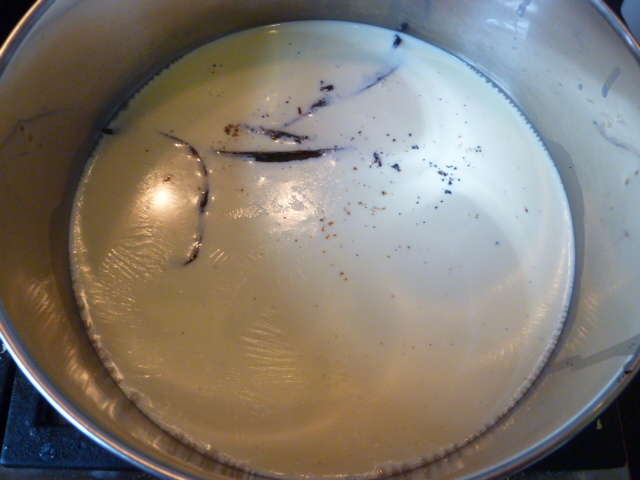
Flavoured milk, just below boilng point

When the milk looks like this, remove from the heat

The milk (or replacement) has to carry the flavour. Usually, this will be vanilla, but could also be cocoa, ginger or fruit syrups. Whatever flavour you are adding needs to get heated with the milk. Some flavours, like the vanilla will infuse sufficiently having been brought up to the boiling point. Others will need to steep for a while before you heat the milk, to intensify their flavour.

Whichever way, you will need to gently bring the milk up to boiling point, but try not to let it boil. You will have reached this point when there are small bubbles at the sides of the pan. Take it off the heat at this point.

STEP TWO – The Eggs

While the milk is slowly coming to the boil, separate your eggs. I have assumed that a picture is not necessary for this part of step two. Be careful not to get yolk in your whites. I advise breaking each egg over a small, separate container before adding the whites and the yolks to the main batches. This way if any do break, you haven’t lost the lot. I have also taken a risk on scooping out some egg yolk when I managed to get a little bit (and I stress it was little) of yolk in my whites once when I didn’t follow my own advice, and it turned out OK, with no discernible effect on the yolks, but it was not great worrying about it.

Don’t throw away the egg whites. They make great meringues and macarons. They also freeze well, if you don’t have time to do something with them straight away. I would love to hear any other suggestions for using up egg whites, particularly in savoury dishes, if you have them. Although egg white omlets need not apply!

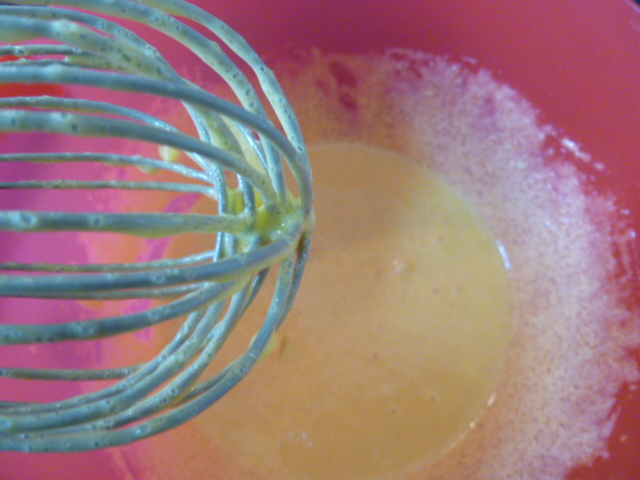
Egg yolks and sugar, whisked until pale

Egg yolks and sugar, whisked until pale

Once you have your egg yolks, you need to combine with the sugar, by whisking them together, until the mixture is pale.

A tip here is not to add the sugar to the egg yolks unless you are going to whisk them straight away. If sugar is left on the yolks, it will change them, and a skin will form, making the end result a little bit lumpy. This would be the time not to answer the phone if anyone rings!

It is the yolks that act as the thickening agent. I have heard that it is possible to make a sort of vegan custard, using soy flour as a thickener, and coconut milk, but I have never tried this method. Anyway, my point in telling you this is that you need the egg yolks – don’t be tempted to cut down on these, unless you also cut down on liquid too.

STEP THREE – Combining Eggs and Milk

Adding milk to eggs to make custard, slowly at first

Add a small amount of milk first

Some people will tell you that this is the hard part of the custard making process. As long as you don’t let it intimidate you, and you have a bit of patience, it need not be difficult. There is a risk that you could scramble the eggs, if you heat them up too quickly in one spot. This only happens if you apply direct heat to them, or if you try to add too much hot liquid at once.

An easy way to get around this is to only add a small amount of milk at first (really, only 20-30 ml), and make sure that you have whisked it in well before adding the next lot of milk.

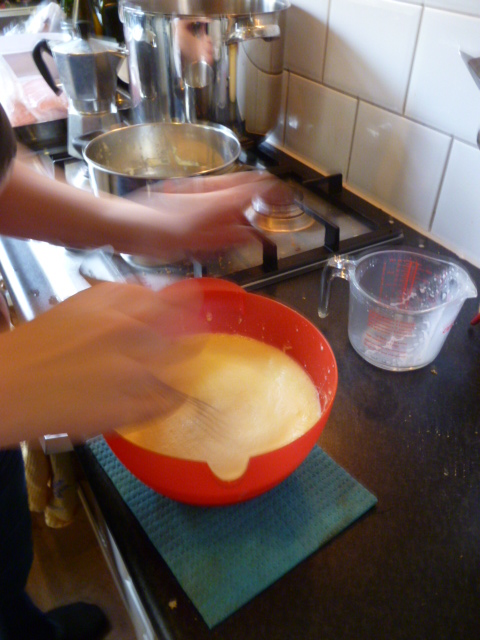
You will need to put a damp cloth under your bowl, as I have done here, to stop it sliding around as you whisk, which leaves you with both hands for custard, not bowl-stabilisation.

Whisking in the first bit of milk

Thoroughly combine the first bit of milk before adding more

You can gradually increase the amount that you add each time. At some point, the egg will become quite liquid, at which point you have custard – congratulations! You  can add the remaining milk in a continuous stream, as long as you continue to whisk the custard all the time as you do so.

Adding Milk faster, continuing to whisk

You can start to add the milk faster, but continue whisking

I usually continue to whisk the custard for a little while, once all the milk has been added, more from habit than anything else, I think.

Whisking well to make sure the milk & eggs are thoroughly combined

Give the custard a whisk after all the milk is added, to ensure it is all combined well

STEP FOUR – Thickening the Custard

Custard, not yet thickened

When you return the custard to the pan, it will look like this

Next, the custard needs to be thickened. If you are making custard from scratch, you will need to stir it constantly. There is no getting away from this. I like to see it as spending time with the custard rather than getting impatient about it. Making custard can be relaxing, and fairly zen, if you let it.

Return the custard to the pan that you heated your milk in. Put it on a low heat and start to stir. You need to try to stir so that you are  moving the wooden spoon over all of the base of the pan, so that no custard can catch on the bottom, and cause lumps.

As it cooks, the custard will gradually start to thicken. When you draw a line on the back of the spoon, and the line stays there, and does not run, then your custard is done.

Thickened, Warm Custard

You know your custard is done when you get a line on your spoon

Never allow the custard to boil at this stage. If it boils, you will split it, and will end up with lumpy, scrambled custard, which will taste nice, but will look awful and the texture in your mouth will be horrible.

If this does happen, don’t despair too much. It can be salvaged to make it passable again, but it will have lost a little of the rich, silky texture that good custard is known for.

You can let the split custard cool a little, then put it into a food processor. Start it on a low setting, and gradually increase the speed and keep going until it is smooth again. I got this tip from the Accidental Hedonist a very long time ago, when I first started making custards, and one split on me (or rather, I split it, if we are going for full disclosure…). It really works, and the custard will be almost as good as new.

You can pour custard, hot, onto pies and puddings, baked fruits, or fresh ones. You can chill it for use in trifles or flans. Once chilled, you can cover  it with sugar that you burn under a blow torch, or a very hot grill for a créme brulée. You can bake it in the oven. You can even bathe in it to demonstrate how wacky you can be to raise money for charity, if you really must (not recommended, better use Bird’s for this purpose). Whatever you do with it, you will have a lovely homemade treat that will impress your friends, and that you can be very proud of.

4 Comments

Filed under Feast

Cold Comfort Cake

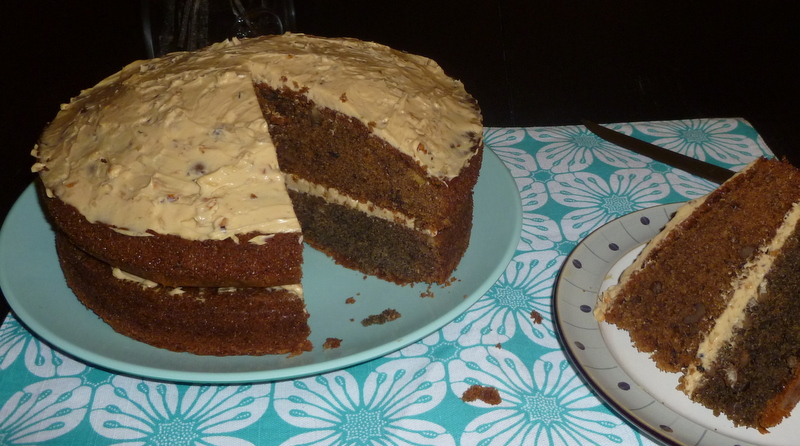
Coffee & Walnut Cake

Comfort and Cure

I used to eschew sponge cakes. I have never been particularly interested in making a classic Victoria sponge; the iced party versions take too much time and artistic talent; and I don’t have a lot of patience for the imbalance of cupcakes. If I am to offer a dessert, I prefer to go for a nice tart, or something that requires custard.

I know a lot of my friends would disagree with me. And I recognise that the popularity of the cake is on the rise, judging by the plethora of baking shows, those about outlandishly decorated 6 feet tall cakes, and cupcakes there seems to be on the TV, these days. Don’t get me wrong, I love The Great British Bake Off almost as much as Mel Geidroyc, but there is an awful lot of baking going on our screens, of varying quality and value.

However, last weekend, the weather took a real turn for the colder. This is the time of year when I long to curl up in the living room with a cup of tea, and a nice slice of cake. The fact that I had a little bit of a hangover after catching up with a few friends on Friday had nothing at all to do with it…

So, after a little indecision, and a rootle around the cupboard to see what I could make without actually having to go to the shops (and a little discussion with the Big Guy to see if he would be prepared to go, which ended in a compromise – not a massive shop, but he would go out for some mascarpone!), I came up trumps with a bag of walnuts. That pretty much settled it – coffee and walnut cake it was then. With a mascarpone glaze; given that I am not too keen on buttercream, and felt it would have been too much for me that day (which had everything to do with my Friday night).

The cake that I made (as pictured) was a little bigger than I had anticipated, because I totally forgot that the amount of cake mixture that I give in the recipe is supposed to be split between two cake tins, and I didn’t want to cut it in half when it came out of the oven, fearing that my hand was not the steadiest. So I made another cake of the same size. I have 25 cm cake tins, this baby was huge! It also meant that the mascarpone glaze was not as generous as it should have been, so don’t do this. The base also got a little bit more coffee in it than the top, so they are sightly different shades.

Don’t worry though, the amount given below is for one normal-sized cake, not a giant one like this one.

Despite all this, what you get is a lovely moist cake, but with all the lightness of a sponge. Brilliant comfort when the weather draws in, and also a great hangover cure. Take one slice in the evening with a big mug of tea.

Recipe: Coffee and Walnut Cake

Ingredients

For the cake:

175 g caster sugar – I used raw cane sugar, to give it a depth of colour and flavour

175 g softened butter (i.e. not from straight out of the fridge, bring it up to room temperature

175 g self raising flour

3 eggs

1 tsp baking powder

2 tsp coffee granules  in 1 tbsp warm water  (or 1 tbsp warm, strong espresso if you don’t have instant)

2 x 20 cm cake tins – you’ll need a removable base on each. I have spring-form tins, which is better, but use what you have

60 g chopped walnuts

For the glaze:

250 g Mascarpone

70 g icing sugar

1 tsp coffee granules in 1 tbsp warm water (or another tbsp warm, strong espresso)

Some more chopped walnuts. Or you can keep them whole and decorate the cake with them, but I am not hugely keen on big lumps of walnuts. I had about 8 walnuts left, so I used them, but the amount is up to your individual taste

Method

Firstly, line the base of your cake tins with some greaseproof paper. Cut it to size, unless you like the wrinkled cake look. I also then greased and floured the sides of my tins. I do this because my mum always did, and it is ingrained in my psyche, although I think that it is probably unnecessary in this non-stick age. You will be really glad of the greaseproof when it comes time to turn the cake out, however.

Heat your oven to 180°C

Beat the sugar and butter together until it has gone a very pale colour. Don’t scrimp on this stage, it helps with the final lightness of the cake. It is best done  with a food mixer, or an electric hand blender if you have one. It is possible with a wooden spoon, but you will end up looking like Brian Shaw, which is a good look if you like very muscular men. It will also take you ages. I had neither the time nor the patience for this on Saturday.

Once you have a nice pale butter and sugar mixture, add the eggs. I usually add a little of the flour with each egg and make sure that I have mixed it in well before adding the next egg. Don’t add all the eggs at once, or the batter may split. They always say this in cookbooks and on the TV. I am not sure what you should do if the batter does split, because it has never happened to me, but I assume that it will affect the rise and texture. I also have no idea if you can salvage it.

Once all of the egg is added, fold in the rest of the flour, and the baking powder. Be careful not to overwork it, or the cake won’t rise as much, but also make sure that there are no seams of flour that haven’t been mixed in.

Add the coffee solution and continue to fold until the batter has an even coffee colour, then stir in the walnuts. This should take about 15 minutes in total, unless you are going for the bodybuilder look. Divide the cake between the two tins, and put them into the oven for about 25 minutes, but check them after 20. If a thin item like a small-bladed knife comes out of the centre clean, then they are done. If it looks sticky, they need a few more minutes.

Tip them out of their tins, remove the greaseproof paper, and leave them to cool on a cooling rack, flat side down.

Make up the glaze by mixing all of the ingredients together until they are all thoroughly combined. You will need to chop the walnuts fairly fine before you add them. Don’t refrigerate this, because it will be too hard to spread later.

When the cake has cooled down completely, you can ice it. If you do it while the cake is still warm, it will melt, and will be difficult to work with.

If you are using a flat surface to serve the cake, you will need to cut the arc of one of the cakes off, to allow it to lie flat on the board, and for the other cake to lie flat on it. I was being lazy, and I have plates that have roughly the same curve as one of my cakes in any case. I just flipped it over, laid the arc side down on the plate, and worked with the flat side for my icing. If the bottom cake wobbles, cut it flat anyway.

Use about a third of the glaze to spread over your bottom cake. Get it in as even a layer as you can. Place the second cake on top of this, flat side down. Then glaze the top and as much of the sides of the cake as you can with the rest of the mascarpone mixture.You can decorate it with walnuts if you are that way inclined.

Then you will need to get the kettle on for that tea!

2 Comments

Filed under Feast

A Meal From the Vaguest of Memories

Lebanese Influenced Chickpea & Lemon Curry

Simple, Wholesome, Made up Fare

Since I am so keen on recycling, I thought that I would give you a third-hand recipe this time. The idea for this recipe came from my desire to cook more Middle Eastern food. I was browsing around, when I remembered a recipe that was attributed to an amazing Lebanese woman where I used to work, but was actually cooked for me by a former manager at a team building dinner we had to go to. She didn’t give me the recipe, but the idea was probably the best thing that I learned from her!

I really enjoyed the dish, but only had a vague memory of the flavours. When I found myself with a lot of spinach (after telling the market stall holder I wanted two handfuls of spinach, before I looked at his hands),  and having my memory jogged  while I was looking up Middle Eastern food and seeing all the chickpeas in the dishes, I decided that I was going to try to recreate that meal.

This is what I came up with, which is as close as I can get to a vaguely remembered flavour of a meal I ate over a year ago. I have no idea if it is authentic, or even close to the dish that I tried. But what I have managed is a really easy vegan supper dish that is bright with really fresh flavours. Another bonus is that it is also pretty cheap to make too.

I try always to use dried chickpeas, because I think that the taste and texture are superior to the tinned ones. In this dish they are the stars of the show, so I think that it really is worth the effort. If you want to make a large batch up, they freeze really well, so you can cook up loads, and freeze them in batches for another time. Not for this recipe though, because you will need some of the cooking liquor for this dish.

Recipe: Lebanese Inspired Chickpea and Lemon Stew

Ingredients

200 g dried chickpeas or one tin.

1 large onion, chopped

3 fat cloves garlic, crushed to a paste with the flat of a knife

Little oil for frying

2 tsp cumin

1 tsp coriander seed

Good pinch chilli  flakes ( a chopped fresh red chilli would also work here, but I only had dried)

Zest & juice of 2 lemons

150 g baby spinach

Method

If you are using dried chickpeas, soak them in cold water for a couple of hours. Place them in a saucepan, and cover with plenty of cold water. Do not salt them, it makes the skin tough, and it is better to salt the final dish, so you get better balance.Bring them to the boil, then cover and simmer until they are just tender. Drain them, but reserve the cooking liquid. This is important, you will need it later.

Toast the cumin and coriander seed in  dry pan. I used the one I was going to cook the rest of the ingredients in, because I am averse to washing up. Grind them with a pestle and mortar until quite fine.

Add the oil to the warm pan, and sweat the onion until it is translucent. Add the garlic, chilli, and the ground spices for a few minutes until the heat from the chilli hits you.

If you are using tinned chickpeas, drain them, but reserve the tinned liquid as well. Put the drained chickpeas into the pan, and let them cook for a couple of minutes with the spiced onion mixture.

Add the juice and zest of two lemons. Be careful not to get any pips in the dish. I got a stray one, and it was a really unpleasant mouthful after I bit through it. If you like, you can add a lemon shell or two, as it cooks to give an extra lemon hit. Pour the reserved cooking water into the pan to just cover the chickpeas. With the tinned chickpeas, add half water from the tap and half from the tin.

Leave to simmer for a further 15 minutes, by which time the liquid in the pan will have reduced, so that it is still fairly liquid, but more soupy and glossy. If you use the lemon shells, remove them at this point. Taste for seasoning, and add salt and pepper as needed. Add the spinach, and cook until it has wilted.

I served this with some brown basmati rice, but I think that it would also be great with bulgur wheat, some crusty bread or even as a side dish.

2 Comments

Filed under Feast

Signs of Life and an Unexpected Salad

First Anemone

First Flowers

Apart from going to the Neighbourfood Market, I also found some inspiration in the garden this weekend. As always, I was late with getting my broad beans and alliums in. They should get planted before the first frosts so that you get an early crop in the early summer.

We haven’t had any frost yet, as far as I can tell, so I was still able to plant them out, although they will be a bit later than I had hoped. In an attempt to do some decent successional sowing, for once, I have only planted half a bed with beans, so I can plant more later. I also still have onion sets, but no space in their designated beds, so I will plant them in planters when I get some potting compost mixed up. I planted Troy white onions and Onion Electric (red) from sets, and Marco Garlic. I only used the fattest cloves, from the outside of the bulbs. The rest are waiting in my cupboard to have in some dish or another. No point in wasting them! The beans were Aquadulce Claudia and the reliable Sutton.

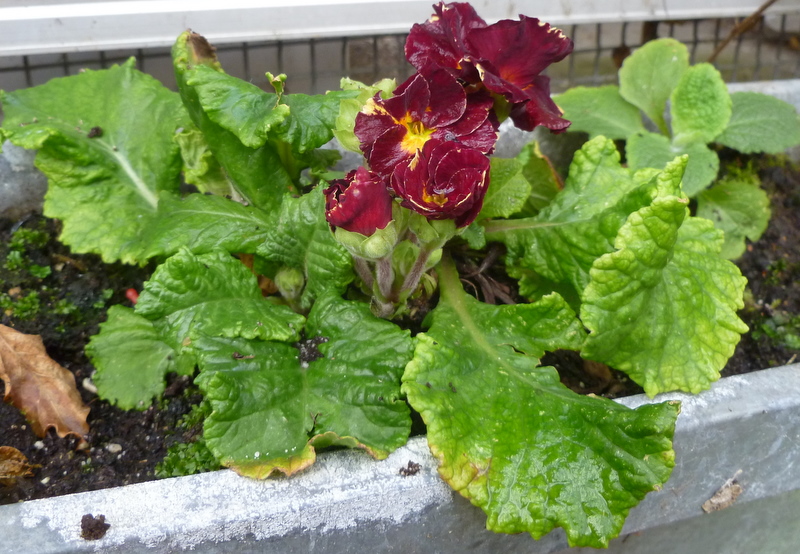
Primula

Early Colour

I also planted a French leaf salad mix, and some rocket to grow indoors as cut and come again salad, because I need something to use for the 52 Week Salad Challenge, as issued by Veg Plotting. I have decided to join this, because I like to grow my own, and forage for food. Salad leaves grow fairly quickly, so they should be good to help me get much better at the rhythm required for successional planting, which I am not great at. And I hope that it will help me to be more creative when it comes to salad. We eat a fair amount of salads, but they tend to be very samey, so I hope this will force me to think of more diverse things to go in them, and more creative dressings.

Raddiccio & Leaf Chicory

Hidden Gems, not Little

I currently have some rocket, mizuna, endive, perpetual spinach, fennel, beetroots, flat leaf parsley, and some carrots in the garden, all of which can be used as salad leaves, so I have time before my other seeds grow.There should be loads of things already starting in the wild that I can pick, but I won’t get foraging for a couple of weeks. We were also clearing an unloved part of the garden at the weekend, and we found some bonus lettuce in a planter that had seeded itself – a radicchio and I think the green one is a leaf chicory.

I only heard about the challenge when I got back from Australia, so this will have to be a 50 week challenge for me. I may not post about this every week, although I will tweet my pictures weekly. I guess it depends how excited I am about my salad in any given week!

Egg Mayo & Rocket

Salad as Comfort Food

Last week was my first. I was fresh back from Australia, and away from all the lovely fresh, summer produce I cooked with there. I didn’t want a salad in the traditional sense, I think it would have disappointed. Instead, I found myself craving the comfort of an egg sandwich. Nothing goes better with egg mayonnaise than some sharp, peppery rocket. I found that I couldn’t shake the idea long enough to find any other kind of salad inspiration, so that was what I had.

This week should have been altogether more exciting. I had an aubergine that needed to be used up, and I had decided to use that bonus radicchio, although it will be sad not to have it sitting resplendent and red in the brown winter garden.

I made Divalicous’ Aubergine, Tomato and Sumac Salad. I am trying to cook with more spicy food, and I found this one last summer. Do give it a go – sumac can be found in many local stores these days. I left out the tomato this time, because I have no interest in the kind of watery tasteless ones that you can get at this time of year. Instead, I used more flat leaf parsley, added some carrot leaves and upped the amount of dressing. I also served it hot.

I had intended to quarter the radicchio, and put it onto the griddle pan after the aubergine had cooked. I wanted it to char, along with some red pepper, and serve it with a lemon and parmesan vinaigrette. The charring softens the radicchio’s sharp quality, and gives it a nutty flavour. If you try it, be really careful, they will burn in seconds, once they start to char. Slightly blackened edges is what you should aim for, but no more. I would have stirred through some quinoa for bulk.

However, while my back was turned, as I put the first batch of aubergine on, the Big Guy came along, and separated the leaves of the radicchio, making it too flimsy to try to char. So a rethink was required. Inspired  by Divalicious’ mention of fattoush on her salad post,  I decided to make a kind of fattoush sandwich in pita, with the radicchio and aubergine salad on top. It wasn’t as substantial as the other way would have been, but it was really tasty nonetheless.

Aubergine & sumac Salad on Raddiccio

Salad as Improv

Something else that I have found this week is Foodcycle, who collect surplus food, and cook it in a café where you can pay what you can afford. Inspiring stuff, doing things that are close to my heart. I think their project rocks, and they are trying to crowdfund to enable them to keep running. They only need £5k to run for a year, which is a ridiculously small amount for all that they achieve. They have 4 days left to hit this target. If you can, please go along and pledge a little, you won’t have to pay if they don’t hit target, but every little helps, as they say.

Unfortunately, the crowd funding scheme is currently only set up for people in the UK, so if you are outside of that jurisdiction, then you can make a direct donation through their money giving site. I know they are very grateful for all donations as well. Or try and find a local scheme that you can help out. If you do, I’d love to hear about it.

16 Comments

Filed under Farmed