Of Gluts and Gluttony

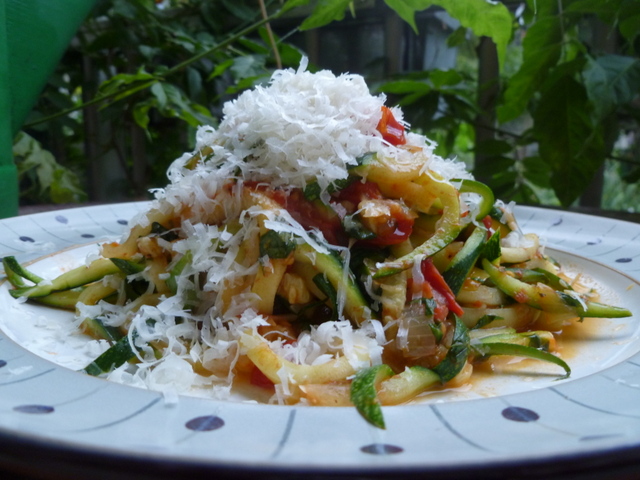
Courgette & tomato "Pasta"

Courgetti Spaghetti

Have you ever planted too many courgettes, or even had an exceptional year, and not known what to do with your excess? I’m sure that this has happened at some time to most gardeners, and you have been desperately trying to give them away to friends, relatives, passing students, and anyone who knocks at the door. Not to mention trying to pickle, grate or shove them into fritters, soups, salads, stews, cakes and on your breakfast.

This year, many of the courgettes seem to have got off to a very slow start, due to the weather, but we are now finally starting to see them take off.

This is a recipe that I use both to use up excess courgettes, and also because it is a tasty, and unusual take on a ratatouille.  It is also a low carb alternative to pasta, as well as being a quick and easy supper.

I have made this for many years. Sometimes, I make it even lighter, by keeping the cherry tomatoes whole, leaving out the onion, and grating in some lemon zest. I find this version needs a little more parmesan, and that you need to mix this in over the hob.

This courgette pasta is actually a version of Pasta Neapolitan.Using the courgette as pasta is also a nice alternative with many other pasta sauces – I have also tried it with al’arrabiata and puttanesca to great effect, but I also imagine it would be good with pesto, carbonara, mushroom-based sauces, and even bolognese, if you are careful not to add too much liquid  to the sauce.

I like to use herbs liberally in this dish, for an extra fresh kick. Always thyme, and I like to add oregano. Rosemary or basil would also work well. Play around with it, and see what you like best.

Simple & in Season Blog Badge

I am entering this into Simple an in Season for August, hosted by Ren of Fabulicious Food. There is nothing more seasonal than using a glut of your vegetables, and this dish really couldn’t be simpler.

If you do try this recipe, please leave me a comment and let me know which herbs you used, I’m always interested to hear what people have done with my recipes, and learn new variations.

Recipe: Courgetti Spaghetti

Ingredients

1 Medium onion, finely diced

A Little olive oil for frying

2 Cloves garlic, crushed to a paste

4-5 Sprigs thyme, leaves only

200 g Cherry tomatoes, halved

2 Courgettes

A little lemon juice

2 Large sprigs oregano, leaves only, finely chopped

Salt and pepper to taste

A little freshly grated parmesan cheese to serve

Method

Sweat the onion off in a little olive oil, until the onion pieces are translucent. Add the garlic and thyme and cook out for a minute.

Add the cherry tomatoes, and cover the pan, to encourage the tomatoes to break down and cook out. Once the tomatoes have broken down a bit, uncover the pan, and allow to cook down on a low heat.

Top and tail the courgettes. Using a mandoline, and being careful of your fingers, make juliennes of the entire length of the courgette, to resemble spaghetti. You can julienne them by hand if you don’t have a mandoline, but this is time-consuming. Instead, take a vegetable peeler and peel the courgette lengthways to give you thin papardelle sized strips.

Cover the courgette strips with cold water with a little lemon juice in. This will stop the courgette from browning, while the sauce  cooks down.

When the sauce has been cooing for at least 15 minutes, and has thickened a bit, blanch the courgette strips in boiling salted water for 2 minutes. You want the courgette to retain some bite, but take the raw edge off. Drain well, and leave in a colander, for at least 10 minutes. You can squeeze a splash more lemon juice over them to prevent browning.

Because the courgette is much more watery than normal pasta, you want to cook the sauce down until it is fairly thick, otherwise the courgette will flood the sauce and dilute it.

When the sauce is almost too thick, add the oregano and mix through. Continue to cook on a low heat, and taste. You can add a little sugar (less than ¼ tsp) if you think you need a little more of the tomato flavour to come through. If you use very ripe tomatoes, you should not need this.

Add te well-drained courgette to the sauce, over the heat. You just want to combine the sauce and the courgette. The courgette is likely to start giving off water, so keep the heat on low while you mix  it all in, and season it to taste. Remove from the heat, and serve immediately, with a little parmesan cheese. Or leave the cheese off, for a simple, seasonal, vegan supper.

7 Comments

Filed under Farmed

Fairies That Can Really Pack A Punch

Marinated Tinkerbell Pepper Salad

Fairy Salad

I recently got hold of some small Tinkerbell Peppers, of assorted colours. They are like bell peppers, but smaller. They are officially a dwarf sweet pepper, but it has given me some ideas for what to call those that I grow, which sometimes turn out not to reach their full size!

I jest. I saved the seed, and I’ll be planting some of these to see if I can grow them next year. We’ll see how successful I am. I hope they’re not F1 hybrids.

Tinkerbell Peppers in Perspective

Fairy-Sized

I recommend this variety, they are small, but perfectly formed, and have quite a lot of flesh for such small peppers, and they have much better flavour than the greenhouse varieties that we get from supermarkets. They would be great for stuffing to use as canapés, on the barbecue or even simply in salads.

I always knew I was going to marinate these peppers, which I often do to larger varieties, to serve with homemade burgers and veggie burgers at barbecues. At the moment, I am also trying to find ways of injecting a lot of flavour into salads, without adding too much by way of fat (more on that soon).

I also have some very good smoked Maldon sea salt, which complements the smokiness of the charred peppers perfectly. I usually char the peppers on my hob, but these were tiny little things, and I wanted to add to the salad by charring some ciabatta, so I used my griddle pan. A fairly recently lit barbecue would also be a great way to char the peppers, and the bread can char just before you serve it. The delicate smoke of the salt enhanced the smoky flavour of the peppers.

It struck me that I could use the peppers and the marinade to dress a nice salad. However, the salad would have to stand up to the punchy marinade, so a normal butterhead lettuce wouldn’t cut it (and this would definitely be no place for an Iceberg). I think any of the mustard greens would be suitable, as would watercress, and some of the foraged greens that are abundant at the minute (e.g. wood sorrel, sorrel, fat hen, chickweed). I had rocket, chickweed and parsley in the garden, so I used those. I bulked it up with some baby spinach. The iron and peppery flavours were just what was needed.

I have also found apple mint and sumac great for adding a lot of flavour to salad leaves, without resorting to cheeses and too much dressing.  If you have any other tips for creating good flavours, I’d love to hear them.

This entry is part of the 52 Week Salad Challenge, where they are currently discussing pests. I know Michelle would love to hear from you if you have anything to add about the bane of slugs or other nuisances.

Recipe: Smoky Tinkerbell Pepper Salad

Ingredients

For the marinated peppers:

5-6 Tinkerbell peppers (or one or two large ones)

A little oil for the griddle pan

2 tbsp extra virgin olive oil

1/2 tbsp blackberry vinegar (or sherry or red wine vinegar will work, even balsamic if you have to)

1 clove garlic, very finely sliced

Small pinch of dried chilli flakes

Good pinch of smoked salt (or normal sea salt)

Black pepper to taste

For the salad:

4 thick slices of ciabatta

A little extra virgin olive oil

A bunch of rocket

A large handful of baby spinach

Bunch of chickweed, chopped if the stalks are long

Bunch of parsley, leaves only

¼ cucumber, diced

8-10 cherry tomatoes, halved

Method

Heat a little oil in the griddle pan.

Halve and deseed the peppers. Put skin-side down in the hot pan, and leave until the skin chars and blisters. You may need to press them down a little on the rounded bits to get the skin to char evenly. Don’t worry that the skins go black.

When the skins are blackened and blistered all over, place them in a plastic bag, a bowl covered with cling film, or in an airtight container, and seal. Allow to cool for 5 or so minutes, when you will be able to rub the skins off easily.

In another airtight container mix a dressing of the extra virgin olive oil, the vinegar, garlic, chilli flakes, the salt and a little pepper. The acidity of a dressing tends to be a matter of taste, so adjust this to your liking.

While the skinned pepper halves are still warm, add them to the marinade, cover, and set aside for a while – at least half an hour – to allow the flavours to mingle. At this stage, you can use the marinade peppers as a side dish or relish too, if you like.

Drizzle the ciabatta slices with some olive oil, and put in the warm griddle pan. You should be able to hear it sizzle, as you put them in. You want a nice striped toast to the bread, so once it is in, resist the temptation to keep moving and checking it.

I used ciabatta rolls, cut in half, so I only toasted the cut side. Leave this for at least 3 minutes, until you can smell the bread toasting. If you are using bread slices, then turn it over, and char the other side, again resisting temptation to move it around. The second side will need slightly less time. Leave to cool slightly.

Meanwhile wash the salad leaves and prepare the cucumber and tomatoes. When the bread is ready, dress the salad in the peppers and marinade, tossing to mix it well.

Serve the salad over the toasted bread, and pour over any remaining marinade.

You will have a smoky, hearty salad, that does not leave you wanting. The marinated peppers may have a fairy’s name, but they really do have a giant flavour.

2 Comments

Filed under Farmed, Feast

Very Suisse!

Meringue Suisse

A Swedish Childhood Dessert

As you will know when I got my Foodie Parcel last month, I was very excited to receive a broken meringue as part of a lovely package.  I promised Teresa that I would blog the recipe for Meringue Suisse, which I knew I was going to make as soon as I saw the broken meringue.

This is a dessert that the Big Guy had often in his childhood. In Sweden. I am not really sure where the Swiss thing came from, although I could probably surmise something about Swiss chocolate, or the fact that it resembles the Matterhorn or something.

This time, I made the basic recipe, and used good quality vanilla ice cream from the shop. As with most simple recipes, the better quality the ingredients, the better the final dish will be. Teresa’s meringue and chocolate were both of such quality that I didn’t want to mess around with the recipe too much.

The basic recipe I give here is pretty simple, but you can play around with it, if you like. Try adding soft fruits (the Big Guy’s family add bananas, but I’ll be having none of that!). You can make it fancy by making your own ice cream or meringue, or you could even make praline or do a bit of sugar work. Crumbled amaretti biscuits could also be a very good topping.

What other toppings or additions would you choose?

Recipe: Meringue Suisse

Ingredients

Good quality vanilla ice cream

1-2 tsp slivered almonds

60 g dark chocolate, broken into chunks

15o ml whipping cream (to be used in 2 parts)

Knob of butter

1 meringue, broken into pieces

Method

Remove the ice cream from the freezer, so it can soften to a scoopable consistency.

Toast the almonds in a dry frying pan. You will need to watch them carefully, and stir them often, as they catch easily. Once they are a nice golden colour on both sides, remove from the pan, to prevent them from cooking any further.

Combine the chocolate, 50 ml of the cream and the butter in a saucepan. Cook over a very low heat until the chocolate has melted. Don’t stir it at this stage.

Meanwhile, whip up the remaining cream to soft peaks.

Once the chocolate has melted, remove from the heat and stir the sauce well to combine it. It may look a little grainy at first. Don’t worry, keep stirring it and it will become a smooth and glossy sauce. Allow to cool slightly, so that it does not melt the ice cream immediately.

Scoop enough ice cream for two people into a bowl, and combine with the meringue. You will need to have reasonably soft ice cream for this. Put the ice cream and meringue mix into serving bowls and top with the whipped cream.

Pour over the chocolate sauce and sprinkle with the toasted almonds. The chocolate sauce should go a wonderfully fudgey texture when it hits the cold of the ice cream.

This is a very easy dessert, but one that looks and tastes impressive. The only question is how will you top yours?

Leave a comment

Filed under Feast

You Can’t Always Get What You Want

Sauteed Chanterelles for Breakfast

…But If You Try Sometimes, You Might Find, You Get the Breakfast You Need.

We were recently in Sweden, and spent a wonderful afternoon with the Big Guy’s sister and her family foraging in a wood. We are never in one place for long in Sweden, and I had spent much of the week eyeing up the meadowsweet and rosebay willow herb that was abundant in the area we were in at the start of the week. I have never seen either plant in the Netherlands, so was looking forward to cooking up some goodies with them. In Swedish, meadowsweet is called älgört (pronounced el-lee-yurt), which means moose herb. Rosebay willow herb is called rallarros (pronounced rah-lor-rose), as it used to be the first plant to line the railways once they had been cleared through the forest, hence the name of railway rose. This is what makes it a pioneer species.

Tettigoniidae spp Bush Cricket

A Fellow Forager

As is often the way, when we got out to where his sister lives, we were actually in a subtly different habitat, and so there was no meadowsweet or rosebay willow herb to be had. This is a good foraging lesson – if you see it, grab some, as conditions may not be the same the next time you come back, or if you move onto a different spot.

Wild raspberry

Forest Jewels

However, all was not lost, we came across some other things I am yet to find in the low countries. First was wild raspberries. Slightly smaller than their domestic cousins, but just as sweet. They were great to come across, and we filled a few tubs.

Bilberries

Edible Carpet

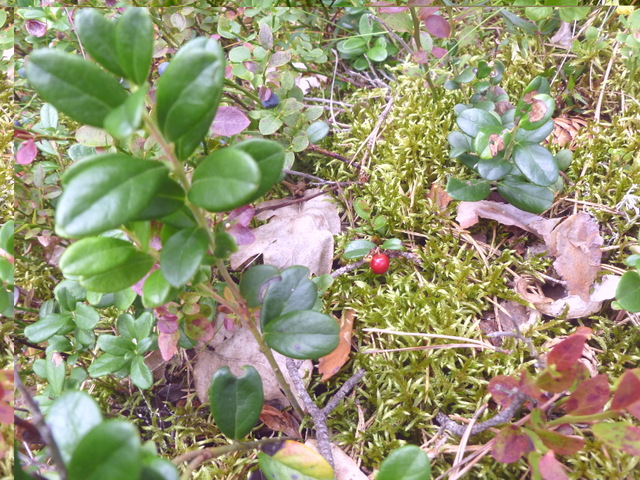
Blue berries are everywhere in Swedish forests. We would call this variety bilberries in the UK, they are a little smaller and less sweet than the ones you would typically buy from the shops. They carpet the forest floor, alongside their cousins, the lingonberry. They are actually not at their peak for a few more weeks yet, but I like them when they are sharper too.

Unripe lingonberry

Not Ready Just Yet


The lingonberries are not yet ripe, so we didn’t even try to pick them. Apparently, there is a hybrid between the lingonberry and the blueberry that they call the ‘blingon’. We didn’t find any of those, but I’d love to taste one, just to see what it is like.

Too young Chanterelles

Beloved by Chefs, But Better Left a While

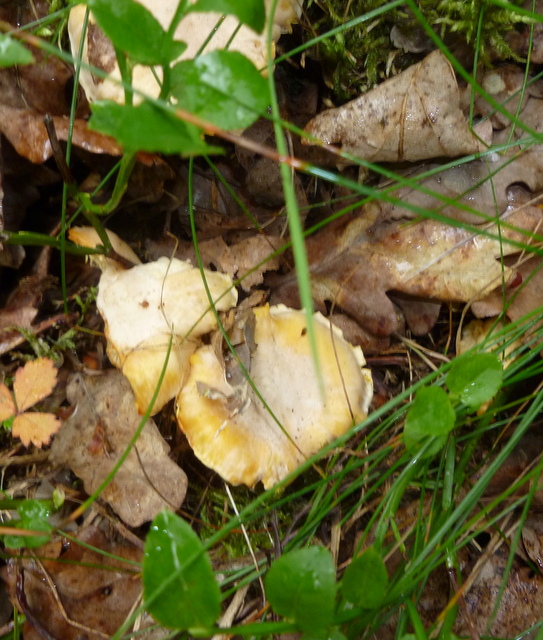
The main thing that we actually did go out to find was the chanterelles, and we were not disappointed. We started to come across really tiny ones. This is the kind that chefs often prefer because they are fairly regular sizes, and can pretty up a dish. However, many foragers lament this habit, because if everyone only took the smallest ones, they would not have time to spore, thus spoiling things for future forages, and the fungus itself.

Mature Chanterelles

We Struck Gold

We were lucky in that we didn’t have far to go to find more mature ones, and we found large mushrooms by the bucketful.

Cleaning Chanterelles

House Work

Because these mushrooms grow in the leaf litter (often quite well hidden, but once you have found one, there will be more) they will need a little trimming, and a bit of a clean with a stiff bristled brush. This can be time consuming, but well worth it to get rid of grit from between the fine gills.

Cleaned Chanterelles

A Bucket of Breakfast

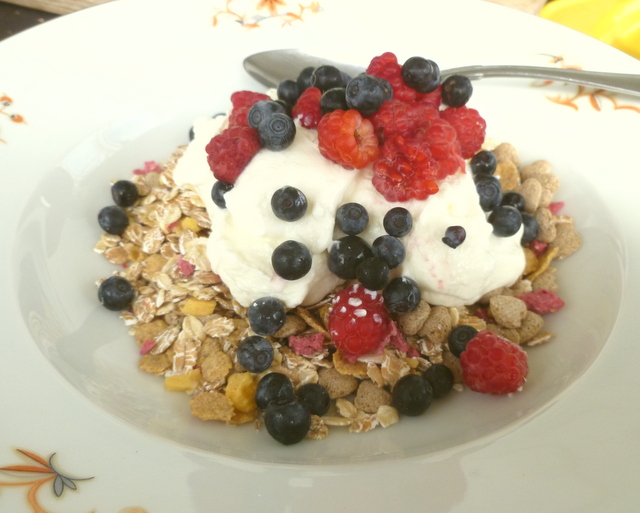
The next day, we ate a king’s breakfast, starting with sautéed chanterelles and scrambled egg, followed by muesli and yoghurt, liberally scattered with raspberries and blueberries. We were leaving Sweden that day, and it was a fantastic start to our travels.

Muesli and foraged berries

Second Breakfast of Champions

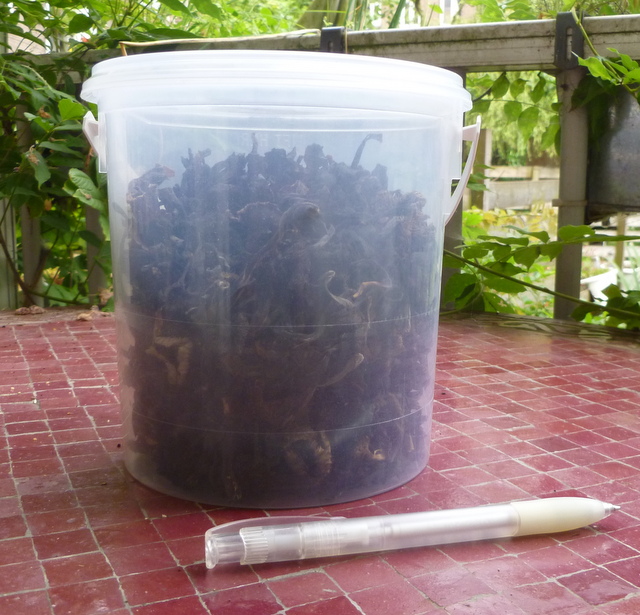
We did manage to get through all of the chanterelles, even though we picked a lot. We left many of the berries for the Big Guy’s sister, and I know that she will make delicious things with them. I’m also very lucky that she likes to forage as well, and I’m very grateful to her for a wonderful afternoon, and for the huge pot of mushrooms that she’d dried from last year’s bounty.

Dried Chanterelle spp

Once-Buried Treasure


Leave a comment

Filed under Found

Sauce Grib-ish

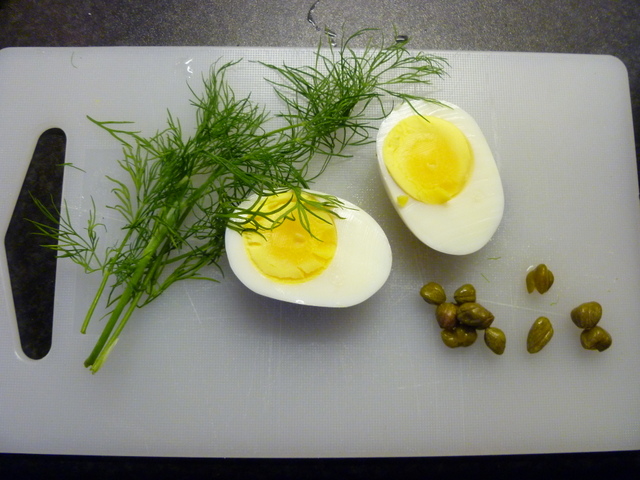
Dill, Boiled Egg & Capers

Ooh, Saucy!

I first had a dish like this whilst having dinner at my friend’s. He writes the excellent Morning Claret wine blog. He really knows his stuff, so if you want some good wines, and great writing, go and give him a visit. Both he and his partner are very accomplished cooks, and it is always a joy to be invited to their house for fine wines, great food and excellent company. His version had anchovies in it, and he served us boiled globe artichokes to dip in it. I loved it, and decided that I would have a go at recreating it.

A bit of research later, and I have found that it was a variation of one of two classic French dishes. Either Sauce Gribiche or Ravigote. Of course, as with any classic dish, there are a lot of variations and the lines are blurred between the two. It seems that ravigote is more like a vinaigrette to which chopped boiled egg has been added, and in gribiche, the yolk is used to make a mayonnaise, and the chopped white is added. This is sauce is not quite either of those things, so I have called it Sauce Grib-ish.

I first made this after an Easter egg hunt left me with quite a few boiled eggs to use up. It also needed to be vegetarian for the friends that I had coming over. It is so versatile, you can serve it as a dip, over asparagus, or with fish and chicken. I’m also going to try to make a potato salad with it, I think it will be a great combination.

I am entering this simple seasonal sauce into Herbs on Saturday at Lavender and Lovage, although I only use dill in the recipe given, it will also be really good with tarragon, chervil or even parsley.

Sauce Grib-ish

Sauce Grib-ish

Recipe: Sauce Grib-ish

Ingredients

This sauce is easy to scale up or down, depending on how many people there are. I have given the amount for two people to have as a sauce to go with vegetables or fish. Taste is the key to this dish, as you need to balance the richness of the egg with the acid of the lemon and/or caper vinegar. The amounts I give here are approximate, so keep testing and adjusting the sauce, according to taste.

1 egg, hard-boiled

2 tbsp capers plus vinegar from the caper pot

Juice of ½ a lemon (or just the vinegar from the capers)

Small bunch dill, finely chopped

Good quality extra virgin olive oil

Method

First, halve the egg, and remove the yolk. Then finely chop the white.

Mash the yolk with a little lemon juice or vinegar. You want the yolk to be a smooth, runny paste, about the same consistency as thick pancake batter.

Roughly chop the capers, and mix together with the dill, egg yolk and egg white. Taste and adjust for acidity, adding caper vinegar if needed.

Add some olive oil and taste and adjust again. The amount of olive oil you need will depend on what you want to use it for. For example, if you are serving it as a dip with crudités, you will want a thick sauce that will stay on bread, tortillas or short lengths of carrot and cucumber. If you want to serve it to accompany artichokes or asparagus, you will want a much thinner consistency, so add more oil. For potato salad, you will want it somewhere in between. The oil will also alter the acidity, so make sure you taste and adjust as you go along.

5 Comments

Filed under Feast

Salad Daze

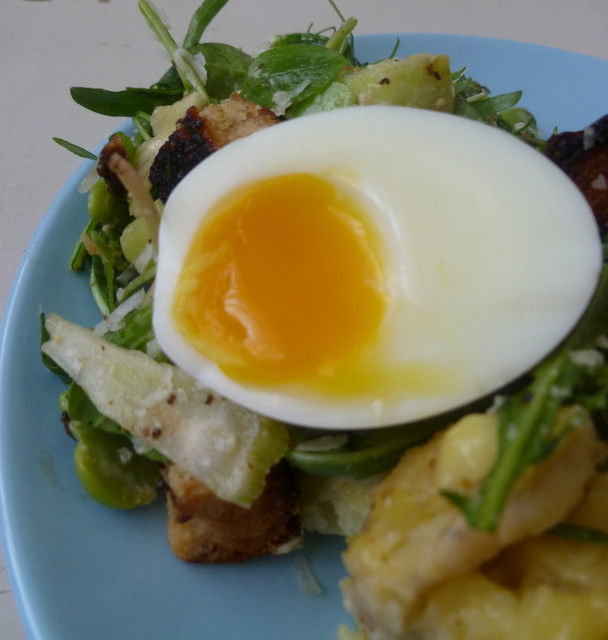
Boiled Egg and Salad

Salad as Protein

Obviously, we are now at the height of the salad season. I have an abundance of rocket, leaf salads, radishes, cress, mustard greens and more. And yet, I am about to do a post that focuses largely on the less usual salads and ingredients that I have been having since last I updated you on the 52 week Salad challenge.

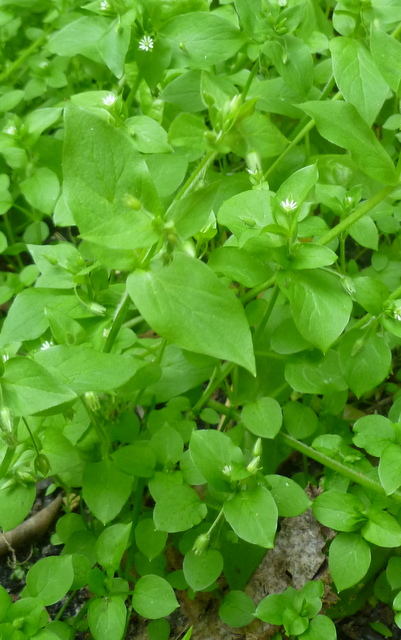
Chickweed Stellaria media

Salad as Easy

I remain loyal to chickweed, and luckily it seems to remain loyal to me. I have been eating it for what seems like months now. I remember that I lamented the lack of chickweed back in the spring, and thought that the conditions in the Netherlands were not suitable. It turns out that I was wrong. Chickweed loves the growing conditions here, but it does appear about 6 weeks after it would in the UK. It has kept me and the guinea pigs happy for quite a while. I have no idea why people write this off as a weed, I think it is delicious.

Mixed Salad with Broad Bean Tips

Salad as a New Kind of Shoot

Back in June, I was also including broad bean tips to my salads. These really are the gardener’s treat, as they don’t keep well, so must be used fresh from the plant. This year, I was also fortuitous in that I hadn’t quite got round to eating my dock and digging it up. I have discovered that blackfly love dock much more than my beans, so they remained pretty free from these sap suckers. Since dock is edible, and has proven to be so effective, I shall probably not be so hasty to remove it all in future, as long as it stays out of my raised beds.

Salmon Fishckes, collaboration salad, Taboulleh & Sauce Grib-ish

Salad as Leftovers

This past month, herbs have also featured heavily. I am finding that herb fennel, dill, mint, basil, and parsley have become a regular addition to my salads, as well as providing me with lots of tabbouleh, and sauces.  I have also been adding herbs to salad dressings. I’ve always used thyme, of course but lately, my oregano has gone crazy, so I have been looking for recipes to use it in. I found this lovely oregano, mint and lime dressing by Laura of How to Cook Good Food. It was an entry in Karen’s Herbs on Saturday Challenge, and has been on heavy rotation in our house since I came across it. It is really a salad dressing for summer.

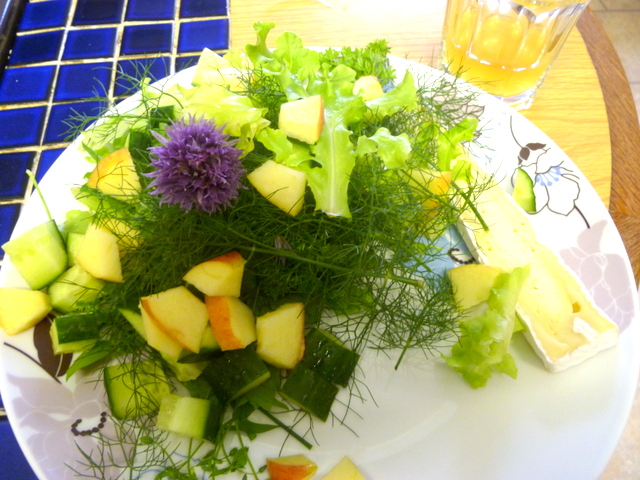
Mixed Family Salad

Salad as a Family Affair

Back when it was my Mum’s birthday, I made a lovely collaborative salad of leaf lettuce from my sister’s garden, fennel, mint and chives from my mum’s garden, and foraged chickweed. I also added carrot and radish leaves, and was very happy when it all went at her birthday barbecue. I also livened up a simple pasta and chive salad, by mixing in a separated chive flower. I think I converted one of Mum’s friends, who was pretty amazed when she found what it was. She didn’t know chive flowers were edible, but said she would try them from now on.

Summer Vegetable Nage

Salad as Soup

Another herb that has been featuring in my cooking of late is chervil. Although you rarely see chervil in the shops it is really easy to grow, and I have many pots and planters with it. I love this delicate little herb, and it makes a great addition to any salad. It goes so well with broad beans and peas too, as you can see from this vegetable nage I made a while ago.

Something else I really love, especially when the weather is a little too cold for salad is to braise lettuce, beans and peas in a good stock. A dish that is made even better by the addition of a little chervil just before serving.

Braised Salad, Beans & Peas

Salad as a Side Dish

(c) P. Caspar 2012

Recipe: Braised Lettuce, Beans and Peas

Ingredients

This will serve four people as a side dish

100 g podded weight broad beans

100 g shelled weight fresh peas

2-3 Little Gem lettuce, depending on size. This dish also works well with Witloof chicory, and other firm hearted salads

400 ml chicken or vegetable stock

Small bunch chervil, finely chopped

Method

Briefly cook the beans and peas in unsalted boiling water. You can use the same pan, but the beans will need 3-5 minutes, depending on size, and the peas will need 1-2, so add the peas to the pan after the beans have had a couple of minutes. Once they are cooked, drain and refresh in cold or iced water.

Double pod the beans.

Halve and rinse the little gems. You need to keep the stalk, so that the lettuce stays together during the cooking.

In a sauté pan, heat a little oil. Once hot, add the lettuce and cook briefly. You want a little colour on the leaves, but be careful, as they will burn easily. Turn them once to get similar colour on each side. If you prefer a thicker sauce, you could stir in about a tbsp. of flour at this point, and cook it out briefly. I don’t often bother with this stage, unless I am going to use this as a soup.

Add the stock, and cover. Bring to the boil then simmer for about five minutes. Add the peas and beans and heat through for another minute or so. Just before you serve, season a little, if needed and stir through the chervil.

This makes a great accompaniment for most main courses, or you can shred the lettuce a little when it is cooked, stir through a little cream, and serve as a light soup.

4 Comments

Filed under Farmed

They Called me the Wild Rose

Wild Rose Jelly

…But my Name was Eliza Dane

I’ve been back collecting rose petals again. As I mentioned in my post about rose cordial, the roses in my favourite spot are probably rosa acicularis. These are quite a long flowering variety, and you don’t need that many for this recipe, so you can still find them now if you try. Don’t forget to leave the bees behind when you pick them, though.

This time I made a really delicately flavoured jelly. My version definitely has all the flavour of rose, but has quite a subtle colour. If you would like a darker coloured jelly, then you can boil the petals up in the water before you add the apples, but I personally don’t think it needs it.

I have never made rose petal jelly before, but once you have the proportions in your head, making jelly is easy. You will need a jelly bag, or muslin and a sieve to strain the liquid. I have a thick piece of muslin that I nail to the frame of a chair with the seat removed, and that works well for me. Whatever method you use, it needs to support a bit of weight.

This makes 3 standard pots of jam, but I actually used smaller jars, as it was a lovely one to give away as gifts. I was also thinking ahead to possible foodie penpals. When I sent my first parcel out, I found to my penpal’s cost that sending jars mean that I can send much less, due to weight limitations. A nice work around is to try to send small jars as testers. I will see if that works.

This jam is a good breakfast preserve, and nice with yoghurt. However, I actually think this has more potential as a glaze for patisserie. I am going to try making a raspberry tart, and use rose petal jam as the glaze, where you would probably ordinarily use apricot jam. Of course, I shall let you know the results when I try it.

Wild Rose petals

Pretty In Pink

Recipe: Rose Petal Jelly

Ingredients

15 g rose petals

500 g apples

400 ml water

Granulated sugar – the exact amount will depend on how much liquid you have

Method

Rinse the rose petals, and remove the claw.

Cut the apples into chunks. There is no need to peel or core them, as this contains pectin, which you need to help the jam set.

Place the apples, petals and water in a pan, and bring to the boil. Reduce to a simmer, and cook for half an hour. At the same time, boil your muslin to sterilise it.

Strain the fruit pulp through your muslin/jelly bag/ whatever set up you use into a large bowl. Leave  it to strain overnight, so you get the maximum amount of juice from your pulp. Don’t be tempted to squeeze the bag, or push the pulp through though, or your beautiful clear jelly will be cloudy.

I usually make fruit butter with the leftovers from jelly making. It is a tasty preserve, but it does have a short shelf life. Unfortunately, I didn’t have enough time to make it or to find homes for the pots where it would not go to waste. As there has been no sugar added, you can still compost the pulp with no adverse effects.

Before you start to make the jelly, sterilise some jars. You can do this in various ways, including washing them in hot water, rinsing well, and putting them in a warm oven; you can steam them in a pressure cooker; or wash them in a dishwasher, being careful to time your cycle with about the right time that the jam is ready. At the same time, boil your muslin to sterilise it.

Measure your juice that was strained from the pulp. This is where the proportions come into play. For every 600 ml of juice that you have, you need 400 g sugar.

In your preserving pan, gently warm the juice and the sugar, stirring while the sugar dissolves. Then bring to a rapid rolling boil. Allow to boil like this for about 10 minutes. Your jelly will have reached setting point at 104.5 °C, or when you get a skin forming on jam dropped on a cold plate and left in the cold  for a minute.

Pour into the sterile jars while both are still hot. Fill to within 3 mm of the top, then put a wax disc over it, wax side down. Seal with a screw lid, or a cellophane cover.

Label them and give them a week for the flavour to develop. Once you have opened a jar, keep it in the fridge.

1 Comment

Filed under Found

Cracked in the Box

Foodie Penpals July Box

A Box of Treats

It’s that time again when I can reveal my matches for Foodie Penpals. I have to say, I really am enjoying this, from deciding what to send out, and trying to make that as tailored as possible to my penpal; to receiving my own box and thinking about some great recipes to make with the contents.

This month, I was matched with Kay at KayTeasCakes and I got a parcel from Teresa from Rockspring Crafts.

Unfortunately, at the time of writing, I have just heard from Kay that her parcel has not arrived. I am away at the moment, and don’t have a tracking number, although I am trying to sort something out. I am really sorry that there has been this problem for Kay, but if I have to I will recreate her parcel and send it to her as soon as I get home. In the worst case scenario, Kay will get two parcels next month, but I hope that her parcel will arrive soon. Please go and cheer Kay up by marvelling at the beautiful cakes that she makes for her stall in Harringay, or even popping along and buying some if you are in the area.

I was very lucky to be matched with Teresa this month. She was also kind enough to notice that I am an expat, and ask me if there was anything I needed from home. I am really appreciating these offers from my penpals, it is nice that people think that there will be things I am missing.

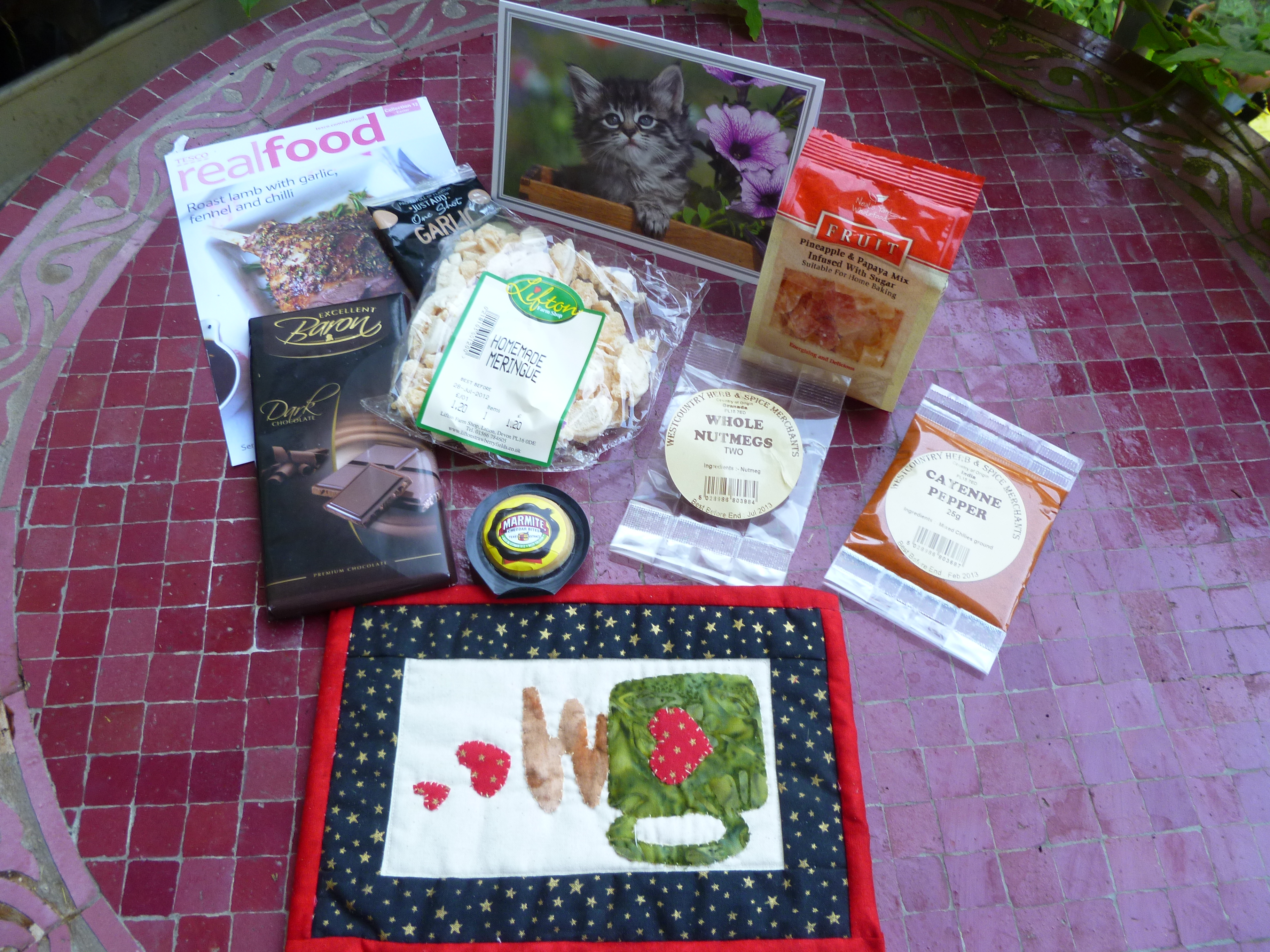
Teresa sent me a lovely box of goodies, some of which have really got me thinking. She obviously had a good time finding me unique items.  An added bonus is that she is a fellow Westcountry person, so, it has been great to get products from almost home!

Firstly, was a lovely lamb, with garlic, fennel and chilli recipe. I love lamb, and we can get very good Texel lamb here, so I know this is going to be a winner. There was also some pineapple and papaya. I make my own muesli (mostly because too many shop-bought mueslis have unwelcome banana chips in), and this has already featured as a very tasty addition. I am thinking of doing some baked goods with the rest soon. Of course, I shall blog it when I do. Also included was some onion salt. I have never used flavoured salts before, but this is a great addition to salad dressings, and I am sure it will be in many more things to come.

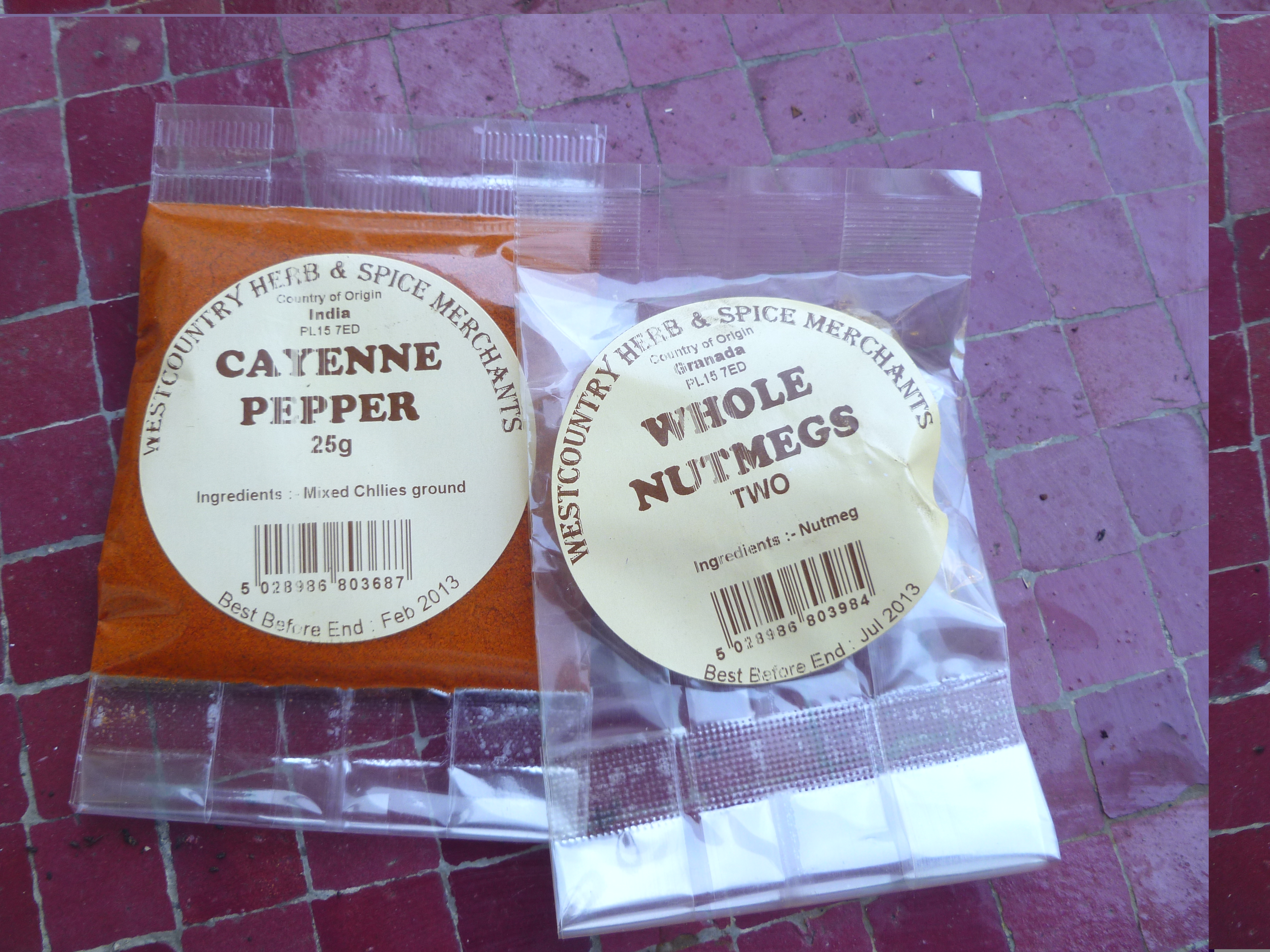
Foodie Penpal Cayenne Pepper and Nutmeg

Spice and More Spice Make all Things Nice

These spices will certainly come in handy. Spices form an essential part of my store cupboard, and I use both cayenne and nutmeg regularly. I have already grated a bit of nutmeg into some rogue nettles that popped up in my broad bean patch. I wasn’t about to let them go to waste, so I cooked them like spinach, and added butter and nutmeg after I had squeezed out all of the moisture. I love this way of eating nettles, and definitely recommend that you give it a go. They are also fantastic as a spinach substitute in curries and greek dishes, like spanakopita.

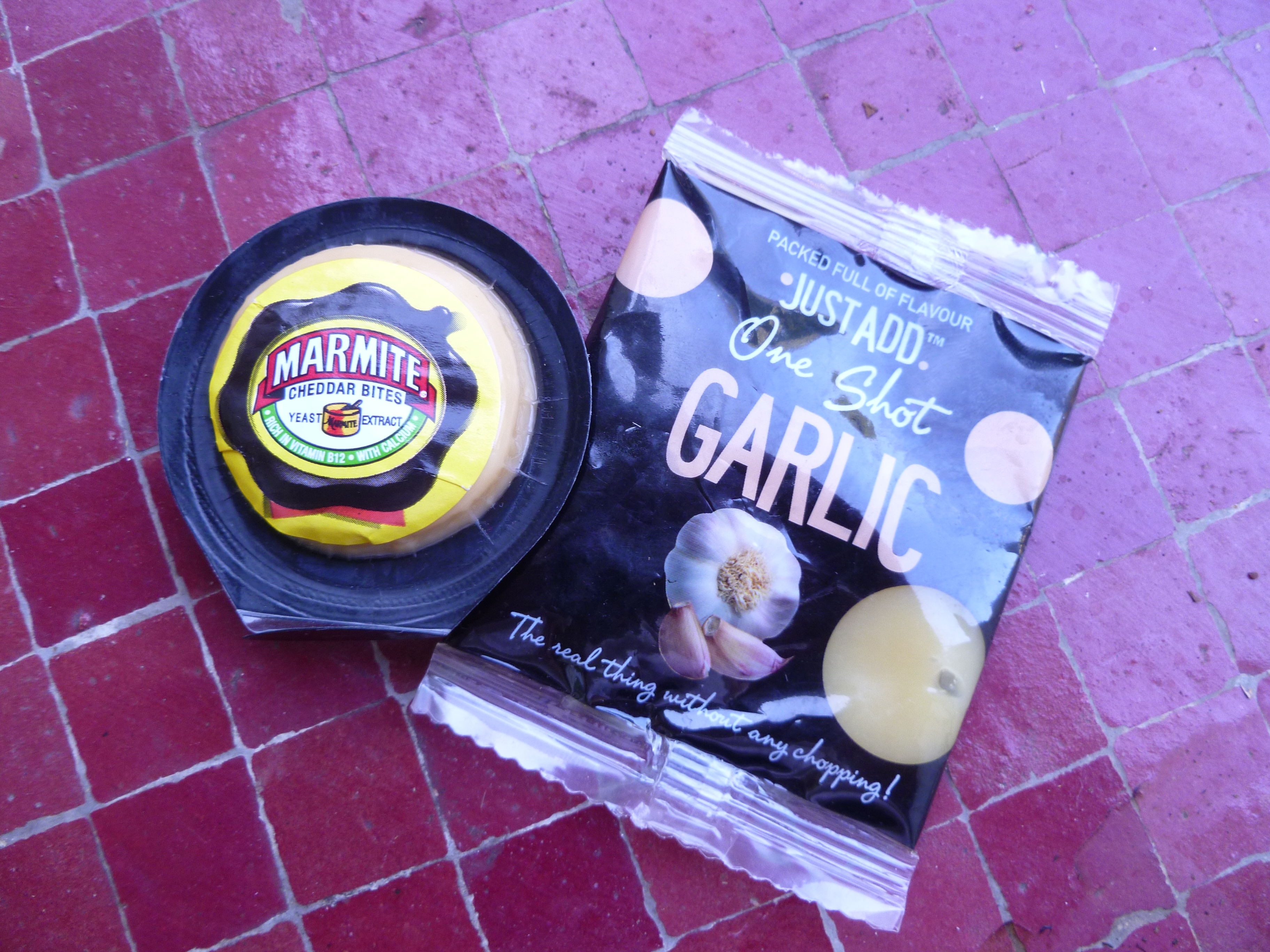
Foodie Penpals One Shot Garlic and Marmite Cheese

New For Teresa and Me

Teresa says that she enjoys finding a few new items to include in her foodie parcel. This time it was One Shot Garlic and Marmite Cheese. Originally there were three of these moreish little cheeses, but I think everybody gets one item that doesn’t make it as far as the photo, and this may have been mine this time. Ahem!

Foodie Penpals Meringue and Chocolate

The Makings of a Great Dessert

Teresa took a chance and sent me a meringue. Unfortunately, this was the cracked in the box that I refer to in the title. However, I am really pleased, because the two of these ingredients are the basis of a great dessert that I first had in Sweden. It is called Meringue Suisse, and I will make and blog that soon. It requires broken meringue, and I am lazy, so the Foodie Parcel has saved me a job.

A Hand Made Mug Rug

A Hand Made Mug Rug

To help pack things together, Teresa included a mug-rug that she made herself. . I am always in awe of people that can make their own things. I did roughly six weeks of needlework at school, and the teacher made me unpick and re-sew everything that I ever made. I caught her out once, when I just returned to my seat, and didn’t unpick nor re-sew anything, returning for her approval a little later, and she passed it. I found that really discouraging though, and have never attempted to make things with textiles again.

I really love my mug rug. Teresa makes them from scraps leftover from quilting and other projects that you can see on her blog, and of course, I love leftovers! She says that the idea is to have something bigger than a coaster & smaller than a placemat to hold a cuppa with space a couple of biscuits or treats. And look, that is exactly right.

Mug Rug, Tea and Biscuits

My Mug Rug in Action

Thank you so much Teresa, for such lovely treats, and to Carol Anne for organising Foodie Penpals in Europe.

Here’s the rough outline of how it works:

  • All interested parties in the UK and Europe – bloggers and blog readers alike – sign up by the form available at the bottom of this post
  • Participants are matched on the 5th of the month
  • Penpals send thoughtful, food related parcels, on or before the 20th of the month. The parcel must include something hand written – a note explaining the box’s contents, a recipe card, whatever you like. The price limit for the boxes is £10 – this is a limit, the point is not the cost, but the thought (no, really!)
  • Penpals open their boxes and rejoice!
  • At the end of the month, everyone blogs about their box, or writes a guest blog post if they are usually a blog reader and not writer. Everyone reads one another’s posts and rejoices some more. Posts are made available on Lindsay’s blog so we can all find each other easily

4 Comments

Filed under Feast

Birthday Brownies

Choc and Orange Brownie

A Birthday Treat

The other day was the Big Guy’s birthday. He loves chocolate, and I had some extraordinarily good chocolate with orange pieces that was given to me by my Foodie Penpal. I had been saving that chocolate for a special occasion, and what better than to make a birthday cake?

JD Gross Premium Equador Chocolate

Fit for a Birthday Brownie

I decided that a Brownie would be right up the Big Guy’s street. And that I would use the extraordinarily good chocolate as the chocolate chips inside. I used JD Gross Finest Chocolate Ecuador. It has very good candied orange in it, the pieces are still chewy, and spike the chocolate throughout. I boosted the orangey hit with a tablespoon of marmalade, but you can just use the marmalade if you can’t find the chocolate. Or you could use some chopped candied peel, if you prefer.

The first and last recipe for making brownies that I learned came originally from Nigel Slater. I just adjust the things I add, but always use this method and it has never let me down. If you make this you will understand why I go back to it time after time.

Recipe: Chocolate Orange Brownies

Ingredients

200 g good quality dark chocolate, broken into pieces

300 g golden, unrefined sugar

250 g butter

3 large eggs, beaten

1 tbsp marmalade

60 g plain Flour

60 g cocoa powder

½ tsp baking powder

Pinch of salt

100 g JD Gross Finest chocolate, very roughly chopped

100 g almonds, roughly chopped

Method

Preheat the oven to 180°C, and line a tin with baking paper. I use my roasting tray for this, and it is the perfect size. A largish square cake tin will also be fine.

Make a bain marie from a saucepan, with a little boiling water in the base (not more than 3 cm deep) and a bowl over the top. Don’t let the water touch the bowl. On a low heat, melt the chocolate in the bain marie. Don’t stir it too much, just let it sit, or you risk it going grainy. If there are floaty lumps of chocolate , just push them under the molten bits, and they’ll soon melt.

While the chocolate melts, start beating the butter and sugar together. I have a hand-held electric whisk. The butter & sugar must be softer than a gentle whisper, so I’d recommend this as a minimum, unless you are Geoff Capes.

What the butter & Sugar should look like for the birthday brownie

Pale and interesting

Keep going until the butter and sugar is almost as pale as consumptive Victorian. Please don’t skimp, because you are incorporating air, and it will help produce the most amazing consistency when you eat it later.

As soon as the chocolate has melted, add the marmalade. Once this has just melted, remove the bowl from the bain marie and leave it aside to cool a little.

If your butter and sugar is not quite ready, go back and whisk it some more. You need it to be almost runny, but not actually runny, there won’t be a lot of air in that, but trust me, you’ll know because it gets very creamy.

Sieve together the flour, cocoa, baking powder, and salt. This is also supposed to incorporate air, but I often don’t bother with just flour. I have never tested this, by baking one with and one without sifting, but I also don’t get flat cakes, either. However, when cocoa is involved, I always sift it, because cocoa can get a bit lumpy, and it will make your cake feel gritty, until you bit through a lump and get raw cocoa in your mouth.

Incorporate the beaten egg into the butter and sugar, a little at a time. Make sure that it is well mixed before adding more. You can also increase the speed at which you beat each time you add some egg.

Fold in the melted chocolate, chopped chocolate and nuts, using a metal spoon. You don’t want to knock all the air you took ages adding, so only mix until the moment there is no more pale butter streaks.

Fold in the flour and cocoa, and again, only mix until you see no more flour. Be gentle, this is time spent with your cake batter, not a sprint race.

Pour your batter into the prepared cake tin, and use a spatula to get the sticky bits from the bowl. Or if it is your Big Guy’s birthday, you can also let him take the rest of it with a spoon, or his finger.

Smooth the top of the batter in the tin, and put it in the oven for 30 minutes. The cake will sink slightly in the middle, this is perfectly acceptable (I’m not Mary Berry), and is because of the rich, gooey consistency.

Pierce the centre of the brownies with a skewer. In this recipe, unlike many cakes, you want the skewer to be a bit sticky. It should not have any raw cake mixture on it though. Again, you’ll have to trust me when I tell you that the difference is obvious. If it is not quite done, bung it back in the oven, but beware that the difference between raw cake mix and sticky is small, so it should take less than 5 minutes, check it after 3.

If you are going to eat this warm, and it really is tempting, leave at least an hour after it comes out of the oven, or it will be too liquid. These brownies solidify a bit as they cool. Divide them into 12 brownies after the hour.

Rich Choc & Orange Brownies

Everything a Good Brownie Should Be

The brownies are gooey and rich as a warm dessert, for sure. But they really are very, very good served cold, because they have that perfect combination of the crisp shell and rich, soft centre, studded with the nuts and chunks of that extraordinary chocolate.

Eat them on their own, if you must, but they are better with cream or a good vanilla ice cream.

These brownies also keep well in an airtight container, and remain moist and fudgey.

Leave a comment

Filed under Feast

Introducing… Seedy Penpals!

Seedy Pen Pals Blog Badge

For the last few weeks, Carl Legge and I have been Tweeting up a storm about #SeedyPenpals. Today, I am very pleased to announce that we have launched Seedy Penpals!

If you follow me or Carl on Twitter, then you may have an idea of what it is about. For those who don’t, or who managed to miss it, this is a place to swap seeds, make friends, and share knowledge or learn more about different kinds of plants.

For this inaugural round, you have until Wednesday 1st August to sign up for the first match. We will then match people up by the 5th August and then you will have until Wednesday 15th August to contact your penpal, and send out your chosen seeds.

There will be the opportunity to blog and tweet about your parcels, and each month, Carl and I will host Seedy Cuttings, where you can add links to your updates or leave them in the comments for all to share. We welcome anyone who is resident within the EU (due to seed export restrictions to other areas), but you don’t need to be an expert gardener, we’d love you to join if you are a complete novice or have green hands, whether you have a window box or a country estate. You don’t need to be a blogger or a tweeter either, there are plenty of opportunities to guest post, comment, or even just join in for the joy of getting a growing present twice a year.

Over the coming weeks, we intend to build a resource that people can share, and a space to ask for advice, or simply to brag that you’ve managed to grow a mighty oak from that tiny acorn you were sent in your parcel! We have a few ideas, which we will be adding soon. Would you like to see anything that would be useful to you?

We are also open to feedback, so please do have a look, and I’d love to hear your comments.

This penpals scheme was inspired by the Foodie Penpals scheme, which is the brain child of Lyndsay at The Lean Green Bean. It was initially suggested by Karen from Samphire, during a chat on Twitter about the Foodie Penpal scheme, and Carl and I agreed. We have had a lot of help and advice on logistics from Carol Anne at Rock Salt, who runs the Foodie Penpal scheme in Europe. I’d like to thank them for a great idea (I’m in my second month of Foodie Pen pals) and especially to Carol Anne for the advice.

Carl also deserves a lot of credit for the lovely blog badge that he came up with. I really think it is beautiful, and totally out of my skill set. It is another brilliant incentive to come and join in, because if you do, you can have this lovely badge on your blog, or even your wall.

I hope to see you all in the Seedy Penpals, and I’d appreciate it if you can tell all your friends too.

Let’s get Seedy!

3 Comments

Filed under Farmed