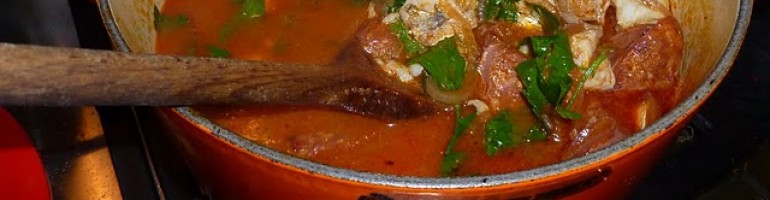
Gravad Lax: Buried Treasure

Gravad Lax with creamy dill sauce

A Christmas Cracker

I love trying food from different cultures, especially as a different take on Christmas food, such as our Aussie Christmas dinner. I guess that by now, Swedish food isn’t so different for me, but I thought I’d share a favourite recipe of mine.

A traditional Swedish julbord, or “Christmas table” is a pretty meat-heavy affair, eaten at 4pm on Christmas eve, after the nation has sprung to life again following their Disney favourite; “Kalle Anka och hans vänner önskar God Jul” or “Donald Duck And His Friends Wish You Happy Christmas”. It is always the same clips, and this is one Christmas tradition I’m not overkeen on, but when in Stockholm…

Anyway, back to the julbord; it groans under a ham, which for me this year was a wild boar one, because the out-laws know I don’t like to eat factory farmed meat; various kinds of inglagd sill ; cold cuts; sausages; lutfisk; spare ribs; and Janssons Frestelse.

In my family, we also often have gravad lax. Also known as gravlax, gravlaks, graavilohi, or graflax depending on where you are in Scandinavia. In any country, it means buried salmon. In times before refrigeration, especially in northern European countries where snow covered the ground for a good part of the year, curing and burying meat was a great way to preserve it. Originally, people would use spruce or pine needles in the cure, but the balance needs to be perfect if your fish is not to end up tasting of a certain kind of disinfectant.

These days, everyone can make this easy recipe; you don’t even need a spade! In fact, you still have time to make it in time for a new year’s gathering, if you are having one. It looks impressive, for relatively little effort, and it is a big hit.
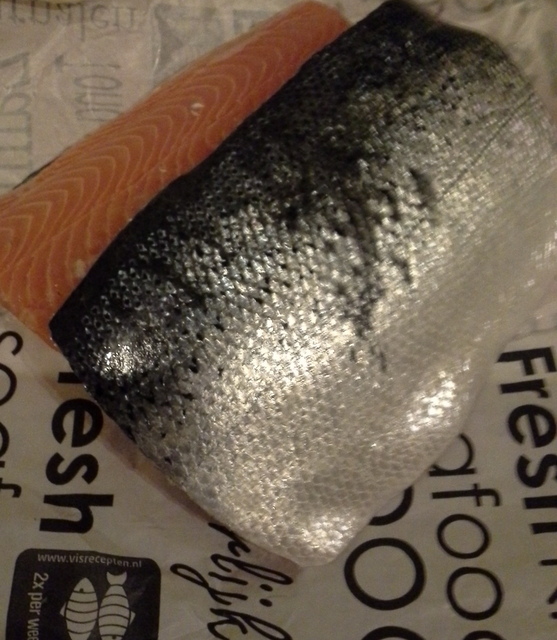
Organic Farmed Salmon

Organic Farmed Salmon

One thing I must urge you is to source your fish well. The increase in popularity of salmon in the last decade or so is concurrent with fish farming, most of which causes horrible environmental damage, due to over feeding and routine, excessive use of antibiotics. At the same time wild stocks are seriously dwindling, due to overfishing, ocean acidification and habitat destruction. In my opinion, salmon should be a treat, eaten very occasionally, so that we can afford to eat the best organically farmed salmon we can, meaning there is no unnecessary antibiotic use, and better care is taken to ensure that the fish are not over fed. This cure also works well for other types of fish, so you could still enjoy the recipe with cheap and plentiful fish, such as mackerel, or herring, so do feel free to experiment.

I made this amount of salmon for a large party, so you can also reduce the amounts of fish you use, but you must have enough cure to really cover the fish, so make a little more of that than you think you might need for the amount of fish that you have.

Recipe: Gravad Lax With A Creamy Mustard Sauce

Ingredients

For the Salmon:
100 g demerera sugar

75 g sea salt

100 g dill

1 tbsp juniper berries crushed

1.5 kg salmon fillet, halved

3 tbsp brandy

3-4 bay leaves

For the Sauce:
250 ml crème fraîche

2-3 tbsp finely chopped dill, depending on how much you like it

2 tbsp wholegrain mustard

1 tbsp runny honey

Salt and pepper to taste

Method
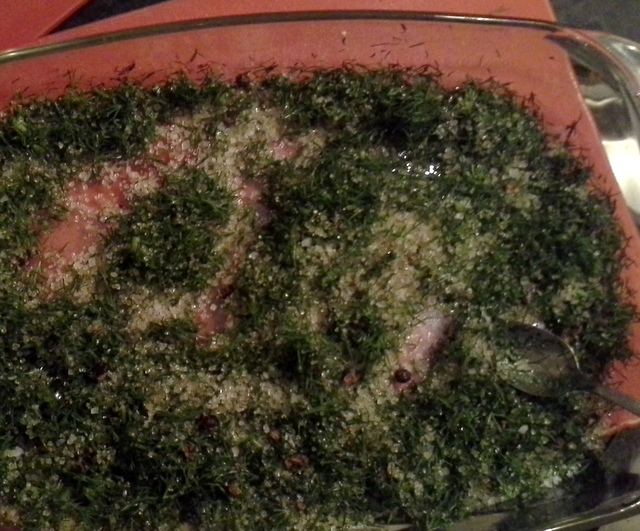
Gravad Lax mix

A Fitting Salmon Send Off

Mix together the salt and sugar until really well combined. Remove the stalks from the dill and chop the rest finely. Mix into the cure with the juniper berries. The cure needs to look pretty green and herby, because you want to get a lot of flavour in there.

In a shallow dish, get some cling film or a cheesecloth, and coat with about a quarter of the cure. Press one half of the fish down well into the cure, skin side down. Rub the cure into the skin, and leave skin side down on the wrapping.

Then you need to load the flesh with the cure. Do this by brushing the flesh with half the brandy and laying about another quarter of the cure over the flesh. Lay a few bay leaves over the fish.

Repeat the brandy and cure on the flesh of the second fillet. Once it is well covered, then lay it on the first fillet, so they are flesh to flesh. If the cure falls out, tuck it back between the fillets.

Rub the last of the cure into the skin of the second fillet. Wrap the fillets tightly together. If you are using cheesecloth, bind it with a series of butcher’s knots, as tight as you can get. The fish will lose liquid as it cures, so it is best to keep it in the shallow dish, unless you really like cleaning the contents of your fridge.

Weigh down the fish, by piling a load of tins on top of a baking sheet on top of the fillets, and placing the whole lot into the fridge. Leave it to cure for 3 days, turning once each day. Rinse off and pat dry with kitchen towel before serving.

What Gravad Lax Should Look Like

The Finished Product

To make the sauce, simply mix together the crème fraîche, dill, mustard and the honey. Season to taste.

Serve with the thinly sliced gravad lax on bread, melba toast or knäckebröd, as a delicious starter or hors d’oeuvre.

11 Comments

Filed under Feast

A Very Happy Christmas

Jul Hjart

Season’s Greetings

Well, it has been a little while since I posted last. I’ve been having a large dose of real life, but it has left me with no time and no inclination to come up with new recipes, so I’ve been relying on old favourites, as everyone does from time to time.

But, now things have settled down a bit, and I’ll be back soon with a Swedish Christmas staple for you all.

I celebrated Christmas in Sweden this year, and so Christmas is over for me already. I do know that many of you are cooking up a storm today, so I hope you have a lot of delicious edible things to enjoy with friends and family this holiday.

Wherever you are, and whatever you celebrate,  I wish you all a very Merry Christmas.

2 Comments

Filed under Uncategorized

Asian Flavoured Beans: Not Just For The French


Asian Flavoured Beans

Beans and Buns – Getting Out Of A Glut Rut

Defrosting the freezer is often a boring, and much put-off task (although you should do it fairly regularly, to keep it running efficiently). I was forced into doing mine today. It was getting difficult to open the top drawer, and it had been jamming accusingly every time I went in there. There was definitely a sulky kind of Huh! noise when I tried to shove it back in. So I finally gave in to the nagging.

You may be wondering why I am boring you with all of this domestic drudgery (you never see Nigel Slater having to give that fridge with the camera in the back a good clean do you?).  Well, I found some hom bao lurking in there, and knew I had found lunch. These little buns freeze so well, and they really keep. Well worth making a batch when next the baking bug hits you, and freezing those that you can’t manage on the day.

As I wanted lunch to contain at least one of my five a day, I also wanted a suitable vegetable side dish. A quick ferret around in the fridge revealed a lot of unsuitable veg, and many of my home-grown runner beans, which are still coming thick and fast at the moment. I didn’t really fancy a stir fry of carrots, tomatoes and lettuce, so beans it was.

It’s funny how you can get a bit stuck into one or two ways to cook a particular vegetable. For me, runner beans are always about my ever-popular green bean chutney, or gently steamed and served with butter and black pepper. If I have to combine them with something, I go down the Lebanese route, and stew them in a garlicky tomato sauce (also very highly recommended). Something that I have never previously done with them is combine them with Asian flavours.

There are many Asian dishes that have beans in them, although they more commonly use french or yard-long beans. There is no reason that runners cannot shine just as well, especially if they are garden fresh. I wanted to stick with a vaguely Chinese style for these, since they were to accompany the Hom Bao.

This dish would also be great with a tablespoon of toasted sesame seeds sprinkled over the top at the end. As it was a cleaning-out-the-cupboards kind of meal, and I didn’t have any sesame seeds, I just left them out. You can choose which one you prefer.

I was very happy with these beans, which took on the salt and spice brilliantly. It just goes to show that a lot of new possibilities can open up for you if you go a very small way outside your usual recipes. I’m very happy to have another way to use a seasonal glut of runner beans (although it really is never a problem, I love them).

Do you have a favourite runner bean recipe? I’d love to hear about it in the comments.

Recipe: Chinese-Style Runner Beans

Ingredients

About 400 g runner beans

1 tbsp sunflower oil

2 garlic cloves, crushed to a paste

½ cm fresh ginger, finely grated

2 tbsp soy sauce

½ tsp sesame oil

Method:

String the beans (or grow a stringless variety, and save yourself a bit of time). Slice them diagonally into 1 cm thick slices. Add to boiling water on the stove, and cook over a medium heat until the water comes back to the boil again. Do not salt the water,  it will make the beans grey and there will be plenty of salt from the soy in the finished dish.

Once the beans have come back up to the boil, drain them and set aside.

Heat the sunflower oil in a frying pan or wok. Add the garlic and the ginger and cook until the fragrance of the ginger hits you. Add the beans and the soy sauce, and cook until the soy has thickened slightly.

Remove from the heat, and stir through the sesame oil and the seeds, if you are using them. Serve immediately.

5 Comments

Filed under Farmed

Experiments with Facebook

Mel Ediblethings

First Appearance

(c) H. Weiber 2013

https://www.facebook.com/pages/Edible-Things/364135607022217

This blog is a little under two years old now. It has been registered for longer than I have been writing, but it took me a little while to pluck up the courage to get going.
At the time, I admitted to being a little shy, but I have found a great community here, and have made some good virtual friends across the gardening and food blogs. Which has been great, and given me the confidence to try to do a bit more.

Now it is about time for a few new things for Edible Things.  Over the coming months and weeks, I’m going to be having a little  facelift, and adding new social media. This is largely an experiment at the moment, because I need to see how much extra time this stuff will take.

You may have noticed the first ever clear photo of me at the top of this post. This is the start of having what I hope will be a bit more of a profile. I will also be adding photos to the about page, and in other places soon. It was taken a barbecue that I held recently for my work team.

Another first is the new Edible Things facebook page.  It is also my profile picture for the Edible Things page.

You may or may not know that I also campaign on food isses, as well as forage, farm and feast on food. The facebook page will probably be about both of these things.  I’d really love it if you dropped by and joined in the conversation!

Leave a comment

Filed under Uncategorized

Super Calamansi-istic

Corn and Calamansi Salsa

Salsa Alidocious!

As you will have seen from my Philippine Tasting Plate, I brought back a few things to use in my home cooking. And what better way to celebrate the recent good weather we’ve been enjoying than to use tropical ingredients?

I got the idea for this dish from a corn salsa I ate at Tomatillo. As is often the way, restaurant food inspires my dishes. The Tomatillo salsa is nice, but I knew that I could twist it a bit to make it even better.

I was already thinking that it needed courgette. Then I remembered the calamansi that I had packed away so carefully, and that was now residing in my fridge. I knew that I had to try to make the dish that began a while ago, and had now taken root in my brain.

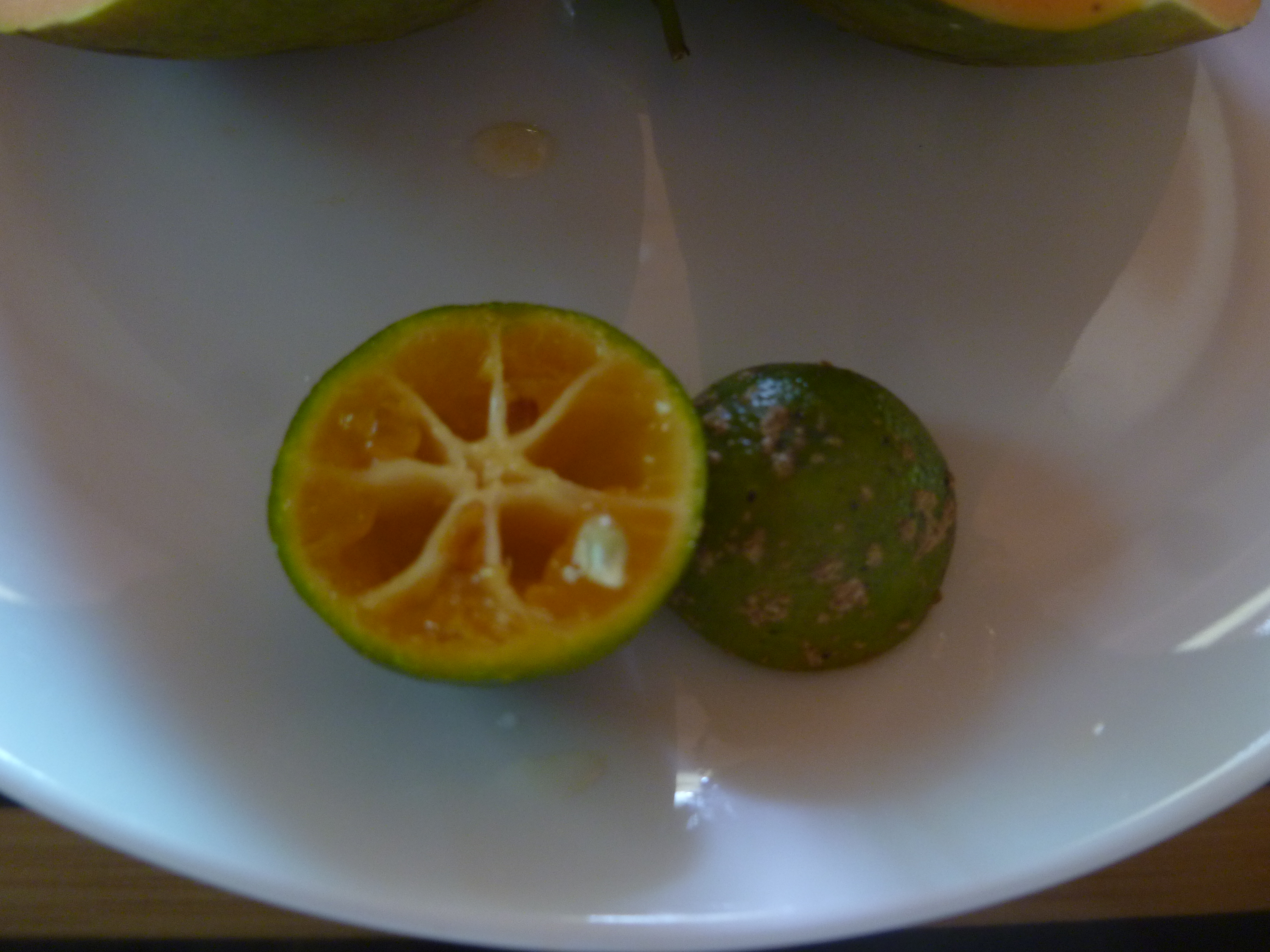
Calamansi

Calamansi – about the same diameter as a 10 p piece (or €2)

Calamansi is a small citrus fruit. You can use them like limes, in salads dressings and to season stocks etc, but they are also a popular drink in the Philippines, as well as being a key ingredient in sisig. They are both sweet and sour at the same time, and have a lot of flavour despite their diminutive size.

They also have a lot of pips. I was going to chance my arm and see what would happen if I planted a few, but I forgot to tell the Big Guy what I was doing, and they got thrown out. Ah well, I know that growing citrus from seed is notoriously unreliable, so I probably saved myself a fair bit of disappointment in any case.

I first made this salsa for a birthday canal boat picnic I held for the Big Guy. It was great as a dip with tortilla chips. I was a little nervous to present it as salsa to that crowd, amongst whom were some Americans who have an in-depth knowledge of all things Tex-mex. I have previously been taken to task for a guacamole, because I had put tomato in it, which apparently makes it pico de gallo, and not guacamole. I have also been told my (Mexican recipe) chile con carne is not a real Chile (but the consensus was that it was very tasty). I needn’t have worried, this went down a treat with everyone on the boat. And no-one objected to me calling it a salsa.

I have since served this at a barbecue, where it was similarly well received, and went equally well as a garnish with my home made burgers as it did with vegan enchiladas. I think it would be great as a salad as well.

I made this with tinned corn, but you could also use fresh a little later in the year, although I’d recommend grilling it in the husk first on either the barbecue or under a hot grill. Then shuck and add to the salsa.

Recipe: Corn and Calamansi Salsa

Ingredients

1 red onion, finely chopped

Juice and zest of 6-8 calamansi (or one lime)

½ courgette, finely diced

1  tin of sweetcorn, drained (or one whole corn cob, grilled and shucked)

1-2 red chilis, deseeded and finely chopped

Small bunch coriander, including stalks, finely chopped

Salt and pepper

Method

If, like me, you dislike raw onion then steep the chopped onion in the calamansi juice and zest for at least 10 minutes before you make the rest of the salsa. The amount of calamansi that you need will depend on the size of your onion. You should ave enough juice to just coat all of the onion. I have made this twice, and needed different amounts each time.

Raw courgette doesn’t taste of much, which puts many people off trying them twice. The secret to bringing out the flavour is to blanch them.  Because these are finely diced, they only need to be steeped in boiling water for about 30 seconds or so. If you like, you could squeeze a little more calamansi juice (or a couple of drops of lime) into the water. Drain immediately, and run under the cold tap to stop them cooking further. Allow to drain completely. The courgette will now taste of courgette, but will still have a bit of bite.

Mix together the onion, courgette, sweetcorn and chili. Season well, and set aside the salsa for about an hour to allow the flavours to meld. Taste, and add more chili, citrus juice or salt and pepper to taste. Stir through the chopped coriander and serve.

2 Comments

Filed under Feast

A Philippine Tasting Plate

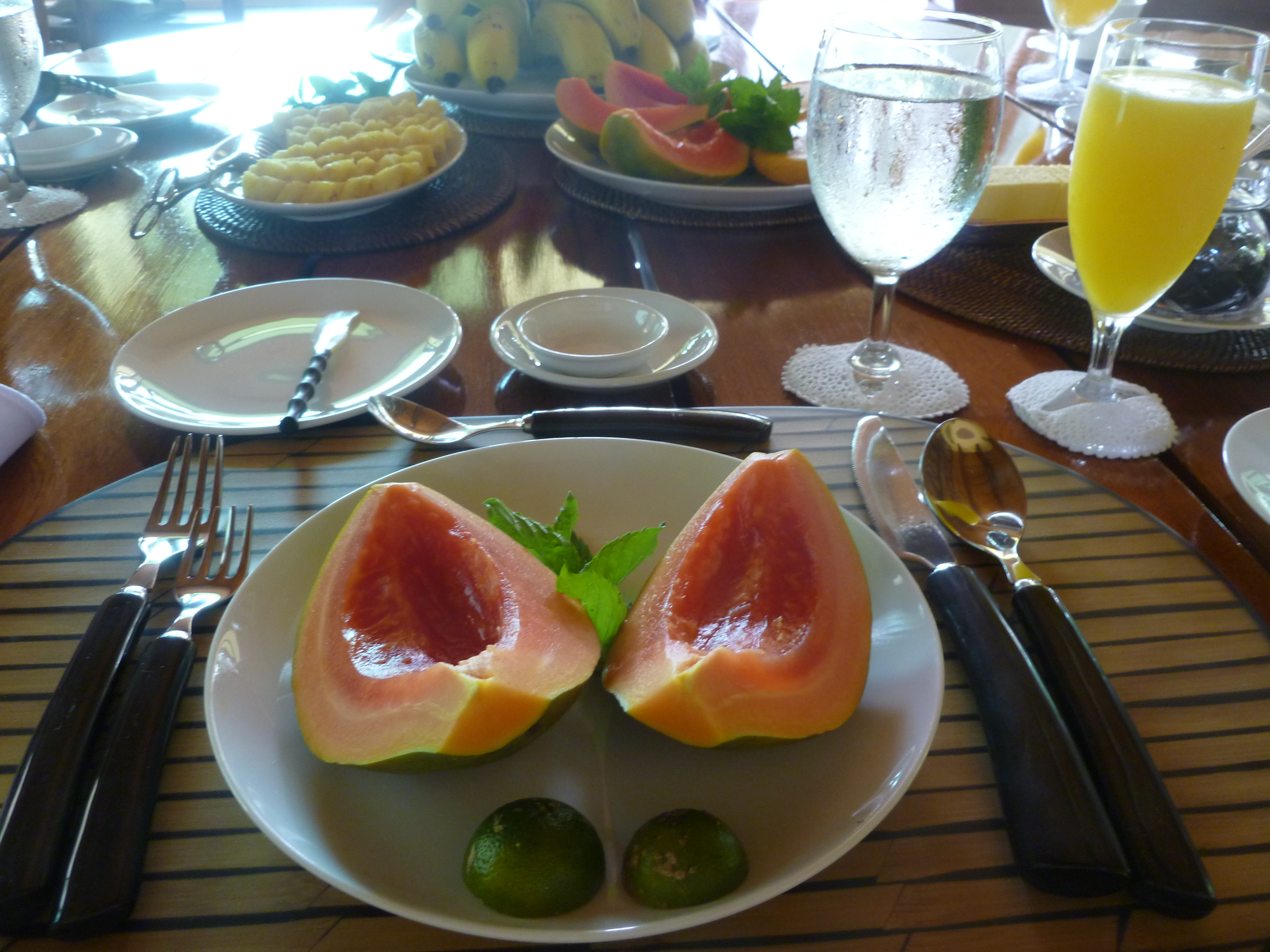
A fresh Fruit Breakfast - papaya and pineapple

The Freshest of Fruit

As I may have mentioned, I have been in the Philippines for work. I didn’t mention it before I went, because we were going to some areas of the southernmost island, Mindanao, which may not be considered to be safe. That said, we had a wonderful time, and saw no sign of trouble at all.

coconut and pandan juice

Pineapple and Pandan Juice

The thing I love most about travel is the different foods and flavours that I encounter. I ate many wonderful things, and I thought that I’d share some of them here with you. I hope you enjoy this little Philippine Tasting Plate. I also managed to bring back a few unusual ingredients, that I will be trying to make some interesting goodies with in posts to come.

Pineapple napkin ring

Pineapples Were, Unsurprisingly, A Bit of a Theme

Of course, I ate a lot of fresh tropical fruits; some of which were new to me, and some were more familiar. I had my first taste of mangosteen and durian (albeit in a crème brûlée) as well as many more familiar fruits. The mango, much like the avocado after my trip to Australia, has been forever ruined for me. You just cannot get the soft, sweet , thin-skinned little jewels that you find in the Philippines. My colleague and I stayed in a beautiful lodge in pineapple country, where there was a definite theme to the place, from the napkin rings, to the juice we had everyday. Fresh pineapple juice is a great start to a meeting.

Stuffed Squid

Stuffed Squid

Seafood is very popular, as you would expect from a country comprising of over seven thousand islands. I ate some really lovely dishes. Tuna is also very popular there, with many of their delicacies containing tuna. I haven’t eaten tuna in years, because there aren’t many left, and there is so much bycatch with the techniques that many fleets use. I remained tunaless, so I haven’t tried many of these specialties.

Chili Crab

A Catchy Crab Dish

I did eat very well in some very good restaurants. It is pretty difficult to be vegetarian in many of the local food places, all the Filipinos we met all said how much they love their meat. But that is not to say that it is impossible. I went to a very good vegetarian restaurant in Manila, who did a really tasty version of sisig – normally made with pork, but always with sharp flavours, often provided by calamansi (a local citrus fruit, more of which later). There are also many “foreign” food restaurants, where you can eat delicious vegetarian food. After a very long day of flight delays, and a cancellation, my colleague and I stumbled across an amazing persian restaurant. I am not vegetarian, but I can have too much meat, so I was really glad to find an Iranian curry, called Qalye Mahi. It was rich, soothing and sharp with tamarind, which isn’t something I’d really explored before. I must try to find a recipe for this.

A Philippine Vegetable GardenA Philippine Vegetable Garden

A Philippine Vegetable Garden

Amongst the other local specialities I tried were Kare Kare – slow cooked pork in a peanut sauce; Bicol – a fiery pork in coconut milk with a lot of chilis; and the ubiquitous adobo, which is meat cooked in vinegar and garlic. A particularly good one was a squid cooked in black vinegar and squid ink; another one I’m going to play around with. One of the more surprising things to eat was a type of yam called ube. It is bright purple, and is used in sweets, pastries and ice cream. I was originally told to look out for ube by Sally, who left a comment on this year’s resolutions post. I’m glad I was told,  I really enjoyed trying new ways to eat purple root veg masquerading as dessert, thank you Sally.

Taro - The Whole Plant is Edible & Often Cooked in Coconut Milk

Taro – The Whole Plant is Edible & Often Cooked in Coconut Milk

I was also delighted to learn of a fantastic tradition called Pasabulong. This is where returning travellers bring their family and colleagues gifts of food. Even if they have only gone to a different city. What a great tradition!

I continued this on, by bringing the Big Guy some sweets and dried squid. I also brought myself a few treats, including some ube. I am going to try to plant some, and I will see what I can cook up with the rest, and the other goodies that I bought. But that may be the subject for future posts.

7 Comments

Filed under Fed

Procrastination Pâtisserie

Strawberry and fennel tarts

The Kind Of Procrastination That Leaves a Sweet Aftertaste

At the time that I cooked this, I really should have been packing for a work trip. I have also been so busy since I got back; including dealing with a gaping hole in my kitchen ceiling through which my neighbour’s shower leaks, and a recalcitrant landlord; that I have not really had the time to blog. Procrastination is a big theme in my life. Both mine and that of others, unfortunately.

You may also have noticed that I have had a little bit of an obssesion with pairing  things with fennel of late. I had briefly considered strawberries with candied fennel, a long time ago, but instead it became Rhubarb and Fennel Foolish, following some inspiration from Mister Kitchen at the Rollende Keukens.

I had some fennel stewed rhubarb leftover a while back. I had it for breakfast with some yoghurt and the first of the year’s strawberries, and discovered another match made in heaven. The seed of an idea was planted, and then I put off enacting it until I had something else I wanted to put off doing.

Unlike most procrastination, this did not leave me grumpy, nor with the slightly sour taste of panic in my mouth. Instead, it was a delicious treat for the last meal with the Big Guy before I left for the Philippines for a work trip. If only I’d got around to blogging it sooner…

Strawberry and Fennel tart in Profile

A Treat You Shouldn’t Put Off

I’m really very proud of this tart, it tastes like it is full of complex techniques, but it really is pretty simple. Even the crème patissière is not as complex as it sounds, since the flour in it means it thickens much quicker than it heats, so the risk of splitting is much less than with normal custard.

In fact, I thought that this little treat would be  great first entry into the Made With Love Monday blog challenge, hosted by Mark at Javelin Warrior because it was all my own work, and was made and shared with love.

Recipe: Fennel and Strawberry Tarts

Makes 6 small tarts

Ingredients

For the Crème Patissière:

½ tsp fennel seeds

350 ml milk

4 egg yolks

65 g caster sugar

15 g plain flour

15 g cornflour (or use 30 g cornflour)

For the Sable Pastry

25 g icing sugar

100 g plain flour

30 g ground almonds

50 g cold butter, cubed

1 egg yolk

A splash of cold milk to bind

For the Tarts:

15-18 Strawberries

2 tbsps rose petal jelly or  strawberry jelly (not jam)

1 tbsp water

Method

Crème Patissière

Add the fennel seed to the milk, bring to the boil, turn off he heat and allow it to infuse for 20 mins.

Meanwhile, whisk the egg yolks and the sugar together until pale. Whisk in the flour and cornflour until thick and glossy.

Once the milk is infused with fennel flavour, bring it back up to boiling point, and strain through a sieve. Let it sit for about a minute. Slowly add to the egg yolk mixture. Don’t add it too fast or the eggs will scramble.

Return the custard to the pan, and bring to the boil, whisking constantly, and pretty rapidly. Once it starts to cloy on the whisk, take it off the heat, pour into a waterproof container, whisk a little more until it is thick. Sprinkle a little icing sugar over the top, so that it doesn’t form a skin.

Cool quickly by dipping the bowl in iced water (don’t get water in the custard). Refrigerate until needed. I did mine the night before I needed it.

Cheekily hoover up the scrapings in the saucepan, like you were 5 again. You won’t regret this step, I promise.

Sable Pastry

Sift the flour and icing sugar. Add the ground almonds. Rub through the butter, until the mixture resembles breadcrumbs.

Mix in the egg yolk. Add very small splashes of milk, until you can just bring the pastry together. You won’t need a lot, this pastry is quite soft.

Wrap the pastry in paper or clingfilm, and allow to rest in the fridge for at least 40 minutes.

Heat the oven to 200°C.

Roll the pastry out thinly. It’s a delicate pastry, it should be really short and buttery when cooked, so don’t add loads of flour when you roll it out. Instead, roll it on a lightly dusted sheet of baking paper (wax side up).

Grease 6 small tartlet tins. I find the ones with the removable bases are the easiest to use.

Line the tins carefully with the pastry. If your pastry is really short, you could make a sausage from it, cut into thin discs, and then overlap some discs and press them together to thin the pastry. Or you could roll it thinly, use a saucer to cut out rounds of the pastry, and slip it into the tart tin using your baking paper. Either way, carefully push the pastry into the flutes of the tin, using a little bit of scrunched up spare dough. Trim the pastry by rolling your rolling-pin over the top of each tart tin.

Cut squares of baking paper (you can use the same stuff you rolled the pastry on) a bit larger than the tart tins, and scrunch each of them up, as if you are going to throw them in a bin. This will help the paper sit better in the tart case, so that you can get the blind bake into all the nooks and crannies, ensuring that none of your pastry can rise.

Gently prick the bases of the pastry cases with a fork. Unscrunch the baking paper, and line the top of the pastry cases. Line thickly with ceramic beans, dried beans or rice and tap on a work surface to get them into the fluting of the cases.

Bake the tartlet cases in the oven for 10 minutes. Then remove the blind bake, and return to the oven for a further five minutes until the pastry is  crisp and lightly browned all over.

Set aside for five minutes, and carefully remove from the tins. Allow to cool completely.

Tarts

Once your pastry and crème patissière are completely cool, you can assemble your tarts. Slice the strawberries in a way you find aesthetically pleasing. Put some of the crème patissière into each tart case, and spread over the base. Arrange your strawberries prettily over the crème patissière.

Make a glaze by heating the rose petal jelly and water gently until the jelly has melted. Mix well, and brush it over the strawberry arrangement.

Enjoy as a slightly unusual treat, with or without friends.

2 Comments

Filed under Feast

Flower Sour

elderflowers

Sweet Little Flowers

Well the elders are in bloom again, and hedgerows all over froth and foam with the delicate white unbrels, almost like the spring tides coming in. This year is a bit later than ususal, due to the length of the Northern hemisphere winter, but now the sunshine has returned, and naure is more than making up for her long sleep.

I love this time of the year, and stock up on elderflowers for cordialsugar, and champagne. All of it delicious, and making the most of the best of the season’s forage.

Elder is really abundant where I live, so there is always plenty to go around during the flowering and fruiting seasons; for us foragers and for the birds.

Elderflowers are not just for the sweet things in life, they are also great in salads, and I have heard of sauces to go with meat. An elderflower sauce is on my list of Things I Want To Experiment With. Like most food bloggers, I guess, I have several such lists – electronically, on paper and in my head. A colleague of mine recently found them in some notes I had taken as part of a work trip, and seemed surprised that I would also be making lists of flavours in between meetings.

As well as the flavours that exist on my lists, or go around in my head, I have a number of different or unusual flavours in my kitchen. For example, I am never without vinegars of all kinds of flavours – raspberry, blackberry, tarragon, rosemary; I even have coconut vinegar since a Filipina friend introduced me to it when she kindly gave me her adobo recipe.

For me, then, it wasn’t too much of a stretch to think that elderflower vinegar would be a great way to keep hold of the elderflower season for just a little bit longer, but without all the sugar.

Try to pick elderflowers on a dry day, in the morning. There will be more pollen and nectar in them, which makes the flavour more intense.

This vinegar is good with salads. I am currently embarking on the 5:2 regimen, because my need to develop great food for this blog was beginning to have a toll on my waistline. I have found that the addition of a few herbs to some of this vinegar is a good way to dress a slad without the need for oil.

You can make marinades with it, and even a couple of drops in some water gives a nice flavour, that is not too sweet.

Elderflower Vinegar

Not So Sweet Little Flowers

Recipe: Elderflower Vinegar

Ingredients

40 g elderflowers

500 ml white wine vinegar

Method

Try to pick the flowers in the morning after a dry spell, in order to maximise the pollen and the flavour.

Remove the elderflowers from the stalks by pulling a fork through the stalks in the diretion of the flowers. You don’t have to be too fussy, as long as you have removed the largest stalks.

Steep the elderflowers in the vinegar, in a non-metallic container or bowl. Cover with a tea towel, and set aside for a few days.

Whenever you remember, give the flowers a stir.

After three days to a week, your vinegar should have reached the strength of flavour that you want.

Bottle up into sterilised bottles. This vinegar will keep well in a cupboard. I cannot resist this fragrant flavour, so the trouble is making it last!

7 Comments

Filed under Found

A Teambuilding Triumph

Dora's Kitchen

Team Build Differently

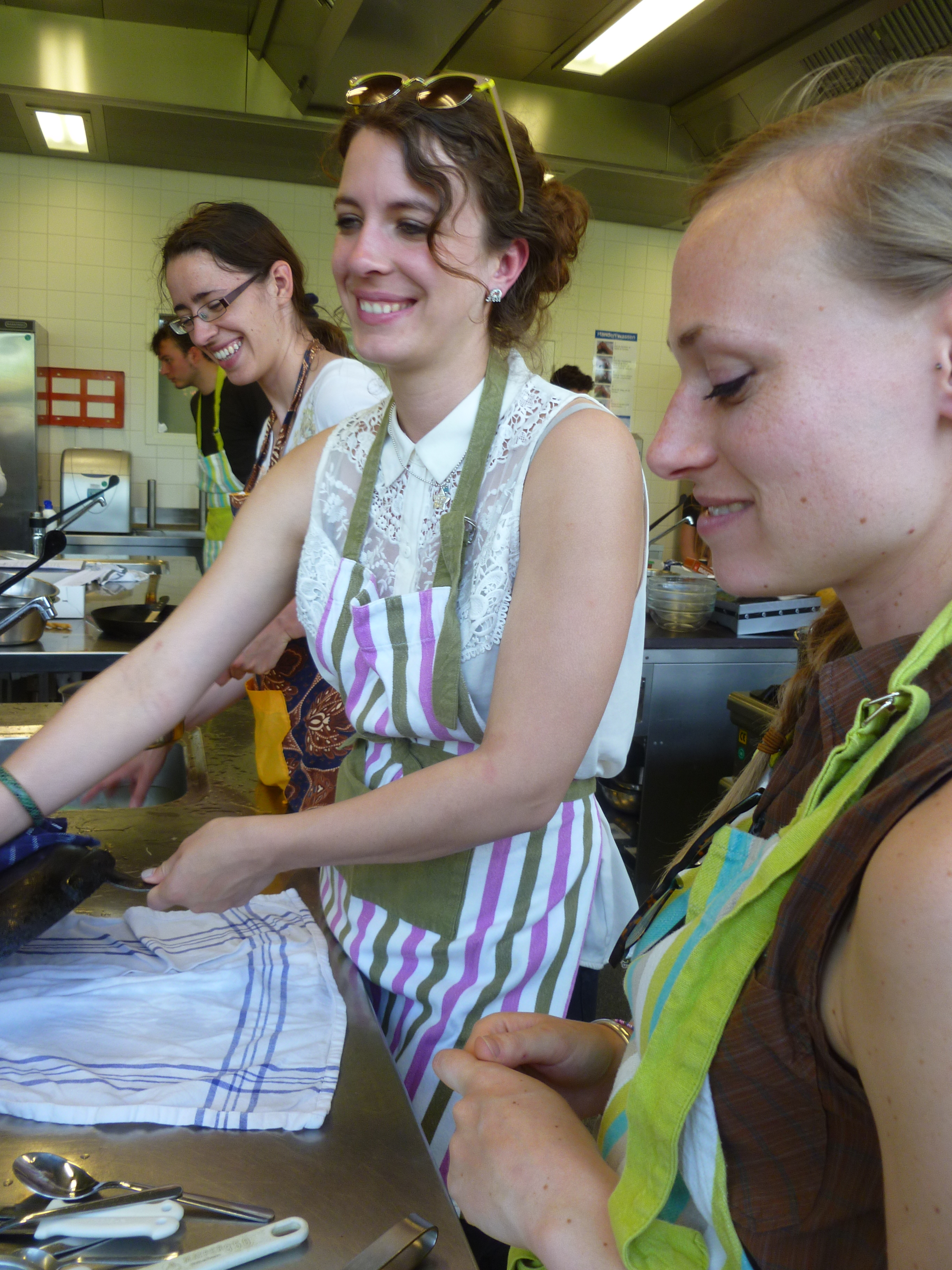
I was less than thrilled when I heard we had a team building thing as part of the staff Coming Back Week, where all the staff from all of the offices get together for strategy work, training and other discussions. I quickly changed my mind, when I heard about what we were doing.

Ingrdient Boxes, ready to go at Dora's Kitchen

What a Greeting

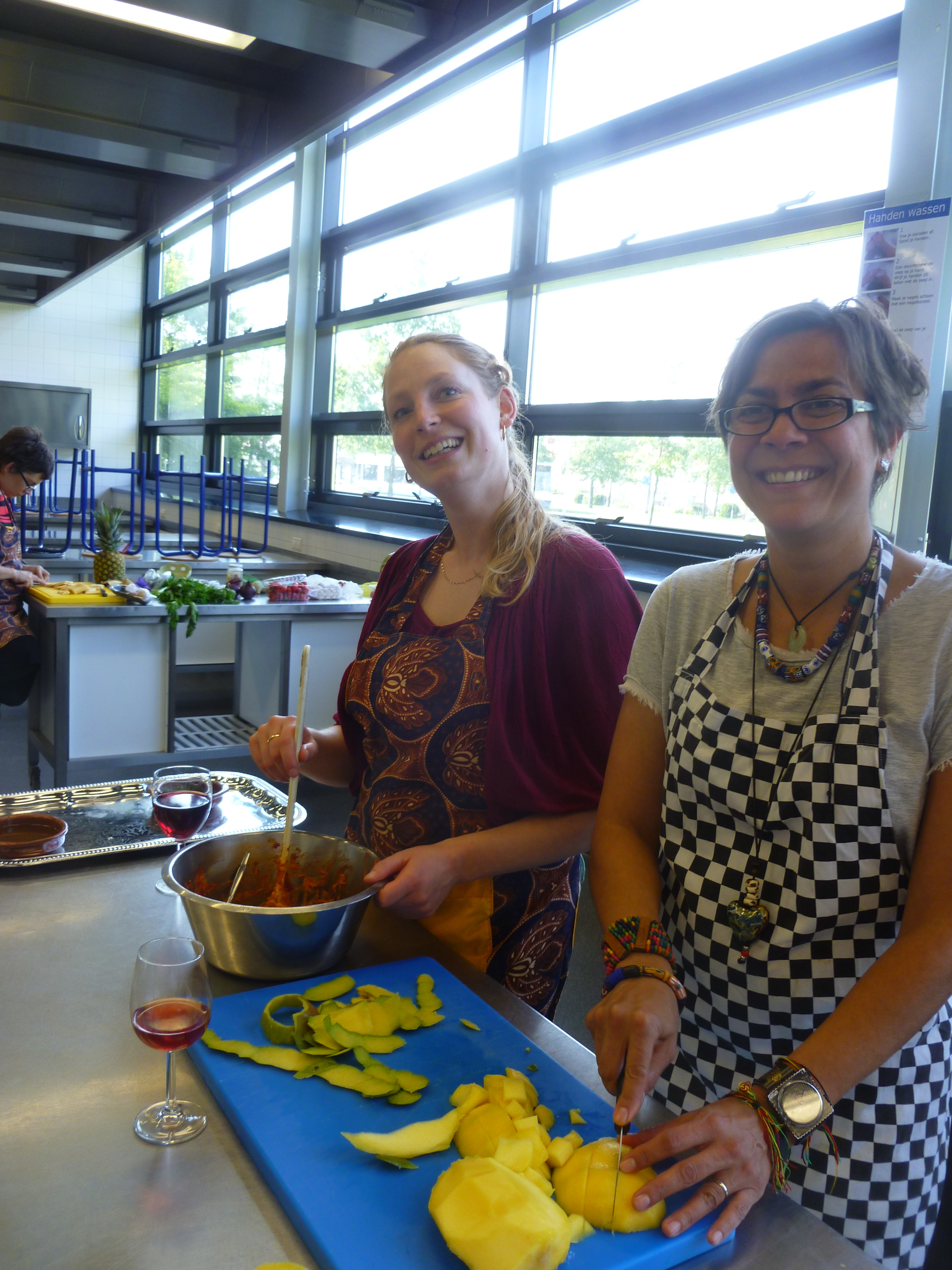
When you work for an organisation that campaigns to make food fairer, you don’t get to experience team building exercises  like yomping miles through a forest, or trying to get two people from A to B over a 2 m high obstacle with two bits of rope and a plank of wood. No, luckily for us; we get to cook.

Elizabeth of Dora's KItchen

The Warmest of Welcomes

We were going to experience Surinamese cooking. We were ushered in by Elizabeth of Dora’s Kitchen, who greeted us all with a big smile, a plate of tasty snacks and some delicious fruit drinks. Their motto is “Anders Koken”, which translates as “Cook Different”, and this was my first attempt at Surinamese dishes, my first ever cookery class, and it was certainly a different team building exercise. I think they lived up to their motto.

Team Building at Dora's Kitchen

And They’re Off!

After setting the tone for the day, we were divided into smaller teams, and found out what we would be cooking. The choices were Peanut Butter Soup, Bacaljauw moksi alesi (salt cod with coconut rice), Fruit Punch, Spicy Baked Aubergines, and little pastries (I didn’t catch what these were called). I have to say, I was a little sceptical, at the sound of some of the dishes, especially Peanut Butter Soup.

Preparing backaljauw

The Fish Dish

I was in one of the teams tasked with making the bacaljauw. This was more about team building than I had anticipated, because the recipe was a little baffling in parts. At first, I suspected that this was because it had been mangled by an online translation engine, but then I came to the conclusion it was to encourage us to work together to work out what it meant.

Making a pot a steamer

Finding Food Solutions

Team members were swapped around after a little while, but the work carried on.

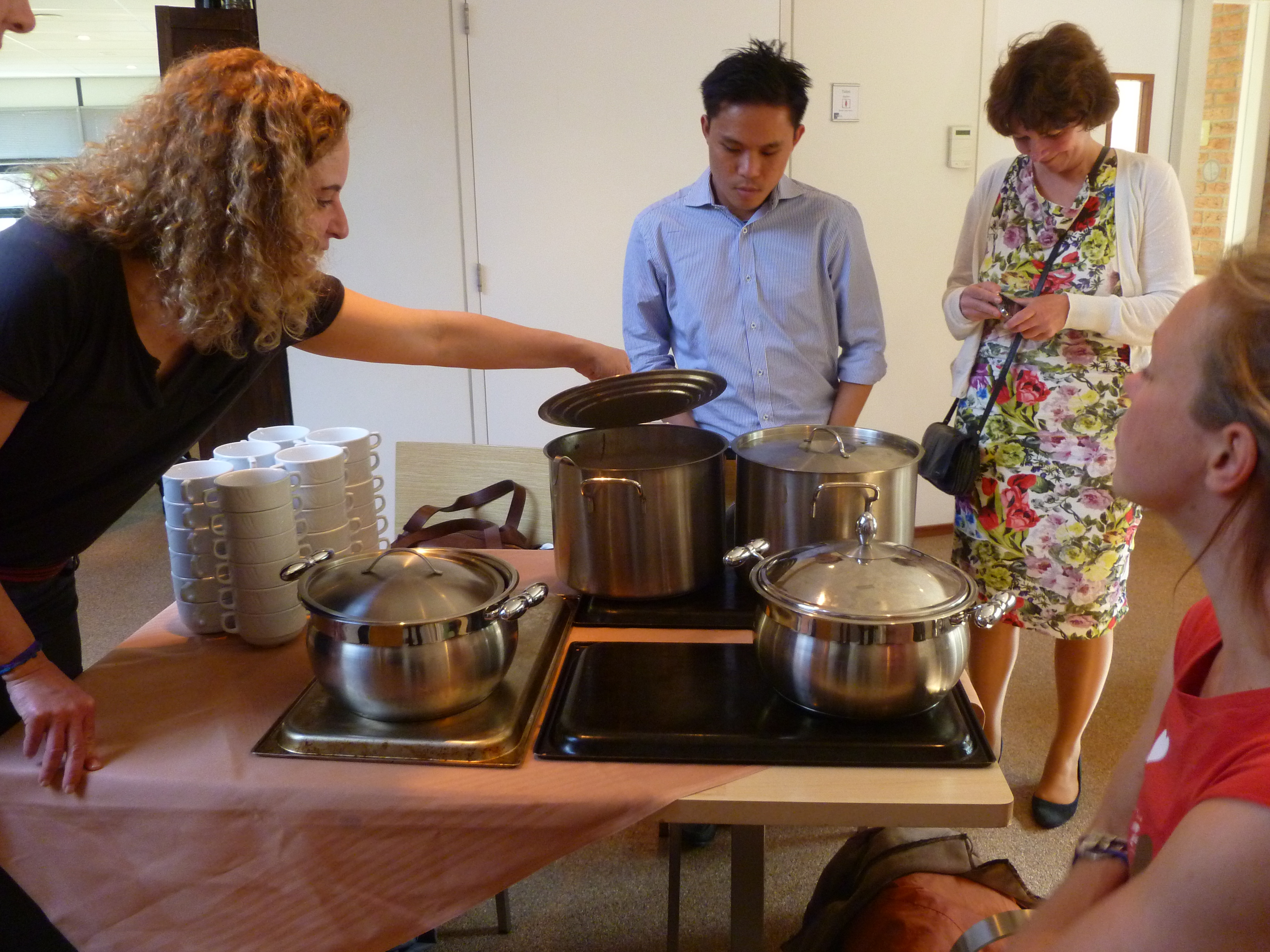
Making Peanut Butter Soup

Stirring it Up Amongst Colleagues

It was interesting to learn about some new techniques, and from the buzz in the room, it seems that the rest of my work mates thought so too.

Making Fruit Punch

Punchy – The Fruit, Not My Work Mates

Despite the seeming chaos, it all came together pretty well in the end. We managed to produce dishes that the Surinamese teachers were pleased with.

All the best fruit and vegetables

Yes! We Have No Bananas (these are plantain)

Although the teachers were all very keen that the Madame Jeanette peppers (they are a bit like Scotch Bonnets) didn’t go into any of the dishes too soon. All spicy food over here is toned down for the “Dutch palate”. I find it really funny that a nation who got very rich on trading spices around the World don’t appreciate the heat of many of the dishes that people make with them.

making Cassava Balls

The Finishing Touches

The best part was that we got to sit down together and eat the fruits of our labour. I loved the event, I thought that it is a great way to get an organisation to come together and share an experience.

The finished Products

The Finished Products

And it turns out that everything was delicious, too. Even the Peanut Butter Soup – who knew?

The Washing Up!

The Washing Up!

If you are responsible for organising a team building exercise, and you like your colleagues, then I’d recommend giving a cookery workshop a go. Obviously, please don’t try this at home if you work with people who should not be in a confined space with sharp knives!

2 Comments

Filed under Fed

A Picnic on Public Transport

Asparagus and Potato Tart

Tarted Up Leftovers

The Big Guy and I are seasoned travellers. If you live in a different country from either of your families, you have to get used to the rhythm of packing, transport, and departure times. Where we can, we take the train; it has a much better rhythm – with a continuity of movement, both in terms of the motion of the carriages, and because there is no hanging about in a departure lounge, or being forced through an array of harshly lit shops. The train gets you where you need to be without fuss; you have space to sit comfortably and to move around.

One of the things that we haven’t got the rhythm of is taking our own food. Although, I do know exactly where all the best places to buy food along the journey are. We have recently returned from one such trip abroad, although this time, we had a leg of the journey on a coach. It was OK, but I will be glad if they ever sort out the troubles on trains run by a certain rail company, which has been unable to run for far too long now.

We decided that we should be better prepared for this journey. Since our usual rhythm was interrupted, I could not guarantee getting to my favourite pit stops. I also had a few ingredients in the fridge that wouldn’t last until we returned. So, the obvious choice was to make something to take with us. A picnic, of sorts.

I had a little of the salad, some cream and some eggs that needed using up from the dinner I made for friends, and a few last sprigs of chervil. As so often happens, the day before I was leaving I woke up and knew that these would be perfect in a tart, with some goat’s cheese. We could have some for dinner that evening, and then we could take the rest as a picnic for the coach the next day.

Like many of the best laid plans, the idea for a nice goat cheese went a bit awry. It was a bank holiday, and none of the usual shops were open, so I had to dispatch the Big Guy to the supermarket. Unfortunately, all they had in the way of goat cheese was some presliced stuff, that could have been any generic cheese. It certainly never has the tang of goat that I was looking for in this dish. Fortunately, he returned with some sharp, crumbly feta instead. This was a much better option, it needed to match the asparagus.

The tart was tasty, filling and survived the journey. So did the salad we had with it, because we dressed it en route from a small jar. This is my top tip for picnic salads – if you dress it before you travel, the salad will cook in the acid, and you will be left with a container full of flaccid disappointment.

Cheese Please blog badgeFour Seasons Food Challenge Chez Foti & Delicieux

I know I have entered my dishes into a lot of blog hops lately, but I couldn’t resist entering this recipe into the inaugural Cheese Please Challenge, hosted by Fromage Homage. Then I heard about the inaugural Four Seasons Food, dreamed up by Anneli at Delicieux and Louisa at Chez Foti. This dish is so apt for both.

This was my perfect public transport picnic, and I didn’t waste anything in my fridge. I’d love to hear what appears on your picnic blanket, or even coach seat when you make food for on the go.

Recipe: Asparagus and Potato Tart

Ingredients

For the Pastry: 

100 g plain flour

50 g cold salted butter

Really good grinding of black pepper

1 egg yolk

For the Filling:

100 ml cream

4 eggs

small bunch chervil, very finely chopped

100 g of leftover asparagus salad, or 3-4 small salad potatoes and 5 asparagus spears cooked until just tender, and cut into 5 cm chunks

2 spring onions, sliced finely

90 g feta cheese

Method

Season the flour. I wanted this pastry to taste peppery, the rest of the tart can hold its own. Don’t be afraid of adding  more pepper than you think.

Rub the cold butter (it needs to be fridge temperature) into the seasoned flour until you have a breadcrumb consistency. Add the egg yolk and bring together into a dough. If you need to, you can add a little bit of cold milk to make it all come together. Add a splash at a time.

Form a disc with the dough, and cover it with cling film or foil, and leave it to rest in the fridge for 20 minutes to an hour.

Heat the oven to 200°C. Roll the pastry out thinly on a floured surface. Carefully line a greased flan case with the pastry, and press into the sides or fluting with a small offcut of pastry in a ball, to avoid any tears or holes, you don’t want the filling to leak and burn on the bottom.

Prick the bottom of the pastry all over with a fork. Line the pastry with greaseproof paper, and add a good layer of blind bake – this can be ceramic beans, dried beans or rice – to give some weight help keep it flat and thin. Bake in the oven for 15-20 minutes, or until the pastry looks dry and is beginning to brown on the sides. Remove the blind bake, and put back in the oven to allow the pastry to cook all over to a light golden colour.

While the pastry is browning, whisk together the cream, eggs, and chervil.

Once the tart case is cooked, remove and turn the oven down to 180°C.

Pick the salad over to remove any leftover capers and cornichons. Scatter the rest over the tart case, so that you get pretty even cover. Then scatter over the spring onions and crumble the feta around, again, so that the coverage is quite even.

Pour the eggs and cream over the rest of the filling, shaking the case a little, to ensure even distribution. Return it to the oven and bake for a further 30-40 minutes, or until the centre is just set, but still has a little wobble if you shake it.

As with all quiches, this is great served hot or cold, but if you want to serve it warm, let it rest for about 10 minutes after it comes out of the oven, so that the filling does not ooze all over the plate.

10 Comments

Filed under Feast